Introduction to Ultrasonic Sensing Technology
Ultrasonic proximity sensors, such as the TU1B-30 model, represent a cornerstone of non-contact detection in modern industrial automation. These devices operate on the principle of emitting high-frequency sound waves, typically above 20 kHz, which are inaudible to the human ear. The sensor calculates the distance to a target object by measuring the time interval between the emission of the ultrasonic pulse and the reception of its echo. This time-of-flight (ToF) method provides highly reliable detection regardless of the target's color, transparency, or surface texture, a significant advantage over optical sensors. The TU1B-30 leverages this robust technology to deliver consistent performance in challenging environments where dust, mist, or varying light conditions are present.
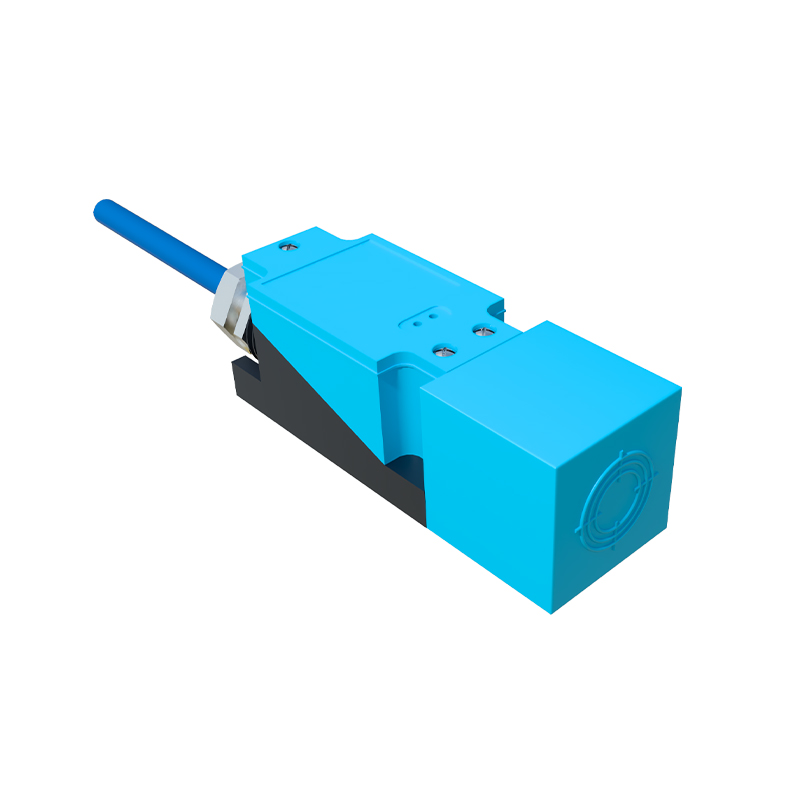
Key Specifications and Features of the TU1B-30
The TU1B-30 ultrasonic proximity sensor is engineered for demanding industrial settings. It typically offers a standardized sensing range, often up to 300 mm or 500 mm depending on the specific variant, with high repeat accuracy. Key electrical specifications include a standard operating voltage range, commonly 10-30 V DC, ensuring compatibility with most industrial control systems. The output is typically a discrete signal, either NPN or PNP transistor output, or analog output versions for distance measurement. A critical feature is its temperature compensation circuitry, which stabilizes measurement accuracy against ambient temperature fluctuations. The housing is usually constructed from rugged materials like PBT or metal, providing high resistance to chemicals, oils, and physical impact, with protection ratings such as IP67 for dust and water ingress.
Installation and Configuration Best Practices
Proper installation is paramount for optimal performance of the TU1B-30. Mounting should be secure and vibration-free to prevent false readings. It is crucial to consider the sensor's beam angle or detection cone; objects outside this cone may not be detected reliably. The sensor face must be kept clean and free from obstructions like accumulated dust or frost. Configuration often involves setting a sensing window or threshold using teach-in buttons or remote input signals. For analog versions, scaling the output to the desired engineering units is necessary. Users must also account for the sensor's blind zone, the minimum distance within which detection is unreliable, and ensure targets operate outside this range.
Typical Industrial Applications and Use Cases
The versatility of the TU1B-30 makes it suitable for a wide array of applications. In packaging machinery, it is used for precise bottle or box counting and level detection in bins or hoppers. On assembly lines, it provides presence detection for robotic pick-and-place operations. In material handling, it assists in palletizing and stack height control. Its ability to detect liquids and transparent objects makes it ideal for fill-level control in tanks containing clear fluids or glass containers. Furthermore, its robustness allows it to function in outdoor applications or harsh indoor environments like woodworking shops or foundries.
Advantages Over Other Sensor Types
Compared to inductive or capacitive proximity sensors, the TU1B-30's primary advantage is its ability to detect virtually any material from a greater distance. Unlike photoelectric sensors, it is largely immune to environmental interferences like target color, reflectivity, and ambient light. It provides a tangible benefit in applications involving clear films, glass, or irregularly shaped objects. While laser sensors offer higher precision, ultrasonic sensors like the TU1B-30 provide a more cost-effective and robust solution for medium-accuracy applications, especially where environmental contaminants are a concern.
Troubleshooting Common Operational Issues
Common issues with ultrasonic sensors include erratic readings or failure to detect. This can often be traced to acoustic interference from other ultrasonic sources, high ambient noise, or air turbulence. Ensuring a stable power supply within the specified voltage range is critical. False echoes from nearby machinery or structural elements can be mitigated by adjusting the sensing threshold or using the sensor's background suppression feature. Regular maintenance, including cleaning the transducer surface, is essential. If the sensor consistently fails, verifying the output load current and wiring according to the manufacturer's datasheet is a necessary first diagnostic step.
Integration with Control Systems and Networks
The TU1B-30 integrates seamlessly into modern industrial architectures. Its discrete outputs connect directly to PLC (Programmable Logic Controller) digital input modules. Analog output versions can interface with analog input cards for continuous distance monitoring. For advanced networking, sensors with IO-Link capability, a point-to-point serial communication protocol, can provide detailed parameterization, real-time diagnostic data, and condition monitoring features to higher-level systems. This facilitates predictive maintenance and centralized management of sensor parameters across the production floor.