Introduction to Sensing Technologies
In the realm of industrial automation and control, the ability to detect the presence, absence, or position of an object without physical contact is paramount. This capability is primarily delivered by two critical families of devices: proximity sensors and photoelectric switches. These components serve as the fundamental "eyes" and "feelers" of a modern automated system, providing essential input data to Programmable Logic Controllers (PLCs) and other control units. Their reliability, speed, and versatility directly impact system efficiency, safety, and productivity. While both serve similar end purposes, their underlying operating principles, strengths, and ideal applications differ significantly. This guide delves into the technical specifics, selection criteria, and application best practices for these indispensable industrial sensors.
Understanding Proximity Sensors
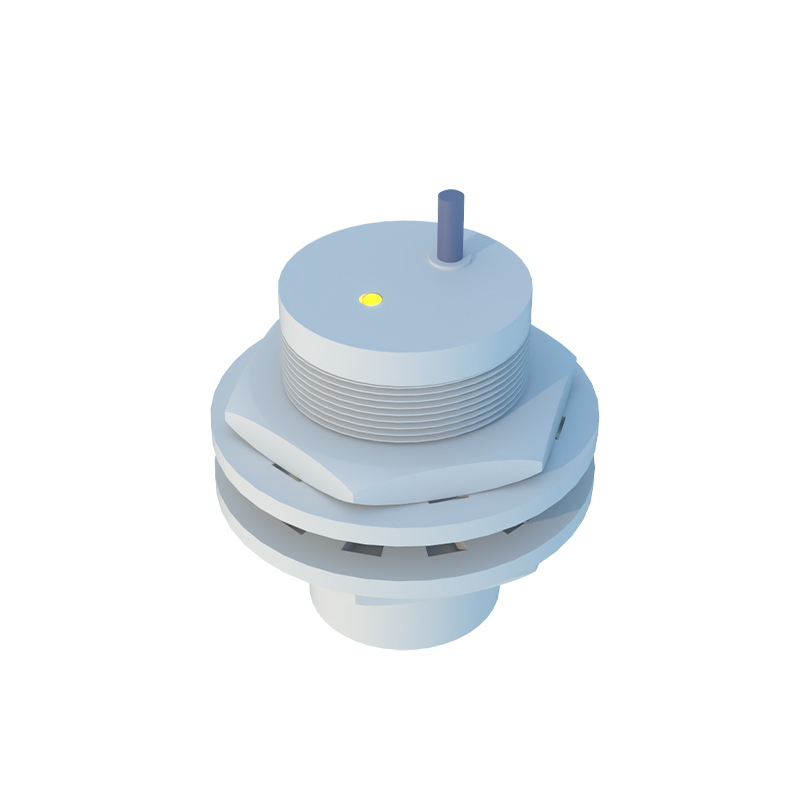
Proximity sensors are devices that detect the presence of nearby objects through the use of electromagnetic fields, light, or sound. The most common type in industrial settings is the inductive proximity sensor. These sensors generate an oscillating electromagnetic field from a coil in their sensing face. When a metallic object enters this field, it induces eddy currents within the target, which in turn dampens the oscillation of the sensor's internal circuit. This change is detected and triggers a solid-state output switch. Inductive sensors are exceptionally robust, immune to environmental factors like dust, oil, and moisture, and offer very fast response times. They are ideal for detecting metal objects, such as machine parts, conveyor components, or robotic end-effectors. Another variant is the capacitive proximity sensor, which can detect both metallic and non-metallic materials (like plastics, wood, or liquids) by sensing changes in capacitance. Their sensing range is typically shorter than inductive models.
Exploring Photoelectric Switches
Photoelectric switches, or photoeyes, operate on the principle of light transmission and reception. They consist of a light source (usually an LED emitting visible red, infrared, or laser light) and a receiver. These switches are categorized by their sensing modes. The through-beam (or opposed) mode uses separate, opposing emitter and receiver units. An object is detected when it breaks the light beam. This mode offers the longest sensing range and highest reliability. The retro-reflective mode employs a single unit that houses both emitter and receiver, using a reflector to bounce the light beam back. Detection occurs when the beam is interrupted. The diffuse (or proximity) mode also uses a single unit, but it detects an object by the reflection of its own light beam off the target's surface. Diffuse sensors are simpler to install but have a shorter range and can be influenced by the target's color and reflectivity.
Key Performance Parameters and Selection
Selecting the correct sensor requires careful analysis of several parameters. Sensing range is the maximum distance at which the sensor can reliably detect a standard target. For proximity sensors, this is heavily influenced by target material and size. Repeatability refers to the sensor's ability to consistently detect an object at the same point. Response time is critical for high-speed applications, indicating how quickly the sensor can signal a detection event. Environmental factors are paramount: proximity sensors excel in dirty, wet, or oily conditions, while photoelectric sensors can be affected by airborne contaminants, ambient light, or heavy fog. The output type (NPN/PNP, NO/NC) must be compatible with the control system's input card. Finally, physical characteristics like housing material (often nickel-plated brass or stainless steel for durability), size, and connection type (pre-wired or quick-disconnect) must suit the mechanical installation.
Typical Industrial Applications
Proximity sensors are the workhorses of metal detection. Common applications include counting metal parts on a conveyor, verifying the position of a cylinder rod, detecting the end-of-travel of a machine slide, or ensuring a metal door is closed in a safety interlock system. Photoelectric switches, with their longer range and ability to sense non-metallics, are used for diverse tasks. Through-beam sensors are perfect for object counting on high-speed bottling lines, detecting broken wires, or ensuring proper package spacing. Retro-reflective sensors are often used for pallet detection in warehouses or height detection. Diffuse sensors are commonly employed for detecting transparent bottles, monitoring fill levels in containers, or as non-contact limit switches for delicate materials.
Installation and Troubleshooting Best Practices
Proper installation is crucial for reliable operation. For proximity sensors, ensure the target material and size meet the sensor's specifications. Maintain the recommended sensing distance and be aware of the "blind zone" immediately in front of the sensing face. Avoid mounting inductive sensors directly adjacent to each other to prevent mutual interference. For photoelectric