Introduction to Photoelectric Sensing Technology
Photoelectric sensors are ubiquitous in modern industrial automation, serving as the eyes of countless systems. These devices operate on a simple yet powerful principle: they emit a beam of light and detect changes in the received light signal to sense the presence, absence, or distance of an object. The core components typically include an emitter (light source), a receiver (photodetector), and associated electronic circuitry for signal processing. The choice of light source—be it LED, laser diode, or infrared—along with the specific detection method, defines the sensor's characteristics and optimal application. Their non-contact nature, high speed, long sensing range, and reliability in harsh environments make them superior to many mechanical alternatives. From packaging lines and material handling to safety systems and consumer electronics, photoelectric sensors provide critical data for control and monitoring, forming an indispensable link in the automation chain.
Through-Beam Sensors: Maximum Range and Reliability
Through-beam sensors, also known as opposed-mode sensors, represent the most robust configuration. They consist of two separate units: a transmitter and a receiver, positioned directly opposite each other. The transmitter continuously emits a light beam, which is received by the corresponding receiver unit. An object is detected when it physically interrupts this beam. This method offers the longest possible sensing ranges, often exceeding 100 meters for some high-power models, and provides extremely high reliability. Because the receiver detects the direct light from the transmitter, it is largely immune to factors like object color, reflectivity, or surface finish. It is also less susceptible to optical interference from ambient light or dust. The primary drawback is the need for precise alignment of two separate components and wiring at both ends, which can increase installation complexity and cost. These sensors are ideal for applications requiring precise detection over long distances or in demanding conditions, such as detecting large objects on conveyors, in warehouse door systems, or for safety curtains.
Retroreflective Sensors: Simplified Alignment

Retroreflective sensors combine the emitter and receiver into a single housing, simplifying installation. They work by emitting a light beam towards a specially designed reflector, often a corner-cube or tape reflector, which returns the light directly back to the receiver. Detection occurs when an object breaks the beam path between the sensor and the reflector. This design offers a good compromise between sensing range (typically up to 10-15 meters) and installation ease, as only one device needs to be wired and aligned with a passive reflector. However, they can be fooled by highly reflective objects, such as shiny metal or mirrors, which might bounce enough light back to the receiver even when present. To combat this, many modern retroreflective sensors use polarization filters. The emitter's light is polarized, and the receiver has a filter that only accepts light with the opposite polarization. The reflector is designed to twist the polarization, allowing its return signal to pass. A shiny object, however, does not twist the polarization, preventing a false signal. These sensors are widely used in material handling, packaging, and automated guided vehicle (AGV) systems.
Diffuse Reflective Sensors: Single Unit Proximity Sensing
Diffuse reflective sensors, or proximity-mode sensors, are the most compact and easiest to install, as they require only a single unit. Both the light emitter and receiver are housed together. The sensor detects an object when light emitted from the LED reflects off the target's surface and scatters back to the receiver. This makes them perfect for close-range detection and applications where mounting a reflector or a separate receiver is impractical. Their performance is heavily dependent on the target's size, color, and surface texture. Light-colored, matte-finished objects reflect more light and can be detected at greater distances than dark, shiny, or absorbent objects. This characteristic can be a limitation but also a feature, allowing for tasks like color detection or label sensing. Sensing ranges are generally shorter than other types, typically from a few millimeters to about 1-2 meters. Advanced versions with background suppression (BGS) or background evaluation (BGE) use triangulation principles to detect objects only within a defined, fixed distance zone, ignoring more distant surfaces. Diffuse sensors are common in robotics, assembly stations, and counting applications.
Specialized Classifications: Distance Measuring and Fiber Optic
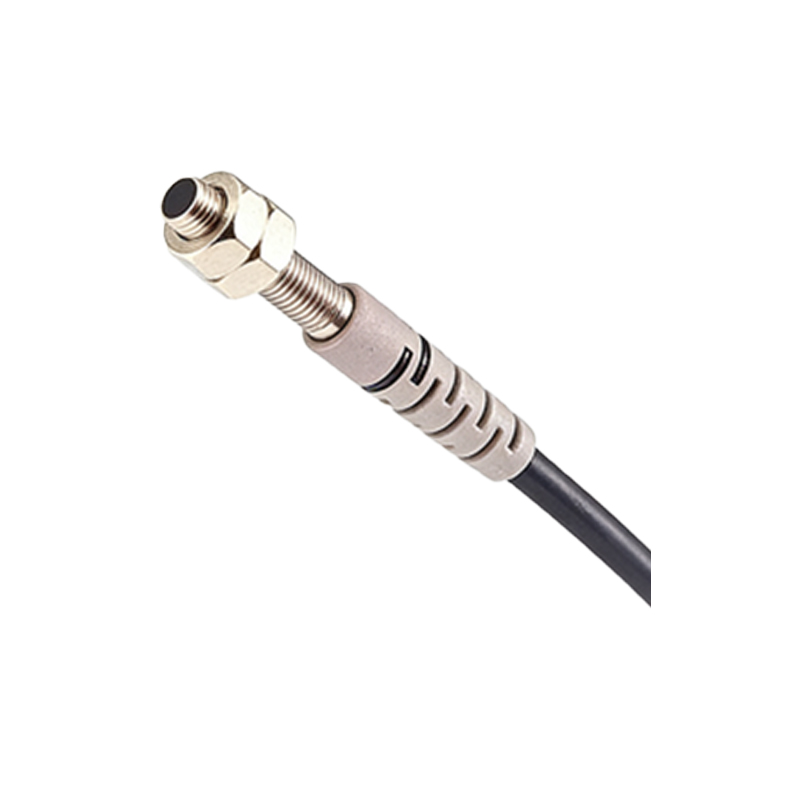
Beyond the basic operating modes, photoelectric sensors can be further classified by specialized technology. Distance-measuring sensors, such as those using time-of-flight (ToF) or triangulation principles, do not merely detect presence but provide an analog output proportional to the measured distance. ToF sensors calculate distance by measuring the time delay between the emission and reception of a light pulse. They are used for precise positioning, level control, and dimension checking. Fiber optic sensors represent another critical category. Here, the sensing element is a flexible fiber optic cable that guides light to and from a remote location. The actual emitter and receiver electronics are housed in a separate amplifier unit. This allows sensing in extremely confined, hot, or hazardous spaces where a standard sensor would not fit or survive. Fiber optics are immune to electromagnetic interference (EMI) and are chemically inert. They are classified further into through-beam, diffuse, and retroreflective styles based on the tip configuration. These sensors are essential in semiconductor manufacturing, food processing, and high-temperature environments.
Selecting the Right Sensor for the Application
Choosing the appropriate photoelectric sensor requires a systematic evaluation of the application parameters. First, define the sensing mode: is long-range, unwavering reliability needed (through-beam), or is ease of installation key (retroreflective or diffuse)? Next, consider the target properties: its size, color, material, and surface finish will dramatically affect the performance of diffuse and, to a lesser extent, retroreflective sensors. The required sensing distance and the operating environment—including ambient light, temperature, dust, moisture, and vibration—must be accounted for. The output type (discrete NPN/PNP, analog, IO-Link) and electrical requirements (voltage, current) must match the control system. Finally, physical constraints like available mounting space may dictate the use of miniature sensors or fiber optics. By carefully analyzing these factors against the strengths and limitations of each sensor classification, engineers can specify the optimal device to ensure robust, maintenance-free operation in any automation scenario.