Introduction to Two-Wire Photoelectric Sensors
Two-wire photoelectric sensors are widely used in industrial automation for detecting objects, measuring distances, and monitoring processes. Unlike three-wire or four-wire sensors, these devices simplify wiring by combining power supply and signal output into just two wires. This design reduces installation complexity and cost, making them ideal for applications where space and budget are constrained. Typically, they operate on DC voltage ranges such as 10-30V DC and are compatible with programmable logic controllers (PLCs) and other control systems. Their compact size and robust construction allow reliable performance in harsh environments, including areas with dust, moisture, or vibration.
Basic Operating Principle
The core function of a two-wire photoelectric sensor relies on light emission and reception. It consists of a transmitter that emits a light beam—often infrared, visible red, or laser—and a receiver that detects changes in light intensity. When an object interrupts or reflects the beam, the receiver senses this alteration and triggers an output signal. In two-wire models, the sensor is connected in series with the load, such as a PLC input module. The sensor draws a small quiescent current when idle and increases current flow when activated, signaling a detection event. This current modulation serves as the output, eliminating the need for a separate signal wire.
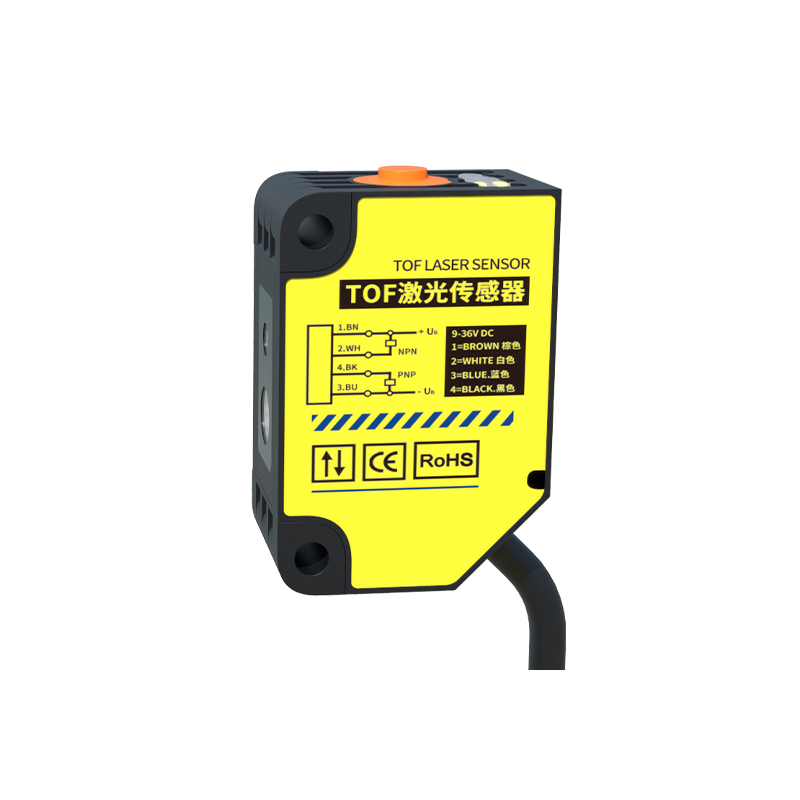
Internal Circuit Diagram and Components
Internally, a two-wire photoelectric sensor includes several key components: a light-emitting diode (LED) or laser diode for transmission, a phototransistor or photodiode for reception, an amplifier circuit, and a switching element like a transistor or solid-state relay. The circuit diagram typically shows the sensor connected to a power source, with the output integrated into the same loop. When the receiver detects light changes, the amplifier processes the signal to drive the switch, altering the current flow. This design ensures low power consumption and protects against overloads or short circuits. Diagrams often highlight the series connection, emphasizing how the sensor acts as a variable resistor that controls current based on detection status.
Wiring Configuration and Installation
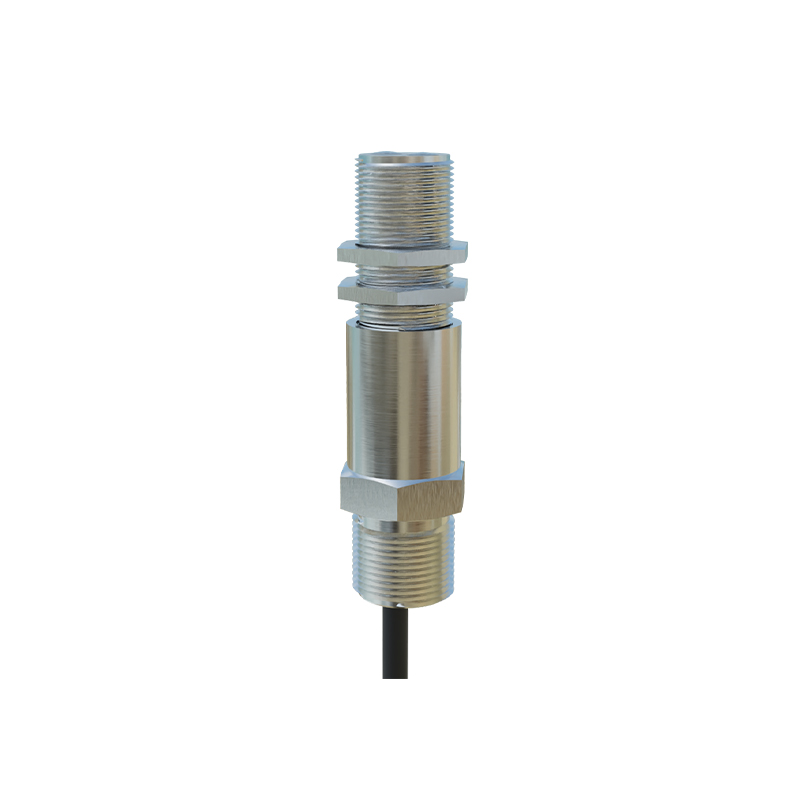
Wiring a two-wire photoelectric sensor is straightforward: one wire connects to the positive DC supply, and the other to the load, which then links to the negative supply. This series loop means the sensor must be rated for the load's current requirements, typically up to 200mA. Proper installation involves ensuring correct polarity, as reverse connection can damage the sensor. Shielding and grounding may be necessary in electrically noisy environments to prevent false triggers. Users should refer to manufacturer datasheets for voltage and current specifications, as exceeding limits can lead to malfunction. Diagrams illustrating wiring setups help visualize connections to PLCs, relays, or indicator lights.
Types and Detection Modes
Two-wire photoelectric sensors come in various types based on detection methods. Through-beam sensors have separate transmitter and receiver units, offering long-range and high-accuracy detection when an object breaks the beam. Retro-reflective sensors use a reflector to bounce light back to the receiver, suitable for medium distances. Diffuse sensors rely on object reflection, with the transmitter and receiver in one housing, ideal for close-range applications. Each mode has unique advantages; for example, through-beam is less affected by object color or surface, while diffuse sensors simplify alignment. Diagrams for each type show light paths and typical setups in industrial scenarios.
Advantages and Limitations
The primary advantage of two-wire photoelectric sensors is simplified installation, reducing wiring time and material costs. They also minimize points of failure and are easier to maintain. However, limitations include voltage drop issues due to series connection, which can affect performance in low-voltage setups. The quiescent current may cause slight power drain, and they may not support high-current loads without additional components. Compared to three-wire sensors, they offer slower response times but are often sufficient for general-purpose applications. Understanding these trade-offs helps in selecting the right sensor for specific tasks, such as packaging, material handling, or safety systems.
Applications in Industry
In industrial settings, two-wire photoelectric sensors are employed for object detection on conveyor belts, part counting in assembly lines, and position sensing in machinery. They monitor fill levels in tanks, detect labels in printing, and ensure safety by sensing door closures or presence of operators. Their durability makes them suitable for automotive, food processing, and pharmaceutical industries. Case studies show how these sensors improve efficiency by automating processes and reducing downtime. Diagrams often depict real-world installations, highlighting sensor placement and integration with control systems for optimal performance.
Maintenance and Troubleshooting Tips
Regular maintenance ensures long-term reliability of two-wire photoelectric sensors. Clean lenses periodically to prevent dust or debris from blocking light beams. Check wiring for loose connections or corrosion, and verify voltage levels to avoid under- or over-powering. Common issues include false triggers from ambient light or electrical interference, which can be mitigated by using shielded cables or adjusting sensitivity settings. If the sensor fails, use a multimeter to measure current flow: low current may indicate a fault in the sensor or load. Refer to troubleshooting guides and diagrams to diagnose problems like misalignment or component wear.
Future Trends and Innovations
Advancements in two-wire photoelectric sensor technology focus on miniaturization, enhanced sensitivity, and smart features. New models incorporate IoT connectivity for remote monitoring and diagnostics, allowing predictive maintenance. Energy-efficient designs reduce quiescent current further, extending battery life in wireless applications. Innovations in light sources, such as blue LED or laser options, improve detection of small or transparent objects. Industry 4.0 integration enables sensors to communicate data directly to cloud systems, optimizing automation processes. Diagrams of next-generation sensors showcase embedded microprocessors and advanced circuitry for improved performance.