Introduction to Core Components in Sensing and Power
In the realm of electrical engineering and industrial automation, terms like "proximity switch," "inductive sensor," and "inductor" are frequently encountered. While they all fundamentally rely on the principles of electromagnetism, their functions, constructions, and applications are distinctly different. Confusion often arises, particularly between proximity switches and inductive sensors, and sometimes with the basic inductor component itself. This article aims to demystify these three key elements, providing a clear, technical distinction for engineers and technicians working in design, maintenance, and integration.

Defining the Basic Inductor: A Passive Energy Storage Device
An inductor, at its core, is a passive two-terminal electrical component that stores energy in a magnetic field when electric current flows through it. It typically consists of a coil of insulated wire wound around a magnetic core (like iron or ferrite) or an air core. Its primary property is inductance, measured in Henries (H), which opposes changes in current. Inductors do not "sense" or "switch" in an active control sense. Their key roles are in energy storage, filtering (in combination with capacitors to form LC circuits), impedance matching, and suppressing electromagnetic interference (EMI). You will find inductors as fundamental building blocks on PCBs in power supplies, radio frequency circuits, and motor drives. They are components, not complete functional devices with logic or output states.
Understanding Inductive Proximity Sensors: The Active Sensing Element
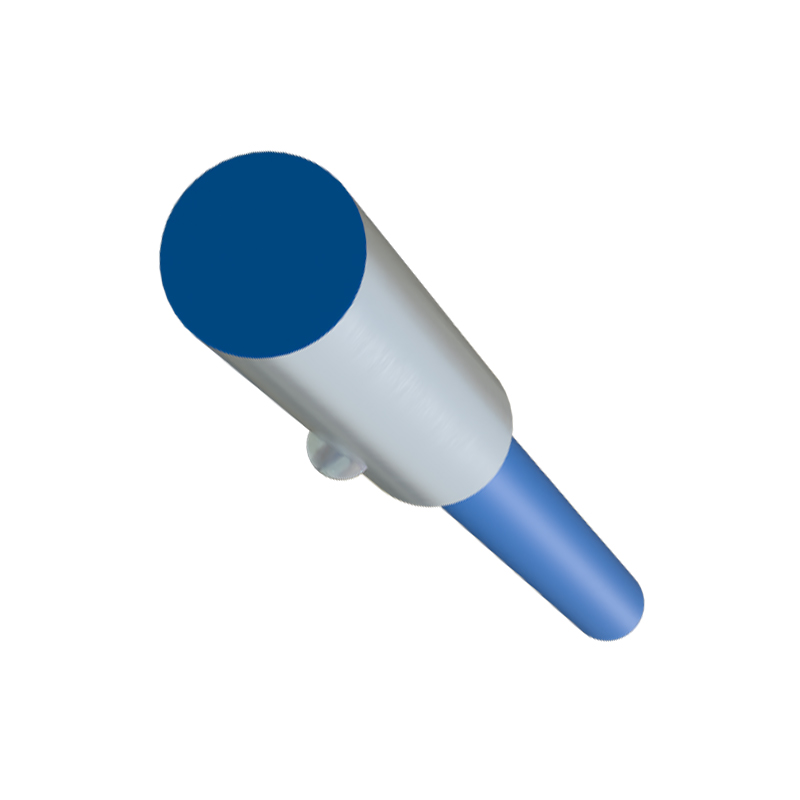
An inductive proximity sensor is an active, self-contained electronic device designed to detect the presence or absence of metallic objects without physical contact. It operates on the principle of electromagnetic induction. The sensor contains four main parts: a coil (an inductor) wound around a ferrite core, an oscillator, a detection circuit, and an output switching circuit. The oscillator generates a high-frequency electromagnetic field at the sensing face. When a metallic object enters this field, eddy currents are induced on the object's surface. This causes a change in the oscillation amplitude, which is detected by the subsequent circuit. This detection triggers a change in the sensor's output state (e.g., from OFF to ON). Inductive sensors are characterized by their sensing range, switching frequency, and output type (PNP/NPN, NO/NC). They are ubiquitous in factory automation for tasks like part detection, position verification, and counting.
Clarifying the Term "Proximity Switch"
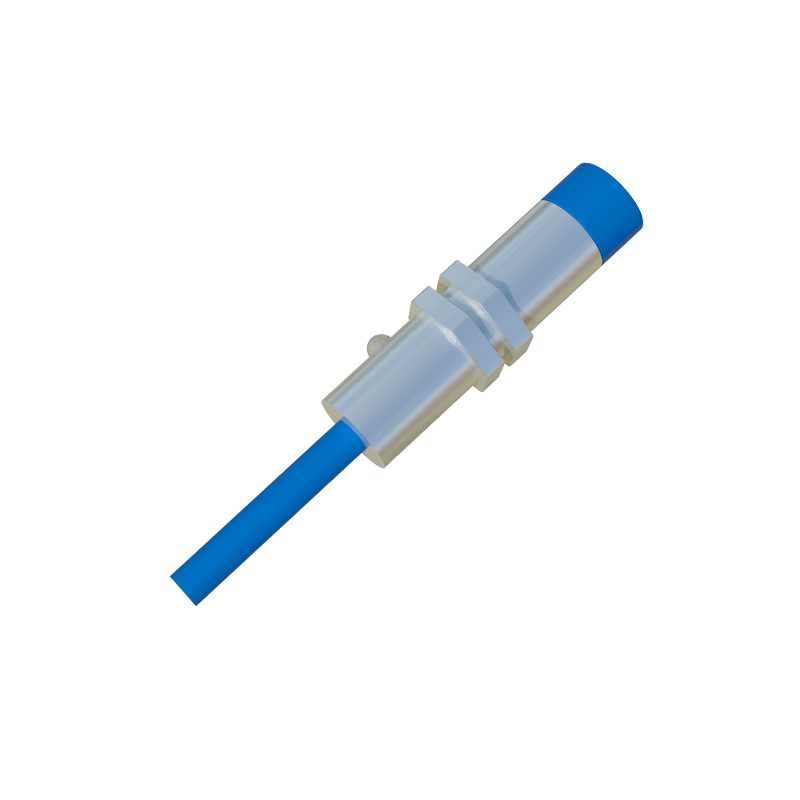
"Proximity switch" is often used as a generic or umbrella term for non-contact sensing devices. In many contexts, particularly in North America, "proximity switch" is synonymous with "inductive proximity sensor" when referring to metal detection. However, technically, a proximity switch can employ different technologies. Besides inductive, there are capacitive proximity switches (for non-metallic materials), ultrasonic, photoelectric, and Hall effect proximity switches. Therefore, while an inductive sensor is a type of proximity switch, not all proximity switches are inductive. The key takeaway is that a "proximity switch" refers to the complete functional device that provides a switching output based on the presence of a target, with the sensing technology specified as a prefix (inductive, capacitive, etc.).
Key Functional and Structural Differences
The differences can be summarized by examining their purpose and complexity. An inductor is a passive, simple component with no intelligence; its function is purely electromagnetic reaction within a circuit. An inductive proximity sensor is an active system that integrates an inductor (as its sensing coil) with sophisticated electronics to interpret a physical condition and produce a control signal. A proximity switch is the broader category of ready-to-use sensors, with inductive being one variant. Structurally, an inductor is just a coil, possibly with a core. An inductive sensor houses that coil inside a robust casing (often metal or plastic) with integrated electronics, a sensing face, and connection terminals or cables.
Application Scenarios: Where Each One Belongs
Choosing the correct device is critical. Use a basic inductor when designing a power filter for a variable frequency drive, creating a tuned circuit for a communication device, or building a boost converter. Use an inductive proximity sensor specifically when you need to detect ferrous or non-ferrous metal objects in an industrial setting—for example, confirming a metal part is in place on an assembly line, monitoring the position of a machine slide, or implementing end-of-travel limits on automated machinery. Specify a capacitive proximity switch for detecting liquids, plastics, or wood. The application dictates the technology under the "