Introduction to Non-Metal Detection Challenges
For decades, industrial automation has heavily relied on proximity sensors for object detection, positioning, and counting. Traditionally, inductive proximity sensors have been the dominant choice due to their robustness and reliability in detecting metallic objects. However, a significant limitation arises when the application requires sensing non-metallic materials such as plastics, glass, wood, liquids, or even granular substances. Inductive sensors, which operate on the principle of electromagnetic induction, are largely ineffective for these materials. This gap created a pressing need for a sensing technology capable of reliably detecting a vast array of non-conductive targets, leading to the widespread adoption of capacitive proximity sensors in modern facilities.
Operating Principle of Capacitive Proximity Sensors
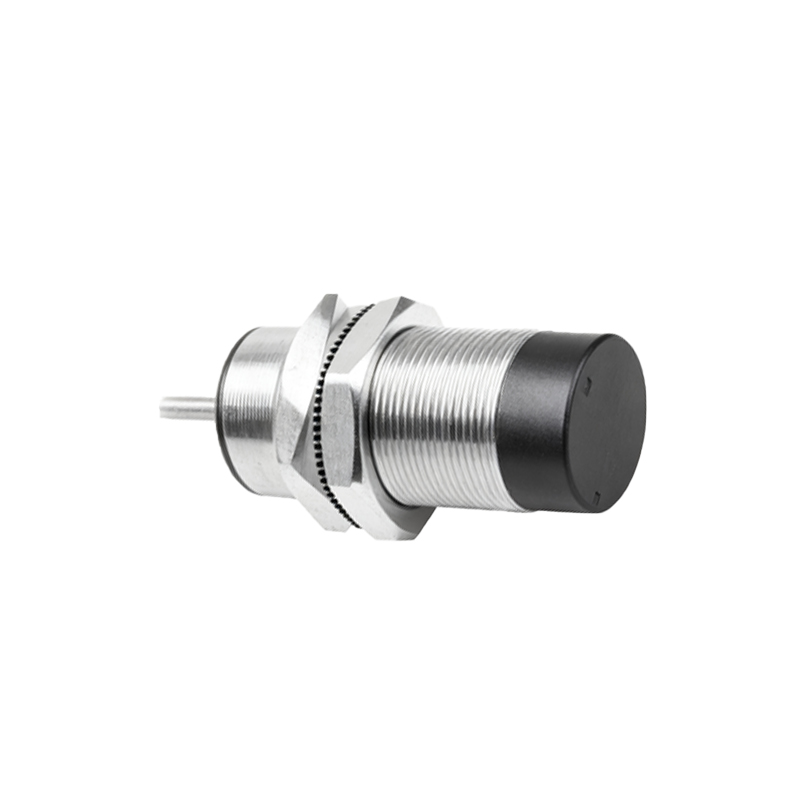
Unlike their inductive counterparts, capacitive proximity sensors function by generating an electrostatic field. The sensor's active face comprises two concentric metal electrodes acting as an open capacitor. An internal oscillator generates an oscillating electrostatic field from these electrodes. When any material enters this detection field, it alters the dielectric constant and thus the capacitance of the system. The sensor's circuitry monitors this change in capacitance or the oscillation amplitude. Once the change surpasses a predefined threshold, the sensor triggers a switching signal. This fundamental principle allows it to detect any object that alters the electrostatic field, regardless of its conductivity, making it ideal for non-metals.
Key Advantages for Non-Metal Applications
The primary advantage of capacitive sensors is their material versatility. They can detect virtually any solid or liquid, including wood, paper, cardboard, plastic films, glass bottles, ceramic tiles, and various chemicals. This makes them indispensable in packaging, food and beverage, pharmaceutical, and woodworking industries. Another significant benefit is their ability to sense through certain non-metallic barriers. For instance, a capacitive sensor can detect the level of a liquid inside a plastic or glass tank without direct contact with the liquid itself, enabling non-invasive monitoring. Furthermore, they offer adjustable sensitivity, allowing engineers to fine-tune the detection range and ignore interfering background materials like the conveyor belt.
Common Industrial Use Cases and Examples
In practice, capacitive sensors solve numerous detection challenges. A classic example is liquid level control in transparent or opaque non-metallic containers. Sensors mounted on the exterior of polypropylene tanks can reliably detect the presence or absence of fluids, preventing overfills or dry runs. In the packaging industry, they are used to verify the presence of plastic caps on bottles or to count cardboard boxes on a conveyor, even if the boxes are empty. Another critical application is in woodworking machinery, where sensors detect the presence of wooden planks for precise cutting or routing operations. They are also employed to monitor the fill level of plastic granules in hoppers or to detect broken threads in textile machines.
Critical Installation and Calibration Considerations
Successful implementation requires careful attention to installation and calibration. Because capacitive sensors react to any change in dielectric constant, they can be influenced by environmental factors such as humidity, dust, or temperature fluctuations. It is crucial to shield the sensor from unintended background influences. This often involves using sensors with built-in shielding (which focuses the field forward) and adjusting the sensitivity potentiometer after installation. The sensor should be calibrated with the actual target material present and under normal operating conditions. Ensuring a stable mounting position and maintaining a consistent distance from the target are vital for reliable, long-term operation without false triggers.
Comparison with Other Sensing Technologies
When selecting a sensor for non-metal detection, engineers often evaluate capacitive technology against alternatives like ultrasonic and optical sensors. Ultrasonic sensors use sound waves and are excellent for long-range detection and precise distance measurement, but they can be affected by temperature gradients and soft materials that absorb sound. Optical sensors (photoelectric) are fast and accurate but struggle with transparent objects (like clear glass) or in environments with heavy dust, steam, or dirt that can obscure the light beam. Capacitive sensors fill a unique niche: they are excellent for short to medium-range detection of solid and liquid non-metals, even if they are transparent, and they perform reliably in mildly contaminated environments where optical sensors might fail.
Future Trends and Conclusion
The future of capacitive sensing is geared towards increased intelligence and integration. Modern sensors now feature IO-Link communication, enabling digital parameter setting, remote monitoring, and predictive maintenance data exchange. Miniaturization continues, allowing for installation in tighter spaces. Enhanced algorithms are improving immunity to environmental interference and enabling more precise material discrimination. In conclusion, capacitive proximity sensors are a fundamental and versatile tool in the industrial automation toolkit. By mastering their operating principle, advantages, and application nuances, engineers can effectively solve a wide spectrum