Fundamental Principles of Capacitive Sensing
At its core, a capacitive proximity sensor operates by generating an electrostatic field. This sensor typically consists of an active electrode, which functions as one plate of a capacitor, and a target object, which acts as the other plate. The surrounding environment, including air or other dielectric materials, serves as the insulating medium between these plates. When an alternating voltage is applied to the active electrode, an electric field emanates from it. The fundamental principle hinges on the ability to detect changes in capacitance—the ability of the system to store an electrical charge. This capacitance is not a fixed value; it is directly influenced by the presence, distance, and material properties of a target object entering the sensing field.
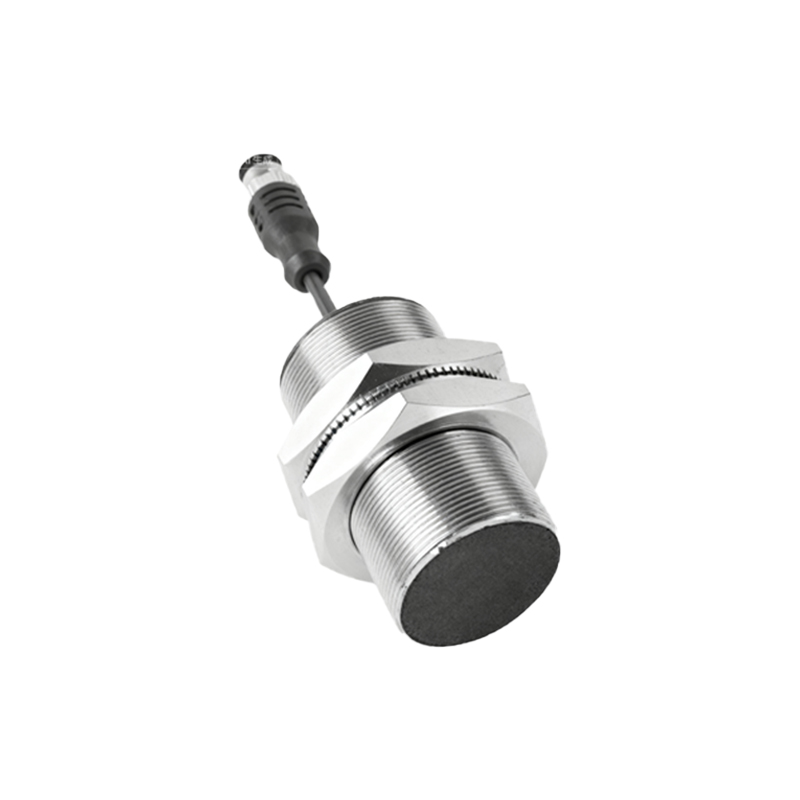
The Critical Role of Capacitance Change
The primary function of the capacitive element is to translate a physical event into a measurable electrical signal. In a resting state, the sensor has a baseline capacitance. As a target object approaches the active electrode, it disturbs the electrostatic field. This disturbance alters the dielectric constant of the space between the electrodes. If the target is conductive, it effectively becomes the second plate, drawing the field lines and significantly increasing the capacitance. For non-conductive materials, the change depends on the material's dielectric constant relative to air; materials with a higher constant (like water or plastics) also increase the capacitance. The sensor's internal oscillator circuit is precisely tuned to detect this specific change in capacitance.
Circuitry and Signal Processing
The detected change in capacitance is minute and requires sophisticated electronic circuitry for processing. The sensor incorporates an oscillator whose frequency or amplitude is modulated by the capacitance of the sensing face. When the capacitance increases due to a proximate target, it affects the oscillator's characteristics. This change is then fed into a trigger circuit or comparator. Once the change surpasses a pre-set threshold—the sensitivity level—the circuit triggers a switch in the output state. This output is typically a solid-state switch (PNP/NPN) or a relay contact, signaling the presence of the object to a programmable logic controller (PLC) or other control system.
Material Influence on Dielectric Properties
A key advantage, and sometimes a consideration, of capacitive sensors is their sensitivity to a wide range of materials, not just metals. This is entirely governed by the dielectric properties. The capacitance change is proportional to the dielectric constant (εr) of the target material. For instance, air has an εr of approximately 1, water about 80, and common plastics range from 2 to 5. Therefore, a sensor can reliably detect the level of a liquid, the presence of a glue bead, or the fill level of powdered material inside a non-metallic container by calibrating to the specific dielectric constant of the target substance.
Overcoming Environmental Challenges
The sensitivity that allows detection of non-metals also makes standard capacitive sensors susceptible to unwanted influences, such as moisture, dust, or contamination on the sensor face. These environmental factors can alter the local dielectric constant and cause false triggering. Modern sensors address this through several design features. Shielding of the electrostatic field is paramount; a shielded (flush-mountable) sensor confines the field primarily to the front, reducing sensitivity to lateral buildup. Additionally, automatic compensation circuits can adjust the baseline capacitance over time, and robust housing with appropriate Ingress Protection (IP) ratings prevents physical intrusion of contaminants.
Applications Leveraging Capacitive Function
The unique role of capacitance enables diverse applications beyond simple metal detection. In packaging, they verify the presence of plastic bottles or foil lids. In the food industry, they control levels of liquids, grains, or powders through container walls. They are indispensable in assembly lines for detecting non-ferrous materials like glass, wood, or composite panels. Touch-sensitive interfaces on industrial control panels are a direct application, where a finger's touch changes the local capacitance. Furthermore, ultra-precise capacitive sensors are used for position measurement and thickness gauging, where minute distance changes result in proportional capacitance variations.
Selection and Configuration Parameters
Correctly leveraging the capacitive function requires careful sensor selection. Key parameters include the nominal sensing distance, which is calibrated for a standard target (usually steel). For other materials, a reduction factor based on the material's dielectric constant must be applied. The adjustable sensitivity potentiometer is the primary tool for tuning the sensor's response to the specific target while ignoring the container wall or background material. The choice between shielded and unshielded types determines the field shape and mounting requirements. Understanding the role of capacitance guides engineers in selecting the correct sensor to ensure reliable operation in complex industrial environments.
SEO