Introduction to High-Speed Photoelectric Sensing
In modern industrial automation, the efficiency of conveyor line operations is paramount. High-speed photoelectric sensors serve as the critical eyes of these systems, enabling rapid detection, counting, positioning, and quality control of items in motion. Unlike standard sensors, these devices are engineered to respond in microseconds, reliably capturing objects traveling at velocities exceeding several meters per second. Their core function is to convert light signals into electrical outputs with minimal latency, ensuring seamless integration with programmable logic controllers (PLCs) and high-speed machinery. The demand for such precision has grown with the advent of smart factories and just-in-time manufacturing, where every millisecond of processing time impacts overall throughput and profitability.
Core Operating Principles and Technologies
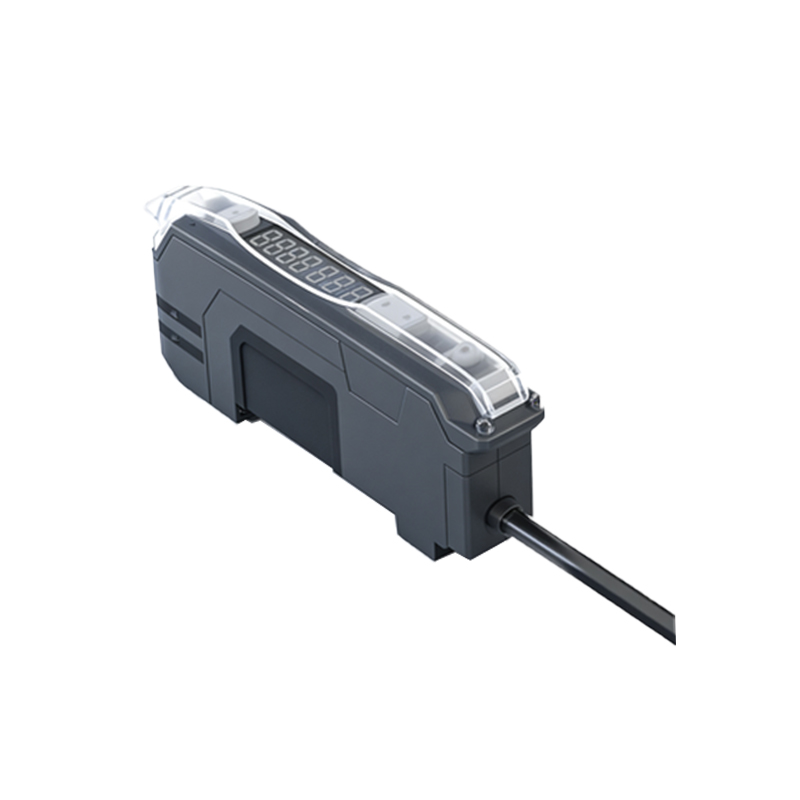
High-speed photoelectric sensors operate primarily on three foundational principles: through-beam, retro-reflective, and diffuse reflection. Through-beam sensors, featuring separate emitter and receiver units, offer the longest sensing ranges and highest immunity to environmental interference, making them ideal for detecting small or transparent objects on fast conveyors. Retro-reflective types use a combined emitter-receiver and a reflector, balancing performance with easier installation. Diffuse reflection sensors detect light reflected directly from the target object, suitable for varied surface colors and textures at close range. Advanced models incorporate modulated infrared or laser light sources to combat ambient light interference, alongside digital signal processing (DSP) chips that filter noise and enhance response times. Key specifications defining their speed include response time (often under 50 µs), switching frequency (exceeding 10 kHz), and light-on/ dark-on programmability.
Critical Selection Criteria for Conveyor Applications
Selecting the appropriate high-speed photoelectric sensor requires a meticulous analysis of application parameters. First, the object characteristics—size, material, color, and transparency—dictate the necessary sensing mode and light source. For instance, detecting clear glass bottles may necessitate a polarized retro-reflective laser sensor. Second, the required sensing distance and conveyor speed determine the sensor's range and response capability. Environmental factors such as dust, moisture, vibration, and temperature extremes mandate enclosures with high IP ratings (e.g., IP67) and robust housing materials. Electrical compatibility, including output type (PNP/NPN) and voltage range (10-30 VDC), must align with the control system. Lastly, features like teach-in functionality for automatic threshold setting, IO-Link communication for diagnostics, and built-in timers can significantly simplify setup and maintenance.
Integration and Optimization on High-Speed Lines
Successful integration extends beyond mere mounting. Sensor positioning is crucial; angles and distances must be calibrated to avoid false triggers from conveyor vibrations or adjacent objects. Wiring should follow EMI/RFI guidelines, using shielded cables in conduits away from power lines to prevent signal degradation. Synchronizing sensor output with the conveyor's encoder or PLC ensures precise timing for downstream actions like sorting or robotic picking. Regular maintenance, including lens cleaning and alignment checks, preserves optimal performance. Furthermore, leveraging smart sensors with predictive diagnostics can alert operators to potential failures, such as lens contamination or gradual output decay, minimizing unplanned downtime.
Addressing Common Challenges and Solutions
High-speed environments present unique challenges. Background interference from shiny surfaces or ambient light can cause erratic readings; solutions involve using sensors with background suppression or fixed-field technology to define a precise sensing window. For rapidly changing object colors, sensors with automatic sensitivity adjustment or true color detection capabilities are effective. In washdown areas, stainless steel housings and sealed optics resist corrosion. When detecting extremely small or fast-moving items, a fiber optic sensor with a high-speed amplifier may be the optimal choice due to its compact sensing head and rapid response. Consistent performance also depends on stable power supplies and protection against voltage spikes.
Future Trends and Innovations
The evolution of high-speed photoelectric sensing is driven by Industry 4.0. Emerging trends include the integration of artificial intelligence for adaptive learning and anomaly detection, enabling sensors to self-optimize based on line conditions. Multi-pixel array sensors can now provide simple contour or height profiling alongside presence detection. Enhanced connectivity via IO-Link and Ethernet-APL allows for seamless data exchange with cloud platforms, facilitating predictive maintenance and overall equipment effectiveness (OEE) analytics. Furthermore, miniaturization continues, allowing for installation in space-constrained locations without sacrificing speed or durability. These advancements promise not only faster detection but also greater intelligence, transforming sensors from simple switches into valuable data sources for the connected factory.