Introduction to Non-Metallic Proximity Sensing
In the diverse landscape of industrial automation, proximity sensors are indispensable for detecting the presence or absence of objects without physical contact. While inductive sensors are renowned for detecting metals, a significant portion of manufacturing and processing involves non-metallic materials such as plastics, glass, wood, liquids, and granular substances. This necessity gave rise to non-metallic proximity sensors, primarily capacitive and optical types. These sensors operate on fundamentally different principles than their inductive counterparts, enabling reliable detection of a vast array of materials irrespective of their conductive properties. Their ability to sense through certain barriers and their sensitivity to material composition make them versatile tools in complex automation environments.
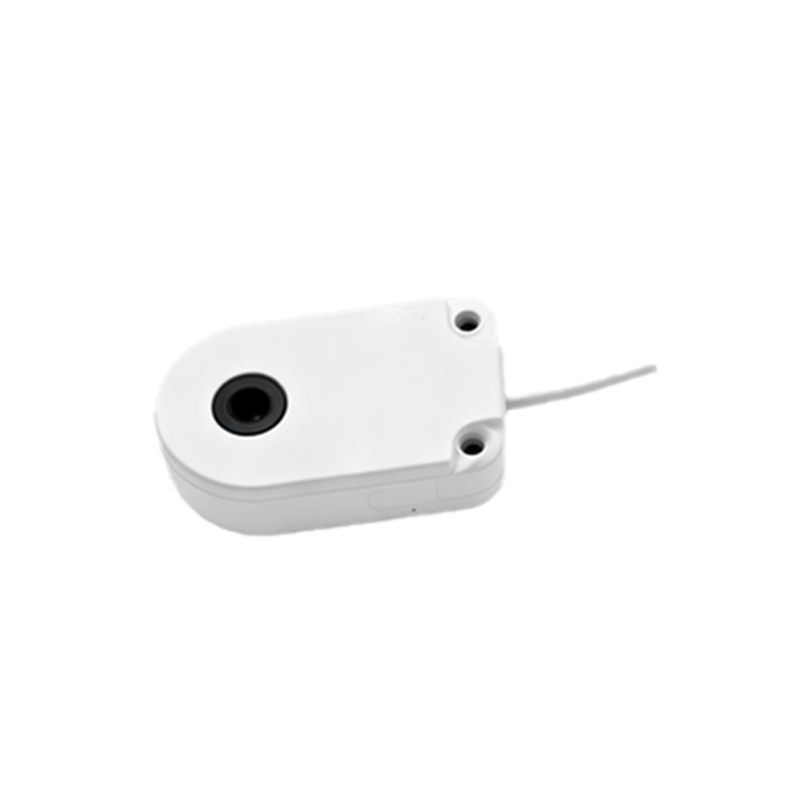
Core Operating Principles
The functionality of non-metallic proximity sensors hinges on two main technologies: capacitive and optical sensing. Capacitive sensors generate an electrostatic field. When any object, metallic or non-metallic, enters this field, it alters the capacitance of the system, triggering a detection signal. This allows them to sense materials like plastics, wood, paper, and even liquids by detecting changes in dielectric constant. Optical sensors, including through-beam, retro-reflective, and diffuse types, utilize a light source (often LED) and a receiver. They detect objects by measuring the interruption or reflection of a light beam. Diffuse sensors, a common subtype, detect the object by the light reflected directly from its surface, making them suitable for a wide range of colors and surfaces, though performance can vary with reflectivity and color.
Primary Types and Technologies
Several key sensor types dominate non-metallic detection. Capacitive proximity sensors are highly effective for level detection in tanks (liquids, powders), detecting filled packaging, and sensing materials behind thin non-metallic walls. Advanced models feature sensitivity adjustments to ignore container walls and focus on the target material. Optical proximity sensors offer further specialization. Through-beam sensors, with separate emitter and receiver units, provide long-range and highly reliable detection. Retro-reflective sensors use a reflector to bounce light back to the receiver, offering easier alignment for medium ranges. Diffuse (photoelectric) sensors are self-contained, measuring reflected light from the target itself, ideal for short-range applications and color differentiation when equipped with appropriate filters.
Key Advantages in Industrial Settings
The adoption of non-metallic proximity sensors brings distinct operational benefits. Their primary advantage is material versatility; a single sensor platform can often detect products across different production lines. They enable non-contact detection of fragile, soft, or sticky items that could be damaged by mechanical switches. Many capacitive models can sense through non-conductive barriers, allowing for sealed, hygienic installations in food and pharmaceutical industries. Optical sensors provide extremely fast response times, crucial for high-speed counting and sorting applications. Furthermore, their ability to detect minute objects and precise edges supports quality control and positioning tasks where inductive sensors would be ineffective.
Common Application Examples
These sensors are ubiquitous across sectors. In packaging, they verify the presence of bottles (plastic/glass), caps, labels, and filled levels within containers. On assembly lines, they detect plastic components, confirm adhesive tape presence, or count wooden items. Capacitive sensors are extensively used for liquid level control in chemical processing and beverage production, and for monitoring material levels in silos containing grains or powders. Optical sensors are critical in printing for paper jam detection, in woodworking for board counting, and in electronics manufacturing for verifying the placement of non-conductive parts. They also form the backbone of automated door safety systems and object detection in robotics.
Critical Selection and Installation Considerations
Selecting the right sensor requires careful analysis. For optical sensors, factors include target color, reflectivity, surface texture, and the required sensing distance. A glossy white plastic will reflect far more light than a matte black rubber, potentially necessitating a sensor with background suppression technology. Environmental conditions are paramount: ambient light, dust, fog, steam, and splashing liquids can interfere with optical beams, while temperature and humidity variations can affect capacitive readings. Mounting position, vibration, and the presence of multiple sensors in close proximity (to prevent crosstalk) must be planned. Regular maintenance, such as lens cleaning for optical sensors, is essential for sustained reliability.
Conclusion and Future Trends
Non-metallic proximity sensors are fundamental components that bridge the gap between the physical world of diverse materials and digital control systems. The ongoing evolution includes miniaturization, enhanced intelligence with IO-Link communication for parameter setting and diagnostics, and improved resistance to harsh industrial environments. The integration of laser technology in optical sensors allows for precise detection of tiny objects, while advanced capacitive sensors offer unparalleled stability for critical level monitoring. As industries continue to automate processes involving an