Introduction to Photoelectric Sensing Technology
Photoelectric sensors are indispensable components in modern industrial automation, safety systems, and consumer electronics. Operating on the principle of converting light signals into electrical signals, these devices detect the presence, absence, or distance of objects without physical contact. The core mechanism involves a light emitter, typically an LED or laser diode, and a receiver, such as a phototransistor or photodiode. When the emitted light beam is interrupted, reflected, or refracted by a target object, the change is detected by the receiver, triggering an output signal. This non-contact nature makes them ideal for applications requiring high reliability, speed, and hygiene, from manufacturing assembly lines to automated packaging and material handling. Their versatility stems from the various operating modes, each tailored to specific environmental conditions and detection challenges.
Through-Beam Sensors
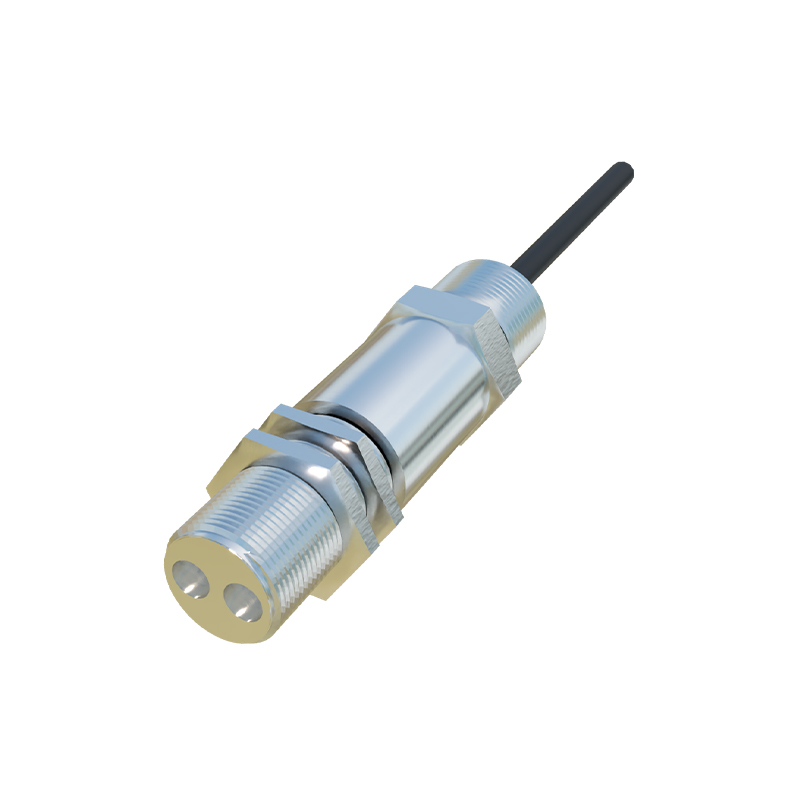
Through-beam sensors, also known as opposed-mode sensors, represent the most robust and long-range photoelectric sensing solution. This configuration consists of two separate units: a transmitter and a receiver, positioned directly opposite each other. The transmitter continuously emits a light beam, which is received by the counterpart unit. Detection occurs when an object physically interrupts this beam, causing the receiver's signal to drop. This method offers several key advantages. It provides the highest excess gain, meaning it can tolerate significant amounts of dirt, dust, or fog on the lenses without failing. It also achieves the longest sensing distances, often exceeding 100 meters in clear conditions. Common applications include detecting large objects on conveyors, monitoring door positions, and ensuring safety in perimeter guarding systems where reliability is paramount.
Retro-Reflective Sensors
Retro-reflective sensors offer a practical compromise between the long range of through-beam sensors and the simpler installation of other types. In this setup, both the emitter and receiver are housed in a single unit. The device emits a light beam towards a specially designed reflector, often a corner-cube reflector or tape, which returns the light directly back to the receiver. An object is detected when it blocks this reflected beam. A critical feature of these sensors is polarization filtering. This technology allows the sensor to distinguish between light reflected from the genuine retro-reflector and light reflected from shiny surfaces of the target object, preventing false triggers. These sensors are widely used in packaging machinery, vehicle detection, and palletizing systems where mounting space on one side of the application is limited.
Diffuse Reflective Sensors
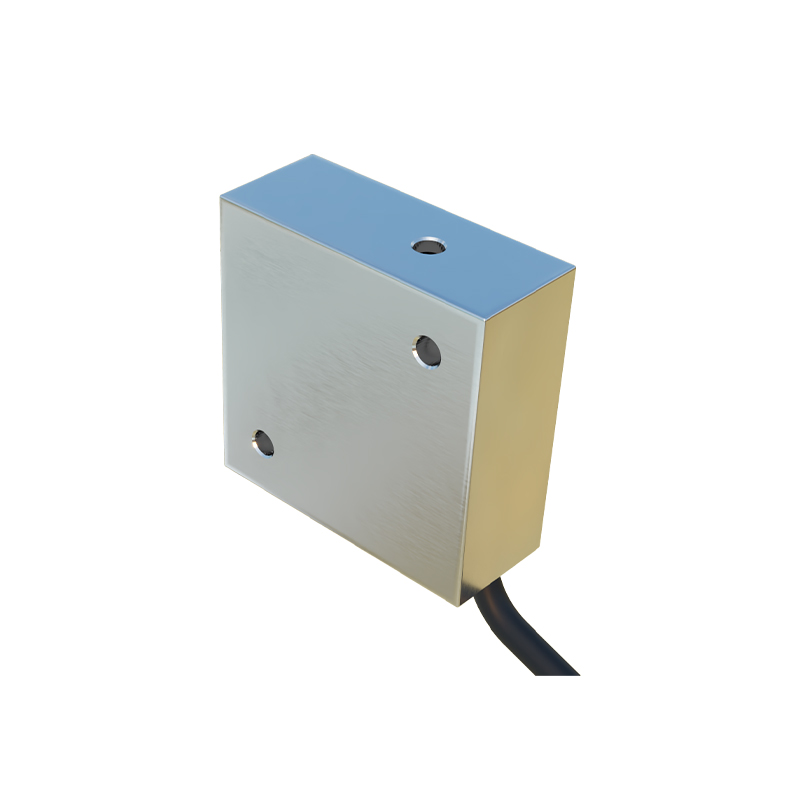
Diffuse reflective sensors, or proximity-mode sensors, are the most compact and easiest to install, as they require only a single unit. The emitter and receiver are positioned side-by-side within the same housing. The sensor detects an object when the emitted light beam strikes the target's surface and a sufficient amount of the diffusely reflected light is scattered back to the receiver. The effective sensing distance is heavily dependent on the target's size, color, and surface texture; light-colored, matte surfaces reflect better than dark, glossy ones. To enhance performance, many modern diffuse sensors incorporate background suppression or fixed-field background suppression technology. This allows them to ignore objects beyond a preset distance, ensuring only the intended target is detected. They are ideal for applications like detecting fill levels in transparent bottles, counting objects on a conveyor, or short-range presence detection.
Convergent Beam and Fixed-Focus Sensors
Convergent beam sensors, a specialized subset of diffuse sensors, are designed for highly precise detection at a specific point. They use a lens system to focus the emitted light to a very narrow, precise point at a predetermined distance. Only objects that break this exact focal point will reflect enough light back to the receiver to trigger detection. Objects before or after this focal point are effectively ignored. This makes them perfect for applications requiring exact positioning, such as detecting the edge of a material, verifying small component placement on a circuit board, or ensuring labels are applied at the correct height. Their precision eliminates problems caused by variations in background objects or color differences in the target.
Fiber-Optic Photoelectric Sensors
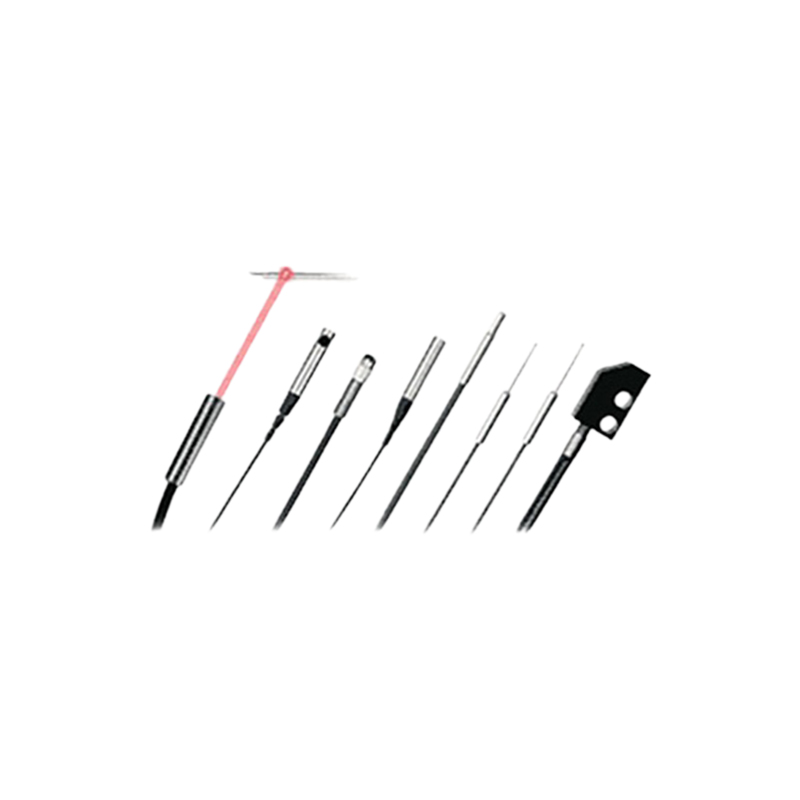
Fiber-optic photoelectric sensors separate the sensing head from the amplifier unit using flexible fiber-optic cables. The amplifier contains the light source and receiver electronics, while the small, passive sensing head is connected via the cables. This architecture provides exceptional benefits in challenging environments. The sensing head can be extremely tiny, allowing it to fit into confined spaces where a standard sensor cannot. It is also inherently immune to electrical noise, high temperatures, corrosive chemicals, and continuous vibration, as the sensitive electronics are remotely located. Different tip configurations (through-beam, diffuse, etc.) are available for the fiber heads. These sensors are essential in semiconductor manufacturing, food processing within washdown areas, and monitoring hot or hazardous processes.
Laser-Based Photoelectric Sensors
Laser photoelectric sensors utilize a focused, coherent laser beam instead of standard LED light. This results in a very small, intense, and precise light spot. The key advantages are exceptional accuracy, long sensing ranges, and the ability to detect very small objects or precise edges. The highly visible red or blue laser spot also simplifies alignment during installation and setup. Laser sensors are commonly used in high-precision manufacturing, such as detecting minute cracks, measuring tiny component displacements, or guiding robotic arms for precise placement. They are also effective in applications requiring detection through small apertures or over long distances with minimal beam dispersion.
Selecting the Right Sensor for Your Application
Choosing the correct photoelectric sensor type requires a careful analysis of the application's specific demands. Key factors to consider include the required sensing distance, the size and surface properties of the target object, the ambient environmental conditions (presence of dust, moisture, or temperature extremes), the required response speed, and installation constraints. For maximum reliability and range in clear environments, a through-beam sensor is optimal. For simpler installation with good range against a defined background, a retro-reflective sensor is suitable. For direct detection of an object's surface, a diffuse sensor with background suppression is often the answer. For precision, a convergent beam or laser sensor is necessary, and for hostile environments, fiber-optic sensors provide unparalleled durability.