Introduction to Proximity Sensing Technology
Proximity sensors are fundamental components in modern industrial automation, designed to detect the presence or absence of an object within a specified range without any physical contact. These devices operate on various physical principles, primarily electromagnetic, capacitive, and optical. Their non-contact nature makes them exceptionally reliable, durable, and suitable for harsh environments where mechanical wear, contamination, or rapid operation would compromise other sensing methods. The core function is to generate an electrical signal when a target object enters the sensor's detection field, enabling precise control, counting, positioning, and safety monitoring in automated systems. From assembly lines and robotic arms to automotive manufacturing and packaging machinery, proximity sensors are indispensable for ensuring efficiency, accuracy, and safety.
Inductive Proximity Sensor Operation
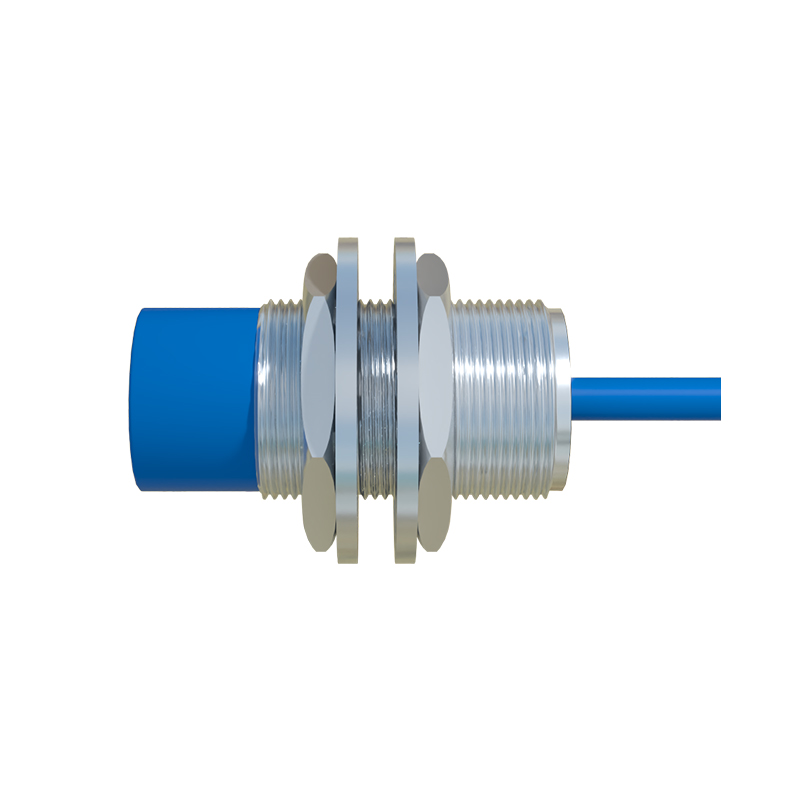
Inductive proximity sensors are the most common type used for detecting metallic objects, primarily ferrous metals like steel and iron. The operating principle is based on electromagnetic induction. The sensor contains a coil wound around a ferrite core, which is part of an oscillator circuit. When an alternating current passes through the coil, it generates an oscillating electromagnetic field at the sensor's active face. When a conductive metal target enters this field, eddy currents are induced on the surface of the target. These eddy currents draw energy from the oscillator, causing a reduction in the oscillation amplitude. An evaluation circuit within the sensor monitors this amplitude change. Once the amplitude drop exceeds a predefined threshold, the circuit triggers a solid-state switch (typically PNP or NPN), changing the sensor's output state. Key characteristics include a short sensing range relative to the sensor's diameter, immunity to non-metallic materials, and excellent performance in dirty or wet conditions.
Capacitive Proximity Sensor Functionality
Capacitive proximity sensors can detect both metallic and non-metallic materials, including liquids, plastics, glass, wood, and granular substances. They operate by measuring changes in capacitance. The sensor face acts as one plate of a capacitor, with the target object acting as the other plate, and the air gap serving as the dielectric. The sensor's internal oscillator generates an electrical field. When a target object enters this field, it alters the dielectric constant and thus the capacitance of the system. This change in capacitance affects the oscillator's amplitude. Similar to inductive sensors, a detection circuit senses this change and switches the output when the threshold is crossed. Capacitive sensors often feature a sensitivity adjustment potentiometer to compensate for different material types and to ignore unwanted background objects. They are ideal for applications like liquid level detection, material handling of non-metals, and presence detection through thin non-metallic barriers.
Photoelectric Proximity Sensing Methods
Photoelectric sensors use light beams to detect objects. While not always classified as "proximity" in the strictest sense (often called diffuse or reflective sensors), they perform a similar non-contact function. A photoelectric proximity sensor (diffuse type) houses both an emitter (usually an LED producing visible red, infrared, or laser light) and a receiver in a single housing. The emitter projects a light beam towards the target. When the target is present, it reflects a portion of this light back to the receiver. The receiver's phototransistor or photodiode converts the received light intensity into an electrical current. The sensor's electronics process this signal and switch the output accordingly. Their sensing range is typically longer than inductive or capacitive sensors, and they can detect objects of virtually any material, provided the surface reflects enough light. They are sensitive to color, surface finish, and environmental factors like dust or fog.
Key Performance Parameters and Selection Criteria
Selecting the correct proximity sensor requires careful analysis of several parameters. The sensing distance, or nominal range, is the maximum distance at which a standard target can be reliably detected. This is often specified for a specific target material and size (e.g., a 1mm thick square of mild steel for inductive sensors). The hysteresis is the difference between the switch-on and switch-off points, providing stability to prevent output chatter when a target is at the edge of the sensing range. Response frequency indicates how quickly the sensor can detect objects passing by, critical for high-speed counting. Environmental factors such as temperature rating, ingress protection (IP code), and resistance to chemicals or welding spatter must match the application. Electrical characteristics like supply voltage, output type (sourcing PNP or sinking NPN), and connection method (pre-wired or connector) are equally vital for proper integration into the control system.
Common Industrial Applications and Benefits
The applications for proximity sensors span the entire spectrum of industry. In machining, they are used for tool wear monitoring, part positioning on CNC lathes, and end-of