Introduction to Photoelectric Sensing Technology
Photoelectric sensors are indispensable components in modern industrial automation, serving as the eyes of a system. These devices operate by emitting a beam of light, typically from an LED or laser diode, and detecting changes in the received light signal. The fundamental principle hinges on the interaction between light and the target object. When the emitted light beam is interrupted, reflected, or refracted by an object, the sensor's receiver detects this alteration and converts it into an electrical signal for processing by a controller. This non-contact method of detection offers significant advantages over mechanical switches, including higher reliability, faster response times, and the ability to sense a wide variety of materials without physical wear. The core components include the light source, a photodetector (such as a phototransistor or photodiode), and signal processing circuitry. The evolution from incandescent bulbs to solid-state light sources has dramatically increased their lifespan, precision, and application scope, making them a cornerstone in sectors ranging from packaging and material handling to automotive assembly and pharmaceutical production.
Core Operating Modes and Their Mechanisms
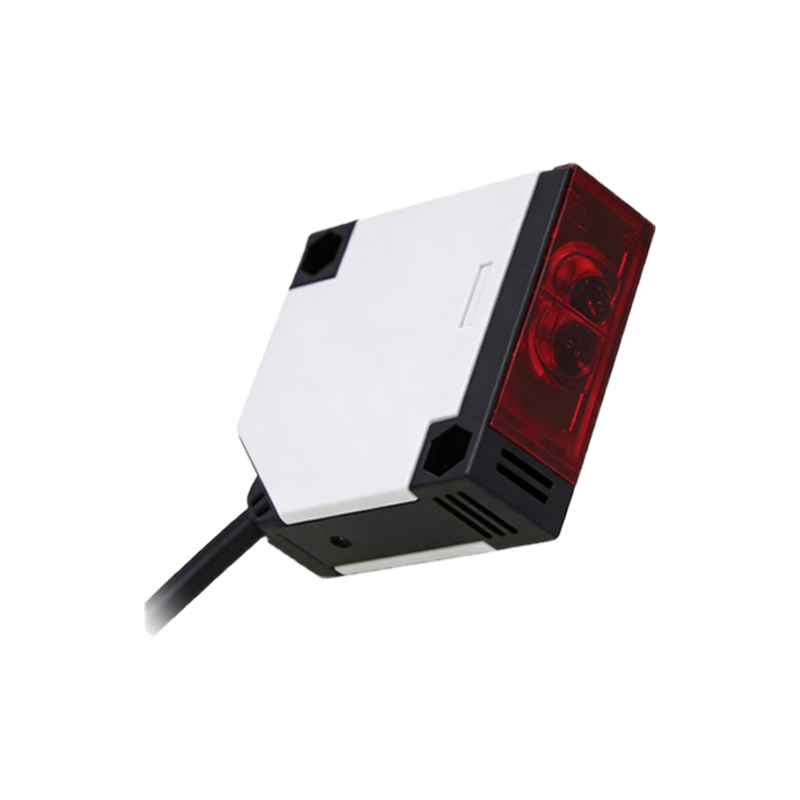
Photoelectric sensors are primarily categorized into three distinct operating modes, each suited for specific detection challenges. Through-beam sensors, also known as opposed-mode sensors, consist of separate, aligned emitter and receiver units. Detection occurs when an object physically breaks the light beam traveling between them. This mode offers the longest sensing range and highest reliability, as it is less susceptible to target surface characteristics like color or reflectivity. Retro-reflective sensors house both emitter and receiver in a single housing, utilizing a reflector to bounce the light beam back. An object is detected when it blocks this return path. These sensors require only one wiring point and are ideal for applications where mounting two separate units is impractical. Diffuse or proximity sensors integrate the emitter and receiver in one unit and detect objects based on the reflection of light from the target's surface itself. While most compact and easiest to install, their performance is influenced by the target's color, texture, and distance, often requiring background suppression or foreground suppression technologies to ignore distant or close interfering surfaces.
Key Performance Specifications and Characteristics
Selecting the appropriate photoelectric sensor requires a thorough understanding of its technical specifications. Sensing range, often specified as a nominal value, defines the maximum reliable detection distance for a standard target. It varies significantly between modes, with through-beam offering the greatest reach. Response time, measured in milliseconds or microseconds, indicates how quickly the sensor can react to a change in state, a critical factor in high-speed production lines. Light sources are another crucial differentiator; red visible LED light is common and easy to align, infrared LED is invisible and less affected by ambient light, while laser diodes provide a precise, narrow beam for detecting very small objects or exact positioning. Environmental ratings, denoted by IP (Ingress Protection) or NEMA codes, define the sensor's resistance to dust and water, ensuring reliable operation in washdown or outdoor settings. Additionally, output types—such as NPN, PNP, analog, or IO-Link—determine how the sensor communicates with the programmable logic controller (PLC), influencing system integration and data capabilities.
Advanced Features and Specialized Sensor Types
To address complex application needs, modern photoelectric sensors incorporate advanced features. Background suppression (BGS) technology uses triangulation to measure the angle of the reflected light, allowing the sensor to detect an object only within a precise, adjustable range while ignoring reflections from surfaces beyond this set point. This is vital for detecting objects on a conveyor regardless of the conveyor color or for ensuring consistent detection of transparent materials. Contrast sensors are optimized to detect differences in color, grayscale, or contrast marks, commonly used in labeling and printing applications. Luminescence sensors detect the presence of materials that glow under UV light, such as invisible security marks or specific adhesives. Fiber optic sensors represent a specialized category where the light beam is transmitted through flexible fiber optic cables, allowing the amplifier unit to be placed remotely in a protected location while the small sensing head fits into extremely tight or hostile environments with high temperatures or strong vibrations.
Practical Application Considerations and Installation
Successful implementation extends beyond selecting a sensor from a catalog. Proper alignment is paramount, especially for through-beam and retro-reflective types; misalignment is a leading cause of failure. Environmental factors like ambient light, dust, fog, or steam can interfere with the light beam, necessitating sensors with modulated light signals (which ignore constant ambient light) or specific protective housings. The target object's properties—size, material, color, surface finish (matte or glossy), and even transparency—must be evaluated against the sensor's specifications. For transparent object detection, sensors operating in the polarized retro-reflective mode or those with high-resolution background suppression are often required. Mounting stability is critical to prevent vibration-induced misalignment. Regular maintenance, including lens cleaning to remove dust or grime, ensures long-term, consistent performance. Integrating sensors with modern industrial networks via IO-Link not only provides diagnostic data like signal strength and operating hours but also enables remote parameter adjustment, reducing downtime.
Guidelines for Sensor Selection and Future Trends
A systematic approach to selection begins with defining the application's core requirement: what needs to be detected, and under what conditions? First, determine the suitable operating mode based on sensing distance, target accessibility, and environmental constraints. Next, analyze the target's characteristics and choose a sensor technology (e.g., standard diffuse, BGS, contrast) that can reliably distinguish it. Then, verify that the sensor's range, response speed, and output type match the mechanical and electrical requirements of the system. Always consider the operating environment's IP rating, temperature range, and potential for chemical exposure. Looking forward, the integration of photoelectric sensors with Industrial Internet of Things (IIoT) platforms is a dominant trend. Smart sensors with embedded intelligence will provide predictive maintenance alerts, process optimization data, and easier configuration through digital twins. Furthermore, advancements in miniaturization and the development of sensors with integrated vision-like capabilities for basic shape recognition will continue to expand their role in flexible and intelligent automation systems.