Introduction to Infrared Proximity Sensing
Infrared (IR) proximity sensors are pivotal components in automation and safety systems, leveraging electromagnetic radiation to detect the presence of objects or humans without physical contact. These sensors operate by emitting infrared light, typically in the near-infrared spectrum (wavelengths around 850-940 nm), and measuring the reflected signal. The core principle hinges on the fact that all objects emit some level of infrared radiation, with human bodies radiating heat that can be distinguished from ambient conditions. In industrial settings, this technology enables precise, non-invasive detection, enhancing efficiency in processes like assembly lines, security systems, and energy management. By avoiding mechanical wear and tear, IR sensors offer longevity and reliability, making them a staple in modern electrical engineering applications.
Working Principle of IR Proximity Sensors
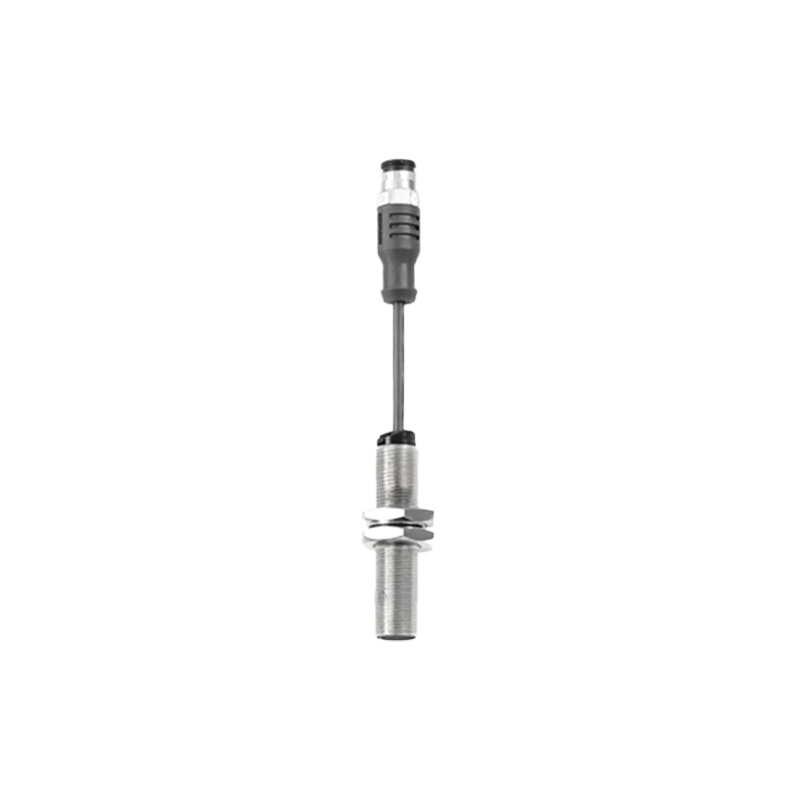
The functionality of an infrared proximity sensor revolves around an emitter and a receiver. The emitter, usually an IR LED, projects a beam of infrared light toward a target area. When an object, such as a human body, enters this area, it reflects part of the IR radiation back to the receiver, which is often a photodiode or phototransistor. The receiver converts the reflected light into an electrical signal, whose strength correlates with the distance and reflectivity of the object. Advanced sensors incorporate modulation techniques, where the emitted IR signal is pulsed at a specific frequency, allowing the receiver to filter out ambient light interference (e.g., from sunlight or artificial sources). This modulation ensures accurate detection even in variable lighting conditions, a critical feature for industrial environments where reliability is paramount.
Key Components and Circuit Design
An IR proximity sensor comprises several essential components: the IR emitter, receiver, signal processing circuitry, and output interface. The emitter circuit drives the IR LED with a controlled current to generate consistent radiation, while the receiver circuit amplifies the weak reflected signal using operational amplifiers. Signal processing involves filtering and demodulation to isolate the relevant IR frequency, reducing noise. Many modern sensors integrate microcontrollers for digital processing, enabling features like adjustable sensitivity and threshold-based triggering. In terms of circuit design, engineers must consider factors such as power consumption, response time, and environmental robustness. For instance, in high-temperature settings, components with thermal stability are selected to prevent drift in sensor readings.
Types of IR Proximity Sensors
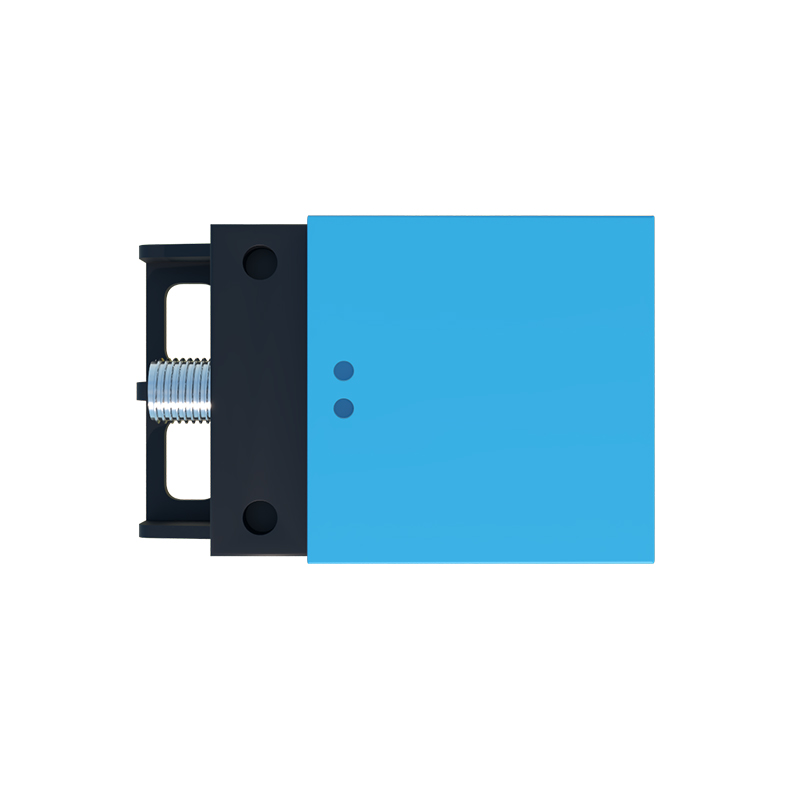
IR proximity sensors are categorized based on their detection methods: reflective, through-beam, and diffuse. Reflective sensors position the emitter and receiver side-by-side, detecting objects that reflect IR light back—ideal for short-range applications like touchless faucets. Through-beam sensors separate the emitter and receiver, with detection occurring when an object interrupts the IR beam; these are used in safety curtains for machinery. Diffuse sensors rely on the reflection from the object itself, suitable for medium-range tasks in packaging or material handling. Additionally, passive infrared (PIR) sensors, which detect changes in ambient IR radiation from moving heat sources, are common in motion-activated lighting and security systems. Each type offers distinct advantages, with selection depending on range, accuracy, and environmental factors.
Applications in Industrial and Safety Systems
In industrial automation, IR proximity sensors play a crucial role in enhancing productivity and safety. On assembly lines, they detect product presence for precise positioning or counting, reducing errors and downtime. In robotics, these sensors enable obstacle avoidance and gesture recognition, facilitating human-machine collaboration. Safety applications include presence detection in hazardous zones, where sensors trigger machine shutdowns if a worker approaches, preventing accidents. Energy management systems utilize IR sensors to control lighting and HVAC based on human occupancy, cutting operational costs. For example, in smart buildings, sensors monitor room usage to optimize climate control, contributing to sustainability goals. The non-contact nature of IR sensing also minimizes contamination risks in sterile environments like pharmaceuticals or food processing.
Challenges and Future Trends
Despite their advantages, IR proximity sensors face challenges such as interference from other IR sources, limited range in dusty or foggy conditions, and sensitivity to object surface properties (e.g., dark materials absorb more IR, reducing reflectivity). Engineers address these by incorporating multi-sensor fusion, combining IR with ultrasonic or capacitive technologies for redundancy. Future trends focus on miniaturization and integration with IoT platforms, allowing sensors to transmit data wirelessly for real-time monitoring and predictive maintenance. Advances in AI are enabling smarter sensors that can distinguish between humans and objects, improving accuracy in complex scenarios. As industries embrace Industry 4.0, IR proximity sensors will evolve toward higher precision, lower power consumption, and enhanced connectivity, driving innovation in automation and safety.