Introduction to M30 Inductive Proximity Sensors
M30 inductive proximity switch sensors are fundamental components in modern industrial automation and control systems. Characterized by their robust cylindrical housing with a 30-millimeter diameter, these non-contact sensors are engineered to detect the presence or absence of metallic objects with exceptional reliability. Operating on the principle of electromagnetic induction, they generate an oscillating electromagnetic field from a coil within the sensor head. When a ferrous or non-ferrous metal target enters this detection field, it induces eddy currents, causing a change in the oscillation amplitude. This change is processed by the internal circuitry, triggering a solid-state output signal. The M30 form factor offers an ideal balance between sensing range, physical durability, and ease of installation, making it a ubiquitous choice across diverse sectors including automotive manufacturing, material handling, packaging, and machine tooling. Their primary function is to provide precise positional feedback, count objects, or act as limit switches without any physical contact, thereby eliminating mechanical wear and enabling high-speed operation in demanding environments.
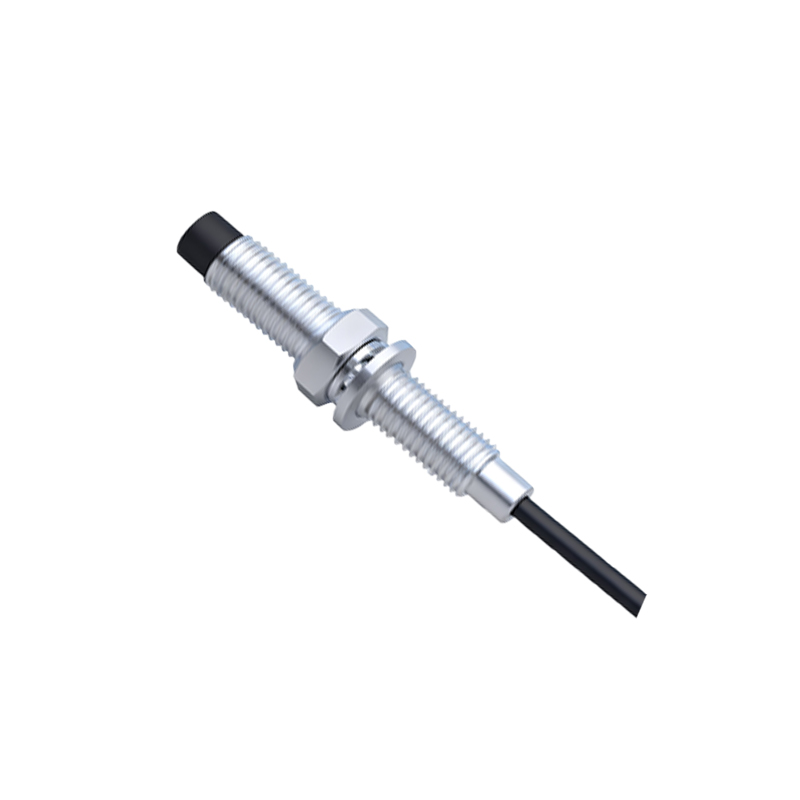
Core Operating Principles and Technology
The efficacy of an M30 inductive proximity sensor hinges on its underlying electromagnetic technology. At its heart lies a ferrite core with a coil, a high-frequency oscillator, a signal evaluator, and an output switching circuit. The oscillator generates a high-frequency alternating magnetic field that radiates from the active face of the sensor. In the absence of a target, the oscillator operates at a constant amplitude. The introduction of a conductive metal object into this field absorbs energy due to eddy current losses, which dampens the oscillation. The sensor's evaluation circuit detects this damping effect. Once the damping exceeds a predefined threshold—corresponding to the nominal sensing distance (Sn)—the circuit activates the output stage. This output is typically a transistor (PNP or NPN sourcing/sinking) that can interface directly with programmable logic controllers (PLCs), relays, or other control devices. Key technical specifications include the sensing range, which for a standard M30 sensor is often up to 15mm for steel targets, switching frequency (how many times per second it can detect an object), and hysteresis (the difference between the switch-on and switch-off points to prevent chatter). Understanding these principles is crucial for selecting the correct sensor for specific application requirements, such as detecting different metals, which have varying effects on the sensing range due to their material properties.
Key Features and Design Advantages
M30 inductive proximity sensors are renowned for a suite of features that deliver performance and longevity. Their rugged, typically nickel-plated brass or stainless-steel housing provides high resistance to mechanical impacts, vibrations, and harsh industrial conditions, including exposure to coolants, oils, and dust. Many models conform to IP67, IP68, or IP69K ingress protection ratings, making them suitable for washdown environments in food and beverage or pharmaceutical industries. The cylindrical M30 thread (commonly M30 x 1.5) allows for easy and secure mounting via a locknut, enabling precise adjustment of the sensing distance. A significant design advantage is their embeddability; shielded (flush-mountable) models can be installed flush in metal without affecting their sensing characteristics, while unshielded (non-flush) types offer longer sensing ranges but require a clear metallic-free zone around them. Additional features often include a built-in LED status indicator for visual confirmation of operation and switching state, short-circuit and reverse polarity protection for enhanced electrical safety, and temperature stability for consistent performance across a wide operational range, typically from -25°C to +70°C. These attributes collectively ensure minimal maintenance, high operational availability, and reduced downtime.
Application Scenarios and Industry Use Cases
The versatility of M30 inductive proximity sensors is demonstrated in their widespread application across industrial automation. In automotive assembly lines, they are deployed for precise positioning of robotic arms, verifying the presence of engine blocks on pallets, or detecting the passage of metal components on conveyors. In packaging machinery, they count metal lids or cans, control filling levels by detecting pistons, and confirm the closed position of metal gates or doors. Within metalworking and CNC machining centers, these sensors serve as tool breakage detectors, monitor spindle position, and act as end-of-travel limit switches for axes movement. Material handling systems utilize them to detect the position of metal carriers on monorails or to confirm the presence of pallets at loading stations. Their robust nature also makes them ideal for heavy industries like steel mills or foundries, where they monitor the position of rollers, cranes, or ingots. The non-contact nature is particularly valuable in applications involving fast-moving or fragile objects where physical contact switches would fail or cause damage.