Introduction to Photoelectric Sensing Technology
Photoelectric sensors are widely used in industrial automation for detecting the presence, absence, or position of objects without physical contact. The GK105A model represents a robust example of this technology, designed for reliable performance in demanding environments. These sensors operate by emitting a light beam and detecting changes in the received light intensity caused by an object interrupting or reflecting the beam. The core principle hinges on the interaction between light and matter, enabling precise, high-speed detection across various applications, from packaging lines to safety systems.
Core Components of the GK105A Sensor
The GK105A photoelectric sensor comprises several key components that facilitate its operation. It includes a light emitter, typically a light-emitting diode (LED) that produces infrared, visible red, or laser light, depending on the specific variant. Opposite the emitter is a photodetector, such as a phototransistor or photodiode, which converts incoming light into an electrical signal. The sensor housing integrates optics to focus the light beam and electronic circuitry for signal processing. Additionally, it features adjustable sensitivity controls and output stages (e.g., NPN or PNP transistors) to interface with control systems like PLCs.
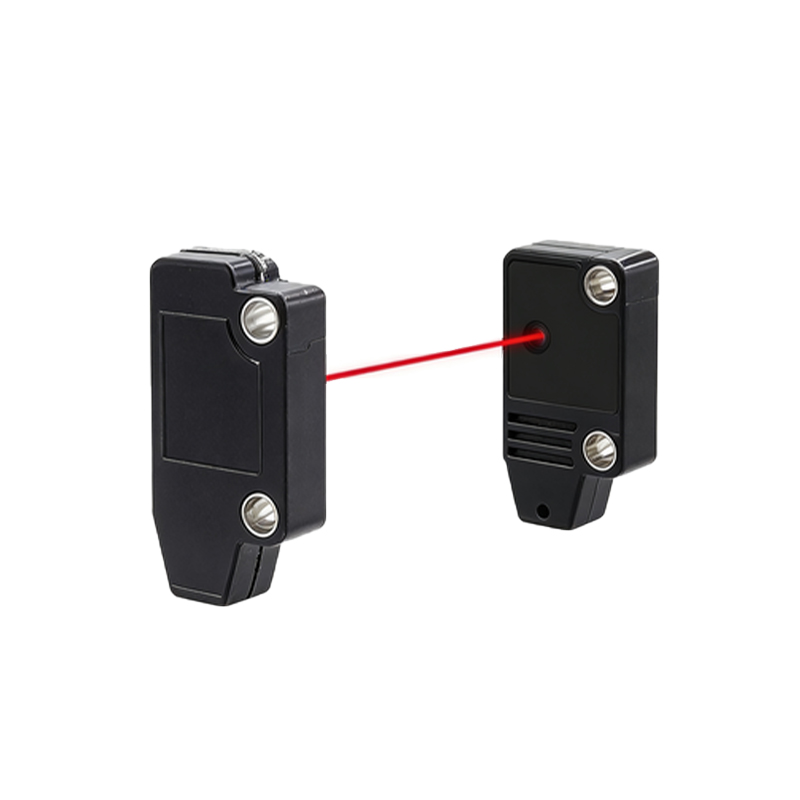
Light Emission and Beam Propagation
In the GK105A, the emitter generates a modulated light beam, often pulsed at a specific frequency to enhance immunity to ambient light interference. This beam travels through the sensor's lens system, which collimates it into a focused path. The design ensures consistent beam quality, allowing for stable detection over specified sensing ranges. For through-beam types, the beam propagates directly to a separate receiver unit, while in diffuse-reflective models, it reflects off the target object. Environmental factors like dust or fog can attenuate the beam, but the GK105A's modulation helps distinguish its signal from background noise.
Detection Mechanisms and Object Interaction
The GK105A employs different detection modes based on application needs. In through-beam mode, an object interrupts the beam between the emitter and receiver, causing a drop in received light intensity and triggering detection. In retro-reflective mode, the beam bounces off a reflector to the receiver, with interruption indicating an object's presence. Diffuse-reflective mode relies on light reflecting directly from the object to the receiver, with sensitivity adjusted to account for varying reflectivity. The sensor's response time is swift, often in milliseconds, making it suitable for high-speed automation tasks.
Signal Processing and Output Generation
Upon receiving light, the photodetector in the GK105A converts it into a small electrical current. This signal is amplified and processed by internal circuitry, which compares it to a preset threshold. If the signal meets or exceeds the threshold (e.g., due to beam interruption or reflection), the sensor activates its output switch. The output can be configured as a digital signal (ON/OFF) to control external devices. Advanced features may include teach-in functionality for automatic threshold setting and diagnostics like stability indicators, ensuring reliable operation in dynamic conditions.
Applications and Environmental Considerations
The GK105A is versatile, used in industries such as manufacturing, logistics, and automotive for tasks like counting, positioning, and edge detection. Its rugged construction resists vibrations, temperature fluctuations, and moisture, adhering to IP ratings for durability. When installing, factors like object color, size, and surface texture must be considered, as they affect reflectivity and detection range. Regular maintenance, such as lens cleaning and alignment checks, helps sustain accuracy. Overall, the GK105A exemplifies how photoelectric sensors enhance efficiency and safety in automated systems through non-contact sensing.