Introduction to Photoelectric Sensing Technology
Photoelectric sensors are pivotal components in modern industrial automation, utilizing light beams to detect the presence, absence, or position of objects. These sensors operate by emitting a light source—typically infrared, visible red, or laser—toward a target. A receiver then analyzes the light that is either reflected back or interrupted. The core principle hinges on the modulation of light properties, such as intensity or beam pattern, to discern object characteristics. For standard opaque materials, detection is straightforward as they significantly alter the light path. However, transparent materials like plastic bags, glass, or films present a unique challenge due to their high light transmittance. This necessitates specialized sensor configurations and advanced signal processing to achieve reliable detection in high-speed packaging, filling, and sorting lines.
The Challenge of Detecting Transparent Packaging
Transparent bags, commonly made from polyethylene (PE) or polypropylene (PP), allow most incident light to pass through with minimal reflection or refraction. From a sensor's perspective, this can make the bag virtually "invisible" to conventional diffuse-reflective sensors, which rely on detecting light scattered back from an object's surface. The primary challenges include low contrast between the signal indicating bag presence and the background noise, potential interference from ambient light, and variations in bag material thickness or surface conditions like wrinkles or moisture. These factors can lead to false negatives (missed detection) or false positives, compromising line efficiency and product quality.
Specialized Sensor Types for Transparent Objects
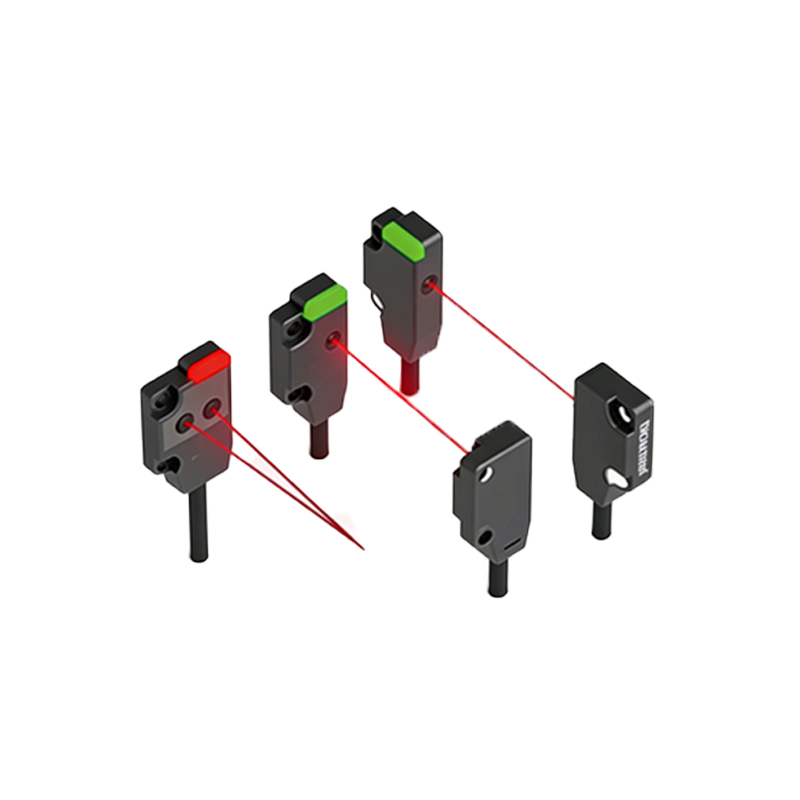
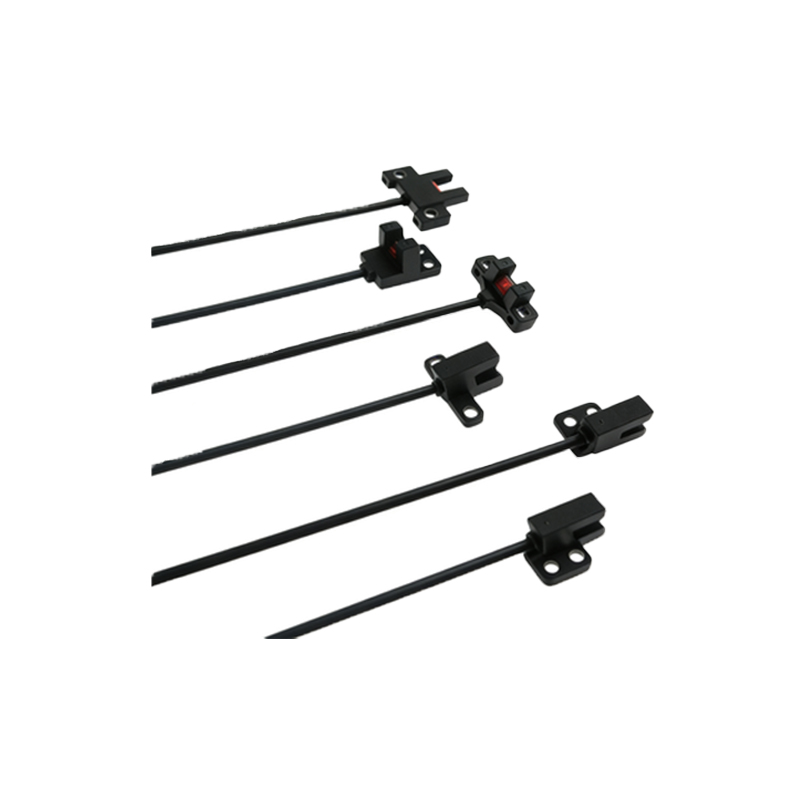
To overcome these hurdles, specific photoelectric sensor models are engineered. Polarized retro-reflective sensors are highly effective. They use a polarizing filter in front of the emitter and receiver. The emitted polarized light reflects off a specialized retro-reflector and returns. When a transparent bag interrupts the beam, it often slightly depolarizes the light. The receiver's filter, crossed to the emitter's polarization, is tuned to ignore the directly reflected polarized light from the reflector but detects the depolarized component caused by the bag, triggering a signal. Another solution is through-beam sensors. Here, the emitter and receiver are separate units facing each other. A transparent bag passing between them causes a slight, measurable attenuation or refraction of the light beam, which the sensitive receiver circuitry can detect despite high transmittance.

Critical Role of Background Suppression Technology
Background suppression (BGS) is a crucial feature, especially in diffuse-reflective mode for detecting transparent objects against a potentially interfering background. Convergent beam sensors with precise BGS can define a very exact sensing window. They are calibrated to only respond to objects within a specific distance range, effectively ignoring the background beyond that point. For a transparent bag on a conveyor, the sensor can be set so that it detects the bag's surface at a set distance but does not trigger on the conveyor belt or machine structure behind it. This is achieved through triangulation principles or using dual receiver elements, providing exceptional reliability in distinguishing low-reflectivity targets from their surroundings.
Optimizing Installation and Sensitivity Adjustment
Correct installation is paramount. The sensor must be positioned at an optimal angle relative to the bag's surface to maximize the detection signal. Angling the sensor slightly, rather than positioning it perpendicularly, can increase the amount of reflected or refracted light captured from glossy or uneven transparent surfaces. Sensitivity adjustment, often a potentiometer or via teach-in function, must be finely tuned. The goal is to set a threshold where the slight optical disturbance caused by the transparent bag is reliably registered without being triggered by dust, vibration, or minor ambient light changes. Many advanced sensors offer automatic tuning or provide stable, high-resolution analog outputs for continuous monitoring of minute signal variations.
Application in Packaging and Quality Control Lines
In practical settings, these sensors are integral to multiple stages. They verify the presence of an empty transparent bag before product filling in form-fill-seal machines, ensuring no waste of product. They count bags on high-speed conveyors and check for proper opening. Furthermore, they can be part of quality inspection systems, identifying defects like holes or excessive wrinkles in the bag material by detecting anomalies in the expected light transmission pattern. Integration with programmable logic controllers (PLCs) allows for immediate line stoppage or rejection of faulty packages, maintaining high throughput and integrity.
Future Trends and Conclusion
The evolution continues toward smarter, more integrated solutions. Sensors with integrated IO-Link communication provide detailed diagnostic data, such as signal strength and operating hours, enabling predictive maintenance. The combination of photoelectric sensing with vision systems or spectral analysis is emerging for more complex tasks, like differentiating between various transparent polymer types. In conclusion, while transparent bags pose a significant detection challenge, modern photoelectric sensors equipped with polarized retro-reflective, through-beam, and advanced background suppression technologies deliver robust and reliable performance. Their precise application and tuning are essential for maintaining efficiency, reducing waste, and ensuring quality in today's automated industrial environments.