Introduction to Flat Proximity Sensors
In the realm of industrial automation and precise machine control, the proximity sensor stands as a fundamental component for non-contact object detection. Among the diverse family of these sensors, the flat proximity sensor, often referred to as a flat-pack or low-profile sensor, has carved out a critical niche. Essentially, a flat proximity sensor is a type of inductive, capacitive, or magnetic sensor designed with a significantly reduced installation depth and a slim, flat housing. This distinct form factor is its primary differentiator, enabling deployment in spaces where traditional cylindrical or block-style sensors simply cannot fit. Their operation principle remains aligned with standard proximity sensing—detecting the presence or absence of a metallic or other target object within a defined sensing range without physical contact—but their geometry unlocks new application possibilities.
Key Design Characteristics and Construction
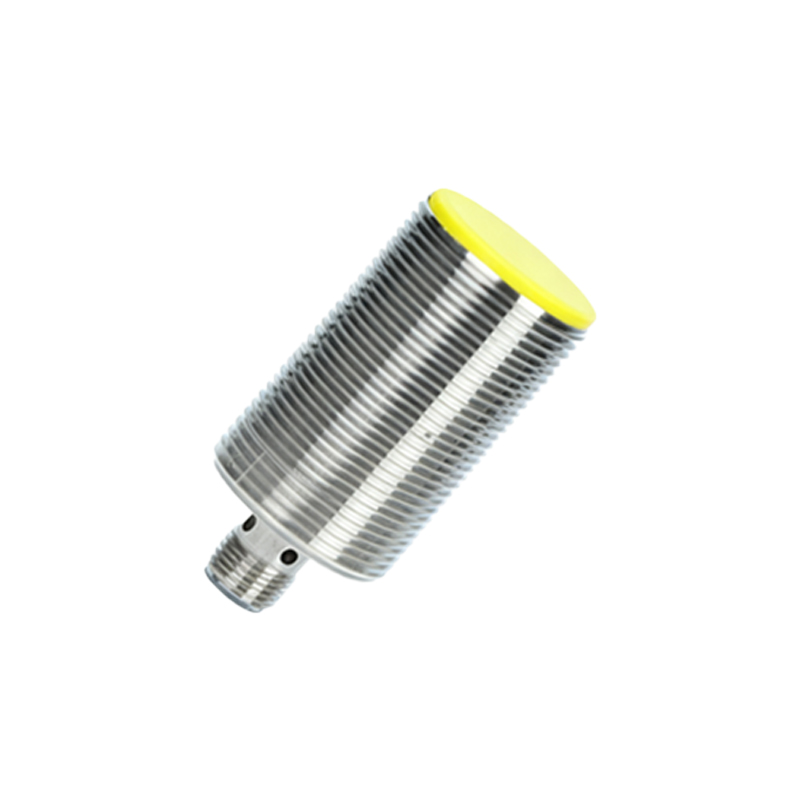
The defining feature of a flat proximity sensor is its minimalistic, low-profile housing. Unlike standard sensors that may protrude significantly from a mounting surface, flat sensors are engineered to sit nearly flush. This is achieved through innovative internal coil and electronics packaging. The sensing face is typically broad and flat, optimizing the detection field for applications requiring a wide sensing area close to the target. The housing is usually made from robust materials like PBT or stainless steel to withstand industrial environments. Connectors are often integrated or designed as compact, flush-mounted variants. This compact construction does not inherently sacrifice performance; modern flat sensors can achieve sensing ranges comparable to some cylindrical models, though the field shape is more pancake-like, spreading out wider but less deep.
Primary Operating Principles
Flat proximity sensors primarily utilize inductive, capacitive, or magnetic field principles, with inductive being the most common for metal detection. An inductive flat sensor contains an oscillator circuit with a flat coil that generates a high-frequency electromagnetic field at its active face. When a conductive metal target enters this field, eddy currents are induced in the target, causing a load on the oscillator and a change in the circuit's amplitude. This change is detected and processed to switch the sensor's output state. Capacitive flat sensors operate similarly but respond to both conductive and non-conductive materials by detecting changes in capacitance. Magnetic flat sensors, often based on reed or Hall effect technology, are used specifically for detecting permanent magnets. The flat design influences the shape and distribution of the generated field.
Advantages Over Traditional Sensor Shapes
The advantages of the flat form factor are substantial in constrained environments. First and foremost is the Space-Saving Design. Their minimal installation depth allows for integration into thin machine walls, tight cavities, robotic grippers, and mobile equipment where every millimeter counts. Secondly, they offer Improved Mechanical Protection. Because they do not protrude, they are less susceptible to damage from accidental impacts, shear forces, or debris in high-traffic areas. Thirdly, the flat face enables Consistent Sensing of Irregular Surfaces. The broader sensing field can more reliably detect objects that may not present a uniform surface to a point-focused cylindrical sensor. Finally, they facilitate Sleeker Machine Design, contributing to cleaner, more compact, and often more aesthetically pleasing industrial equipment.
Common Industrial Applications
Flat proximity sensors are indispensable in numerous precision applications. In Robotics and Automated Handling Systems, they are mounted on the inside of gripper jaws to detect the presence of a picked object without increasing the gripper's external dimensions. In Machine Tooling, they monitor tool presence, workpiece positioning, or door closure in the confined spaces of CNC mills and lathes. The Semiconductor and Electronics Manufacturing industry relies on them for wafer handling and PCB positioning due to their cleanliness and precision. They are also widely used in Material Handling for detecting the position of thin metal sheets, elevator floor leveling, and as end-of-travel limit switches in linear actuators. Their use in Mobile Machinery and automotive assembly lines is also prevalent for position feedback in compact hydraulic cylinders.
Critical Selection Criteria
Selecting the appropriate flat proximity sensor requires careful consideration of several parameters. Sensing Range is crucial and is typically shorter than an equivalent cylindrical sensor; the specific "flat" sensing distance must be verified. Target Material dictates the sensor type: inductive for metals, capacitive for varied materials, magnetic for magnets. Housing Material and Protection Rating (IP67, IP69K) ensure durability against coolant, washdowns, and physical abuse. Output Type (PNP/NPN, NO/NC, analog, IO-Link) must match the control system's requirements. Mounting Method is also key, as flat sensors often use special brackets or flush-mounting with specific non-ferromagnetic requirements to ensure proper