Introduction to Photoelectric Sensor LEDs
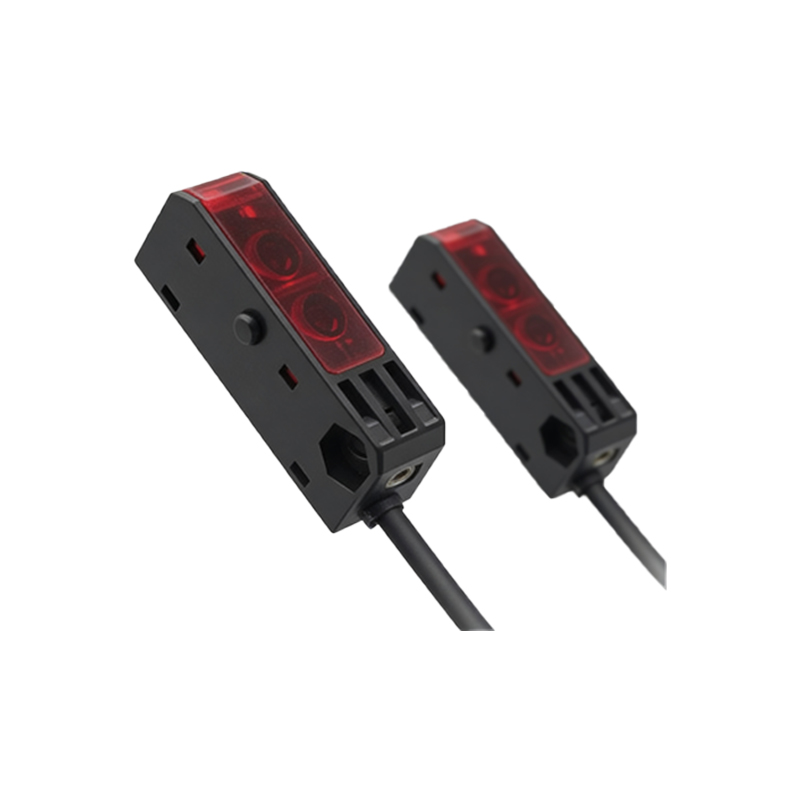
At the heart of every modern photoelectric sensor lies a critical component: the Light Emitting Diode, or LED. This semiconductor light source is responsible for generating the optical beam that interacts with the target object. Unlike general illumination LEDs, those designed for industrial sensing are engineered for precision, reliability, and longevity under demanding conditions. They emit light in specific wavelengths, most commonly visible red, infrared (IR), or laser red, each chosen for its unique properties in detection scenarios. The performance of the entire sensor system is intrinsically linked to the characteristics of its LED, making its selection a fundamental engineering decision.
Core Types and Wavelength Characteristics
The primary classification of sensor LEDs is based on their emitted wavelength. Visible red LEDs, typically around 660 nm, are the most common. They provide a visible beam spot, which greatly simplifies sensor alignment and setup during installation, a significant advantage for maintenance personnel. Infrared LEDs, operating at wavelengths like 880 nm or 950 nm, are invisible to the human eye. They are less susceptible to ambient light interference and are ideal for detecting objects that are transparent to visible light or in applications where a discreet beam is necessary. Laser diodes represent a more advanced category, emitting a highly concentrated, coherent beam of visible red or other wavelengths. This results in a very small, precise beam spot, enabling the detection of extremely small objects or precise positioning at longer ranges.
Key Performance Parameters
Evaluating a photoelectric sensor LED involves several technical parameters. Light output intensity, often measured in milliwatts (mW) or as luminous intensity, directly influences the sensor's sensing range and its ability to overcome environmental challenges like dust or mist. The response time of the LED is crucial for high-speed applications, as it determines how quickly the light can be modulated for the sensor's operation. Spectral bandwidth defines the purity of the emitted color; a narrower bandwidth allows for better optical filtering against ambient light. Finally, operational lifetime is a standout feature, with industrial LEDs often rated for tens of thousands of hours of continuous operation, far exceeding traditional incandescent lamps used in older sensors.
Modulation Techniques for Reliability
To ensure reliable operation in environments flooded with ambient light (from sunlight or factory lighting), photoelectric sensors almost exclusively use modulated LEDs. Instead of emitting a constant beam, the LED is pulsed at a specific high frequency (e.g., several kHz). The sensor's receiver is then tuned to recognize only light pulsing at that exact frequency. This sophisticated technique effectively makes the sensor "blind" to constant or differently modulated ambient light, dramatically enhancing signal-to-noise ratio and system immunity. This modulation is a key reason why modern photoelectric sensors are so robust in real-world industrial settings.
Application-Specific Selection Guidelines
Choosing the correct LED type is application-driven. For general-purpose detection of opaque objects at short to medium ranges, a standard visible red LED sensor is often the best and most cost-effective choice, thanks to its easy alignment. For detecting transparent materials like glass or plastic bottles, an infrared LED is frequently superior as many transparent materials are opaque to IR wavelengths. In packaging, an IR sensor might detect a clear film that a red LED would see through. Laser-based sensors are indispensable in precision industries—for example, detecting the precise edge of a wafer in semiconductor manufacturing or ensuring exact fill levels in small containers where a standard beam would be too diffuse.
Integration and Optical Design Considerations
The LED does not function in isolation; its performance is shaped by the sensor's optical design. Lenses are used to collimate (make parallel) or focus the emitted light, defining the beam's shape and size. A well-designed lens assembly ensures a sharp, consistent beam profile, which translates to consistent detection and a stable sensing range. The housing must also protect the LED from physical damage and environmental contaminants like oil, coolant, or dust that could coat the lens and attenuate the light signal. Engineers must consider the entire optical path, including the receiver's lens and filter, to create a balanced and effective sensing system.
Future Trends and Advancements
The evolution of photoelectric sensor LEDs continues. Trends include the development of LEDs with even higher output intensities for extreme range applications, and more robust packaging for harsh environments involving high temperatures or chemical exposure. There is also growing integration of multiple LEDs or multi-wavelength sources within a single sensor housing to create smarter sensors capable of color detection or material discrimination. Furthermore, advancements in blue and green LED technology for sensing are opening new possibilities for specific material detection where their unique wavelengths offer advantages. The drive is towards smarter, more versatile, and more resilient light sources that push the boundaries of what photoelectric sensing can achieve.