Introduction to PNP Laser Background Suppression Sensors
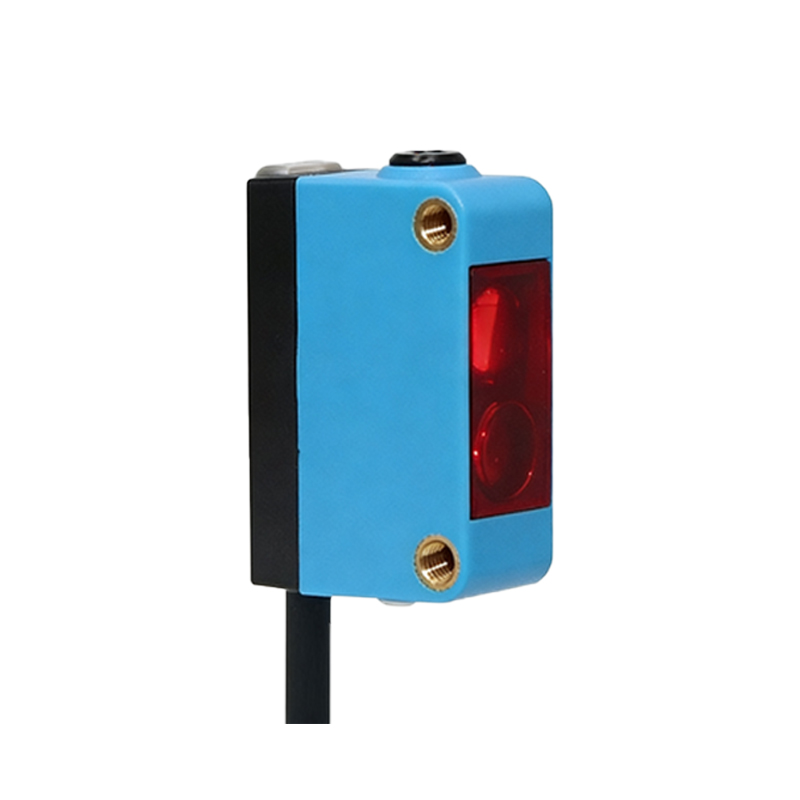
In the realm of industrial automation, precise object detection is paramount. PNP laser background suppression photoelectric sensors represent a sophisticated solution for applications demanding high accuracy and reliability, particularly in environments with challenging backgrounds. These sensors utilize a focused laser beam and specialized triangulation principles to ignore objects beyond a precisely set sensing distance. The "PNP" designation refers to the transistor output type, where the output switches to a positive voltage when activated, a configuration widely compatible with many programmable logic controllers (PLCs) and industrial control systems. This combination of advanced optical technology and standard electrical interfacing makes these sensors indispensable for tasks like precise positioning, small part detection, and edge guidance.
Core Operating Principle and Technology
The fundamental operation hinges on the background suppression principle, often achieved through triangulation. The sensor emits a focused, visible red laser beam onto the target. The reflected light returns to the receiver, but not to a single point. Instead, the position where the light strikes the receiver's sensitive element changes depending on the distance to the target. An internal optical system and intelligent electronics analyze this light spot position. The sensor is programmed with a specific switching point. If the reflected light indicates the object is within this set distance, the sensor triggers its PNP output. Objects beyond this point, even if highly reflective, are effectively ignored or "suppressed," hence the name. This method provides exceptional immunity to variations in target color, reflectivity, and the presence of distant background surfaces.
Key Advantages in Industrial Settings
The primary benefit is reliable detection independent of surface properties. Unlike diffuse sensors whose sensing range fluctuates with target color and finish, a background suppression sensor maintains a consistent switching point for black, white, shiny, or matte objects. This ensures process stability. The visible laser spot allows for easy and precise alignment, reducing installation and commissioning time. The high resolution enabled by the focused laser permits detection of extremely small objects or precise edges. Furthermore, the PNP (sourcing) output is a de facto standard in many regions and industries, offering straightforward wiring to common DC sinking inputs on controllers. This plug-and-play compatibility minimizes integration complexity.
Typical Applications and Use Cases
These sensors excel in numerous precision-driven applications. In packaging machinery, they are used for exact carton flap detection, ensuring proper folding and gluing regardless of cardboard color. On assembly lines, they perform precise counting of small components or verify the presence of parts in nests or fixtures. In material handling, they provide accurate edge detection for guiding webs, films, or sheets, preventing misalignment. Robotics often employs them for precise positioning of grippers or for detecting the presence of a picked item. Any application requiring a definite sensing window in a cluttered environment, such as detecting objects on a conveyor while ignoring the belt or machinery behind it, is an ideal candidate for this technology.
Critical Selection and Installation Considerations
Selecting the correct sensor involves several parameters. The sensing range must be chosen based on the required working distance. The size of the laser spot is crucial for detecting small features. Environmental factors like ambient light, dust, fog, or temperature extremes must be considered, and sensors with appropriate IP ratings and robust housings should be selected. During installation, careful alignment is key. The sensor must be mounted securely to prevent vibration from altering the beam path. The background suppression distance must be set precisely, often via a potentiometer or teach-in button, to define the exact plane where switching occurs. Ensuring a stable power supply and correct wiring of the PNP output to the load is essential for reliable operation.
Comparison with Other Sensor Outputs and Types
While this article focuses on PNP outputs, it is vital to understand the alternative: NPN (sinking) outputs. The choice between PNP and NPN is primarily determined by the input circuit of the connected control device. PNP sensors supply positive voltage to the load, whereas NPN sensors provide a path to ground. System designers must specify the correct type to match their PLC's input card. Furthermore, compared to standard diffuse photoelectric sensors, background suppression models offer superior performance for distance-based tasks but may have a shorter maximum range. Compared to through-beam sensors, they are easier to install (requiring only one device) but can be more sensitive to dirty lenses or extreme target angles.
Maintenance and Troubleshooting Guidelines
For optimal longevity, regular maintenance is advised. Keep the lens clean from dust, oil, or debris using appropriate cleaning methods to maintain signal integrity. Periodically verify the sensing accuracy and the set switching point, as mechanical shifts can occur over time. Common issues include failure to detect, which may stem from misalignment, a dirty lens, an incorrect suppression distance setting, or a power problem. Intermittent operation could indicate electrical noise interference, requiring proper shielding and grounding. Always consult the manufacturer's datasheet for specific diagnostic LEDs, error codes, and recommended troubleshooting procedures to ensure quick resolution of operational faults.
Future Trends and Conclusion
The evolution of laser background suppression sensors continues. Trends include miniaturization for tighter spaces, integrated IO-Link communication for advanced diagnostics, parameter setting, and process data monitoring, and enhanced resistance to environmental interference. Some models now incorporate multiple switching points or analog distance output. In conclusion, PNP laser background suppression photoelectric sensors are a critical tool for engineers seeking reliable, precise, and background-immune detection. Their combination of advanced optical triangulation with the straightforward PNP output interface delivers a robust solution that enhances accuracy, reduces downtime, and improves the overall efficiency and quality of automated industrial systems.