The Core Principle of Photoelectric Sensing
At its heart, a photoelectric sensor is a device that uses light to detect the presence, absence, or distance of an object. The fundamental operation relies on the interaction between an emitted light beam and a target. When this beam is interrupted or reflected by an object, it triggers a change in the sensor's output state, sending an electrical signal to a control system like a PLC. This simple yet powerful principle enables non-contact detection across countless industrial applications, from packaging and material handling to assembly line automation and safety systems. The reliability and versatility of these sensors stem from their three fundamental building blocks, which work in concert to perform precise detection tasks.
The Light Emitter: The Source of the Signal
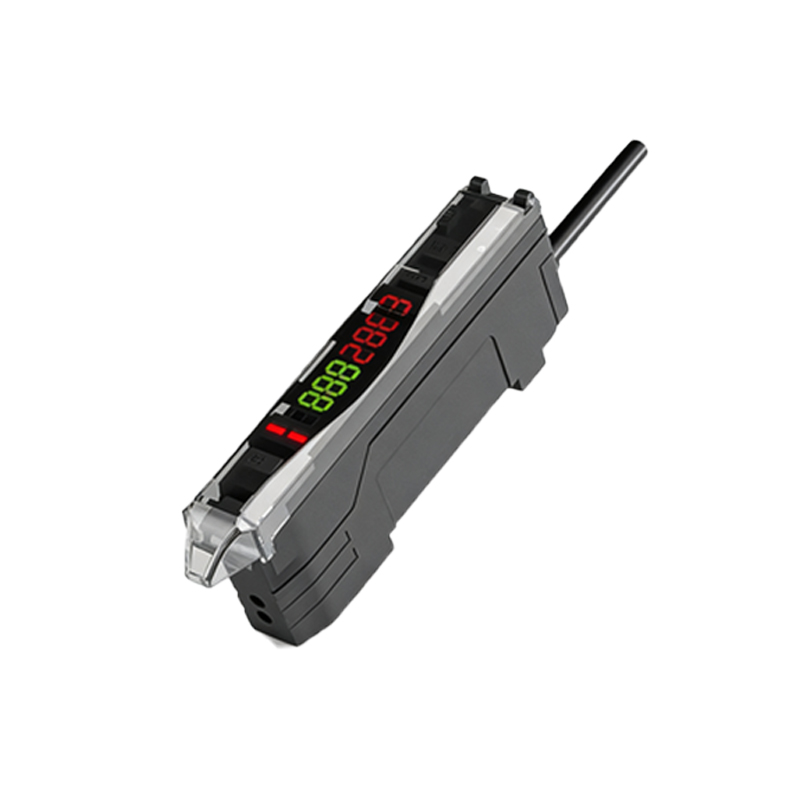
The first critical component is the light emitter. This is the active element that generates the modulated light beam crucial for detection. Most modern industrial photoelectric sensors use Light Emitting Diodes (LEDs) as their light source. LEDs are preferred for their long operational life, compact size, resistance to vibration, and ability to be switched at very high speeds, allowing for sophisticated modulation. The most common types emit visible red light or infrared light, with infrared being widely used for its invisibility and better immunity to ambient light interference. For specialized applications requiring exceptional precision or detection of very small objects, sensors may utilize laser diodes. The emitted light is typically pulsed at a specific frequency, which allows the receiver to distinguish the sensor's own signal from background ambient light, dramatically enhancing reliability and sensing range.
The Receiver: Capturing the Light Signal
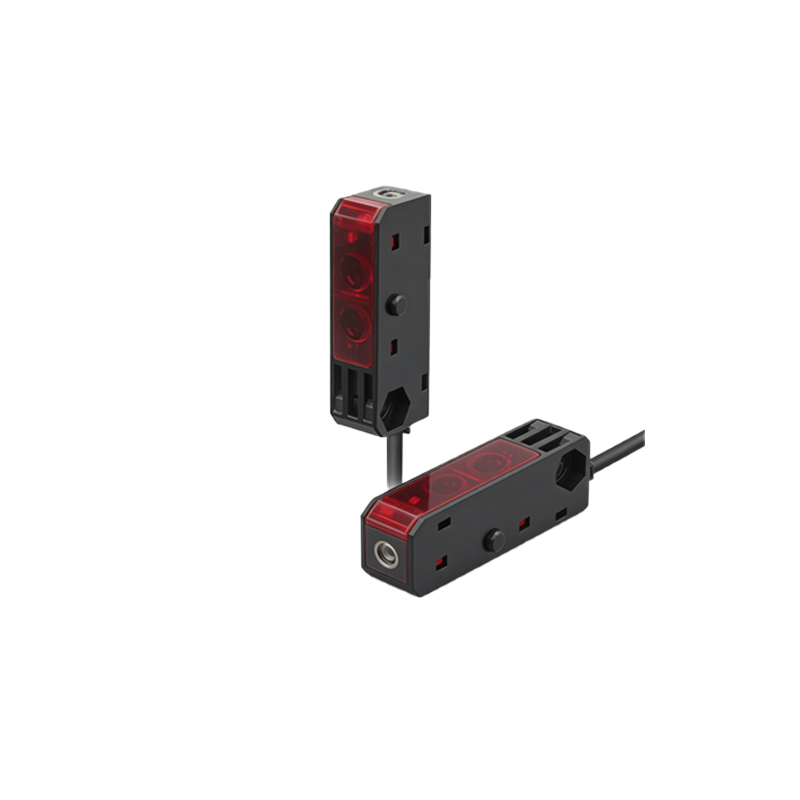
The second essential component is the receiver or photodetector. Its sole purpose is to convert incoming light energy back into an electrical signal. The most common type of photodetector used is a phototransistor or a photodiode. These semiconductor devices are precisely tuned to be sensitive to the wavelength of light emitted by the paired LED. When the emitted light beam reaches the receiver—either directly from the emitter (in through-beam mode) or reflected from an object (in retro-reflective or diffuse mode)—the photodetector conducts current proportionally to the light intensity. This circuit is meticulously designed to filter out signals that do not match the precise modulation frequency of the emitter. This sophisticated filtering is what gives modern photoelectric sensors their remarkable immunity to factory ambient light from windows, lamps, or other equipment.
The Control Circuit and Output Unit: The Decision-Maker
The third and final core component is the control circuit, often integrated with the output switching unit. This is the "brain" of the sensor. It processes the electrical signal from the receiver, comparing its strength and timing against predefined thresholds. Based on this analysis, it makes a deterministic decision: is an object present or not? Once the decision is made, the output unit acts upon it. This unit typically contains a solid-state switch (like a transistor) or an electromechanical relay. It changes its state to provide a discrete signal, commonly a DC voltage (e.g., 24V) for a "ON" condition or 0V for an "OFF" condition. This clean, switched signal is directly compatible with programmable logic controllers (PLCs), counters, and other control devices. Advanced sensors integrate further logic here, such as timers, counters, or teach-in functionality for setting sensitivity.
Integration and Housing: Bringing It All Together
While the emitter, receiver, and control circuit form the functional triad, they are housed within a robust enclosure designed for industrial environments. This housing protects the sensitive electronics from dust, moisture, oil, and physical impact, with ingress protection ratings like IP67 or IP69K being common. Lenses are fitted over the emitter and receiver to focus the light beam, and alignment indicators are often provided for easier setup. The housing also contains the wiring terminals or connectors for power supply and the output signal. The seamless integration of the three core components into a durable, application-suited package is what transforms individual parts into a reliable, maintenance-free workhorse of factory automation, capable of performing millions of detection cycles with consistent accuracy.