Introduction to the 3C_D_A93L Proximity Sensor
The 3C_D_A93L represents a significant advancement in non-contact sensing technology, designed specifically for demanding industrial environments. As a robust inductive proximity sensor, it excels in detecting the presence or absence of metallic objects without any physical contact. This fundamental capability makes it indispensable in automated production lines, material handling systems, and safety-critical applications. The sensor's designation, 3C_D_A93L, follows a logical industry nomenclature, where '3C' often indicates a specific series or housing style, 'D' may refer to the sensing distance or output configuration, and 'A93L' typically details the electrical characteristics and housing material. Its primary function is to provide a reliable digital signal when a ferrous or non-ferrous metal target enters its predefined detection field, triggering subsequent actions in a control system such as a PLC.
Core Operating Principle and Technology
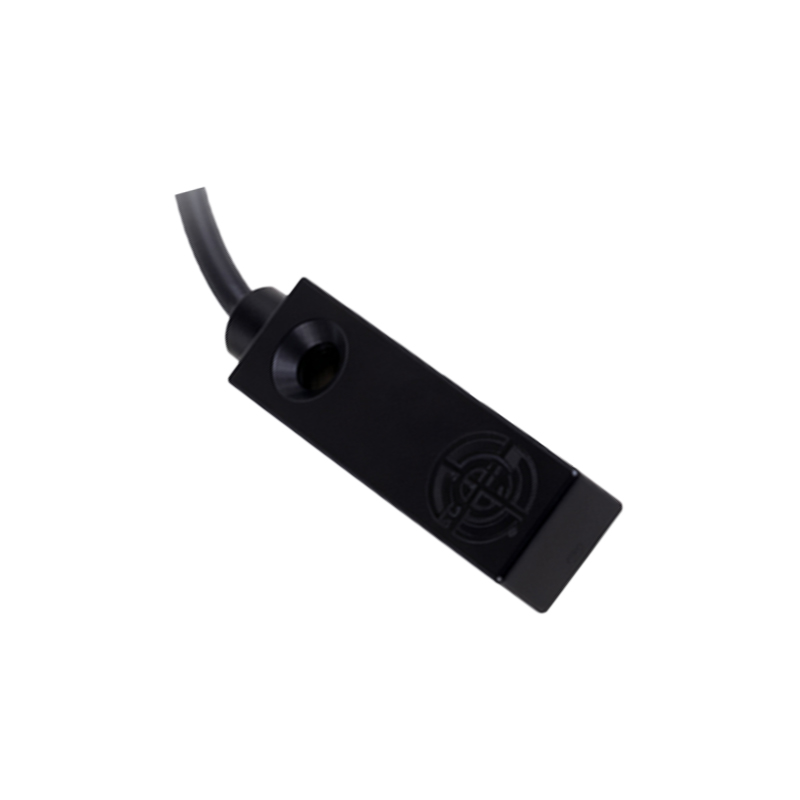
At its heart, the 3C_D_A93L operates on the principle of electromagnetic induction. The sensor contains an oscillator circuit that generates a high-frequency electromagnetic field at its active face. When a metallic object enters this oscillating field, eddy currents are induced on the surface of the target. These eddy currents draw energy from the oscillator, causing a measurable change in its amplitude. An integrated evaluation circuit continuously monitors this oscillation level. Once the amplitude drop exceeds a set threshold—indicating a target within the nominal sensing range—the sensor's solid-state switching element (typically an NPN or PNP transistor) changes state. This results in a clean, bounce-free output signal sent to the controller. The "A93L" suffix often implies a specific sensing distance, likely 2mm, 4mm, or 8mm, with enhanced noise immunity and temperature stability.
Key Technical Specifications and Performance Data
Understanding the specifications is crucial for proper integration. The 3C_D_A93L typically features a DC operating voltage range, commonly 10-30V DC, ensuring compatibility with standard industrial control voltages. Its output is usually a 3-wire configuration (V+, V-, and Signal) with either a sinking (NPN) or sourcing (PNP) transistor. The rated operating current is a critical parameter, often around 200mA, which dictates the load it can drive directly. Key performance metrics include a high switching frequency, often up to 1 kHz or more, allowing for the detection of rapidly moving parts. Repeat accuracy is exceptionally high, often within microns, guaranteeing consistent operation. Furthermore, it boasts a high degree of protection, typically rated IP67, making it resistant to dust ingress and temporary immersion, suitable for harsh washdown environments.
Installation, Wiring, and Configuration Best Practices
Correct installation is paramount for optimal performance. The sensor must be mounted securely to prevent vibration-induced errors. It is essential to maintain the specified lateral and axial clearance from surrounding metal structures (the "non-flush" mounting requirement) to avoid false triggering. Wiring must adhere to the manufacturer's diagram: brown wire to positive DC, blue wire to negative DC, and the black (or white) wire as the switched output to the PLC input module. A protective fuse or circuit breaker is recommended in the supply line. For the 3C_D_A93L, special attention should be paid to the sensing face orientation; the target should approach perpendicularly for maximum range. No user configuration is typically required, as the sensing range is fixed, but the load (e.g., a PLC input, relay coil) must be matched to the sensor's output type and current capacity.
Common Industrial Applications and Use Cases
The versatility of the 3C_D_A93L makes it a workhorse across numerous sectors. In automotive assembly, it is used for part presence verification, such as confirming a piston is in a cylinder block before machining. In packaging machinery, it counts metallic items on a conveyor or detects the open/closed position of a metallic door. Within material handling, it provides end-of-travel detection for robotic arms or verifies the position of pallets. A critical safety application is in machine guarding, where it can be part of an interlock system to ensure a safety gate is fully closed before a press cycle can begin. Its robust construction allows it to function reliably near welding equipment, stamping presses, and in areas with significant electromagnetic interference.
Troubleshooting and Maintenance Guidelines
Despite their durability, proximity sensors can encounter issues. Common problems include failure to detect a target, constant activation, or intermittent operation. A systematic approach begins with verifying power supply voltage at the sensor terminals using a multimeter.