Introduction to Photoelectric Displacement Sensing
Photoelectric sensors are pivotal components in modern industrial automation, offering non-contact, high-precision displacement detection. These devices operate by emitting a beam of light—typically infrared, visible, or laser—toward a target object. The reflected or interrupted light is then captured by a receiver, and the sensor's internal electronics analyze the signal to determine the object's position or movement. Unlike mechanical contact methods, photoelectric sensing eliminates wear and tear, ensuring long-term reliability and accuracy. This technology is indispensable in applications ranging from assembly line positioning to robotic guidance, where minute displacements must be monitored with minimal latency. The fundamental principle relies on the modulation of light properties, such as intensity or phase, which correlates directly to displacement changes, enabling resolutions down to micrometer levels in advanced systems.
Types of Photoelectric Sensors for Displacement
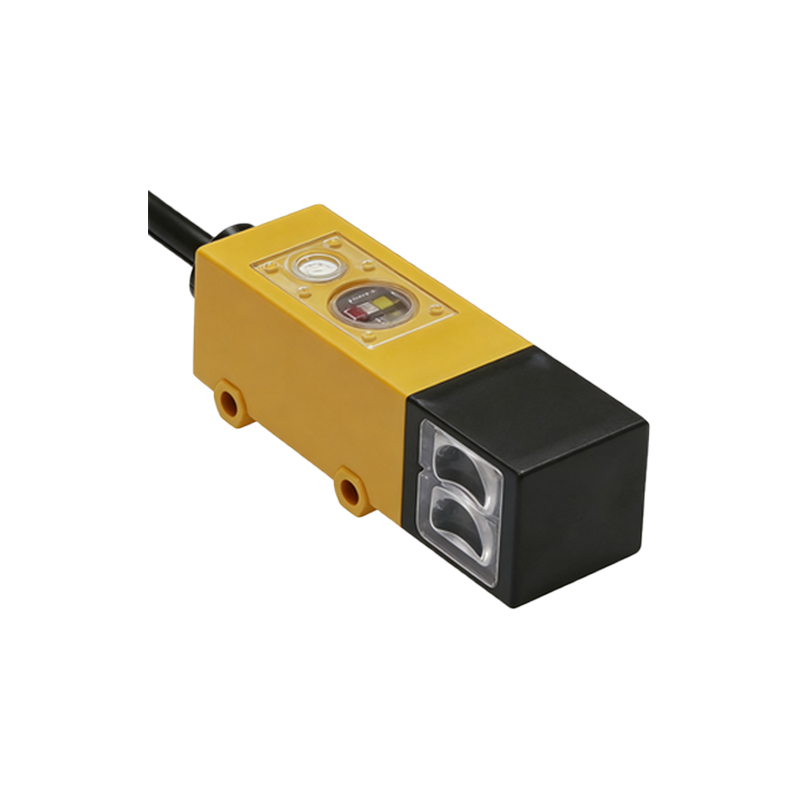
Several photoelectric sensor configurations are employed for displacement detection, each suited to specific industrial environments. Through-beam sensors consist of separate emitter and receiver units aligned opposite each other; displacement is measured when an object interrupts the light beam, ideal for long-range detection up to several meters. Retro-reflective sensors use a single unit that emits light and detects its return from a reflector, suitable for medium-range applications where alignment is challenging. Diffuse reflective sensors rely on light bouncing directly off the target, offering simplicity for short-range tasks but with potential accuracy variations due to surface reflectivity. Laser triangulation sensors, a high-precision variant, project a laser spot onto a target and use a CMOS or CCD array to calculate displacement based on the spot's position, achieving sub-micron accuracy in controlled conditions. Each type balances factors like range, resolution, and environmental robustness.
Key Performance Parameters and Selection Criteria
Selecting an appropriate photoelectric sensor for displacement detection requires evaluating critical parameters. Resolution refers to the smallest detectable displacement change, often influenced by the light source wavelength and receiver sensitivity; laser-based sensors typically offer the highest resolution. Repeatability indicates the consistency of measurements under identical conditions, crucial for quality control processes. Response time, measured in milliseconds or microseconds, determines how quickly the sensor can track rapid movements, essential for high-speed manufacturing lines. Environmental factors such as ambient light, dust, humidity, and temperature fluctuations can affect performance, necessitating sensors with protective housings or specialized filters. Additionally, the target's properties—like color, material, and surface texture—impact light reflection, requiring calibration or sensor type adjustment. Engineers must also consider output interfaces (e.g., analog voltage, digital signals, or fieldbus protocols) for integration with PLCs or data acquisition systems.
Applications in Industrial Automation and Robotics
Photoelectric displacement sensors are integral to diverse industrial sectors, enhancing efficiency and precision. In automotive manufacturing, they monitor the positioning of components during assembly, ensuring tolerances are met for safety-critical parts like brake systems. Packaging lines utilize these sensors to detect label placement or product alignment, reducing waste and downtime. Robotics applications leverage them for end-effector guidance, allowing arms to adjust in real-time based on object displacement, which is vital for pick-and-place operations or welding tasks. Semiconductor fabrication relies on high-accuracy laser sensors to measure wafer stage movements, where nanometer-level precision is mandatory. Moreover, in conveyor systems, sensors track item flow and detect jams, optimizing throughput. These examples underscore the technology's versatility in achieving operational excellence across harsh and dynamic environments.
Calibration and Maintenance Best Practices
To maintain optimal performance, photoelectric sensors require regular calibration and upkeep. Initial calibration involves setting reference points for zero displacement and scaling factors, often using certified calibration targets or gauge blocks. Environmental compensation may be needed if temperature shifts cause material expansion, affecting readings; some advanced sensors include built-in compensation algorithms. Maintenance routines should include lens cleaning to prevent dust or oil buildup that scatters light, along with periodic checks for alignment drift, especially in vibrating machinery. Diagnostic features, like LED indicators or output signal monitoring, help identify issues such as weak signals or interference. Additionally, firmware updates from manufacturers can enhance functionality or address drift over time. Implementing a preventive maintenance schedule reduces unexpected failures and extends sensor lifespan, ensuring consistent displacement data for critical processes.
Future Trends and Technological Advancements
The evolution of photoelectric displacement sensing is driven by Industry 4.0 and smart manufacturing demands. Emerging trends include miniaturization of sensor packages, enabling integration into compact devices like wearable robotics or medical instruments. Enhanced connectivity via IoT protocols allows sensors to transmit real-time displacement data to cloud platforms for predictive analytics, facilitating proactive maintenance and process optimization. Advances in light sources, such as blue laser diodes, improve resolution and stability in challenging materials like transparent or glossy surfaces. Machine learning algorithms are being integrated to compensate for environmental variables automatically, reducing manual calibration efforts. Furthermore, hybrid systems combining photoelectric sensing with other technologies (e.g., vision systems or inertial measurement units) offer multi-dimensional displacement tracking. These innovations promise to expand applications into fields like autonomous vehicles and precision agriculture, where reliable non-contact detection is paramount.