Understanding the One-to-Many Sensor Paradigm
In industrial automation and control systems, the traditional setup often involves a single proximity sensor dedicated to monitoring one specific target or event. However, the evolving demands for efficiency, cost reduction, and space optimization have propelled the adoption of more sophisticated configurations. A one-to-many proximity sensor system represents a significant leap in this direction. This paradigm refers to a setup where a single sensor unit, or a strategically placed sensor array, is designed to detect, identify, or monitor multiple distinct targets or conditions within its effective sensing range. This approach moves beyond simple presence detection towards a more intelligent, multi-point monitoring solution, enabling complex machine interactions and data collection from several points using a minimized hardware footprint.
Core Technologies Enabling Multi-Target Detection
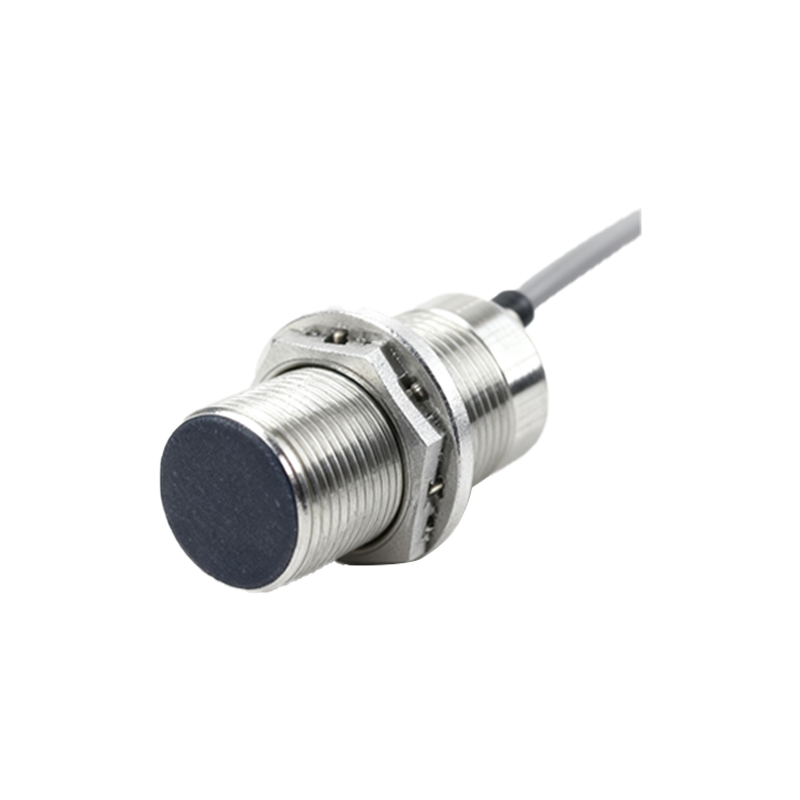
Not all proximity sensor technologies are equally suited for one-to-many applications. The feasibility hinges on the sensor's ability to discriminate between different targets. Inductive proximity sensors, common for metal detection, can be configured in a multiplexed array where a single controller rapidly polls multiple sensor heads. Capacitive sensors can detect multiple non-metallic objects based on material and distance, but discrimination can be challenging. The most promising technologies for advanced one-to-many setups are photoelectric sensors and RFID systems. Photoelectric sensors, especially those with background suppression or precise light spot control, can be used to monitor multiple break-beams or reflectors. Ultrasonic sensors can measure distances to several objects within their beam pattern, provided there is sufficient separation. RFID systems inherently operate on a one-to-many principle, where a single reader can identify numerous tagged items passing through its field.
Key Design Considerations and Challenges
Implementing a reliable one-to-many proximity sensing system requires meticulous planning. The primary challenge is avoiding crosstalk or interference, where the sensor's signal is confused by multiple targets. Engineers must carefully calculate sensing ranges, install physical barriers or shields, and employ sensors with narrow, focused sensing fields. Timing and sequencing are critical; using time-division multiplexing allows a single sensor circuit to service multiple points sequentially at high speed, making it appear simultaneous. For identification tasks, such as with RFID, ensuring consistent read rates and managing data collisions from multiple tags are paramount. Environmental factors like dust, moisture, and ambient light (for photoelectrics) must be accounted for, as they can significantly degrade performance in a multi-target environment where signal integrity is already complex.
Wiring and Network Integration Strategies
A major advantage of one-to-many configurations is the simplification of wiring and connectivity. Instead of running individual cables from each sensor point back to the controller, multiple sensing points can be connected via a bus system or networked through a single interface. This is commonly achieved using IO-Link, AS-Interface, or PROFINET protocols, where a single master device communicates with multiple sensor nodes on a shared cable. This drastically reduces installation time, material costs, and potential points of failure. The network also enables advanced diagnostics and parameterization for each sensing point remotely, allowing for quick reconfiguration of the system without physical adjustments to the sensor hardware itself.
Practical Applications in Modern Industry
The practical applications of one-to-many proximity sensing are vast and growing. In automated assembly lines, a single RFID reader can track dozens of pallets or product carriers, enabling flexible routing and process control. On packaging machinery, a multiplexed array of inductive sensors can monitor the positions of multiple actuators or cams on a single shaft. In warehouse automation, a strategically placed photoelectric sensor array can count items on a conveyor or detect the occupancy status of multiple storage bins. AGVs (Automated Guided Vehicles) often use a combination of sensors to detect multiple navigation points or obstacles in their path from a single unit. These applications highlight the core benefits: reduced hardware costs, streamlined cabinet space, simplified maintenance, and enhanced system intelligence.
Future Trends and Intelligent Systems
The future of one-to-many proximity sensing is tightly integrated with the rise of Industry 4.0 and smart sensor technology. Sensors are becoming more intelligent, with embedded processing power that allows for onboard target discrimination and data pre-processing. The integration of machine vision with proximity sensing creates powerful hybrid systems where a camera (acting as a sophisticated sensor) can identify and locate hundreds of features simultaneously. Furthermore, the use of AI algorithms can help interpret complex sensor data from a single point to infer multiple conditions, such as predicting machine wear by analyzing vibration patterns detected by a single accelerometer. The trend is moving towards sensor fusion and data-driven insights, where the one-to-many concept evolves from simply detecting multiple objects to understanding complex relationships between them.