Fundamental Operating Principle
Inductive proximity sensors are non-contact electronic devices designed to detect the presence or absence of metallic objects without physical contact. Their operation is based on the principle of electromagnetic induction. At the core of the sensor is a coil wound around a ferrite core, which forms part of an oscillator circuit. When energized, this coil generates a high-frequency alternating electromagnetic field that radiates from the active face of the sensor. When a metallic target enters this field, eddy currents are induced on the surface of the target. These eddy currents draw energy from the oscillator, resulting in a measurable change in the oscillation amplitude or frequency. This change is detected by the sensor's evaluation circuit, which subsequently triggers a switching signal in the output stage, typically an NPN or PNP transistor, or a solid-state relay.
Key Characteristics and Performance Metrics
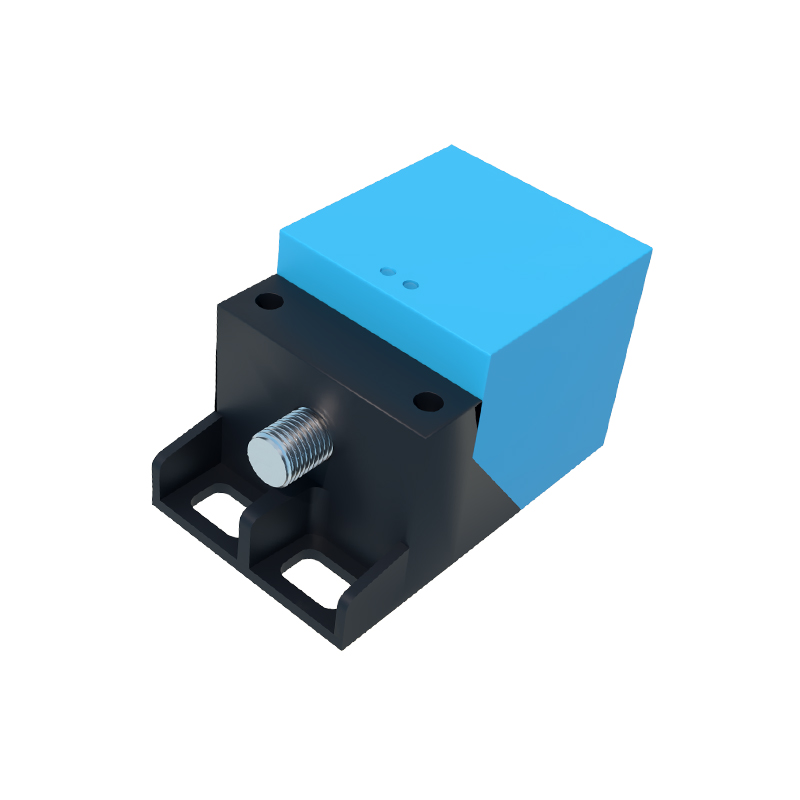
Several critical parameters define the performance and suitability of an inductive sensor for a given application. The nominal sensing distance (Sn) is a fundamental specification, indicating the ideal detection range for a standard target, usually defined as a square of mild steel (Fe360) with a thickness equal to the sensor's diameter. The real sensing distance (Sr) can vary based on the target material, size, and shape, often requiring a reduction factor for non-ferrous metals. Repeatability is crucial for precision applications, referring to the sensor's ability to consistently detect a target at the same point under identical conditions. Switching frequency denotes how many on/off cycles the sensor can perform per second, a vital factor in high-speed automation. Other important considerations include hysteresis, which prevents chatter by creating a difference between the switch-on and switch-off points, and the sensor's housing material and protection rating (IP or NEMA), which determine its resilience in harsh industrial environments.
Common Types and Form Factors
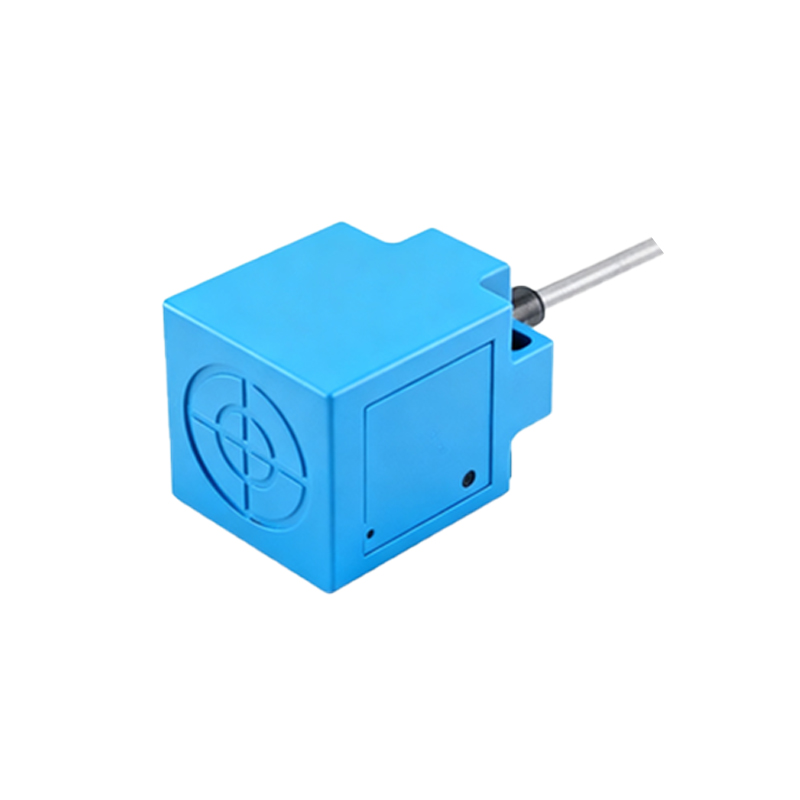
The industrial market offers a wide variety of inductive proximity sensors tailored to different spatial and functional requirements. Cylindrical threaded barrels (e.g., M8, M12, M18, M30) are among the most common, prized for their ease of installation and robust design. Rectangular or block-style sensors provide a flat sensing face, often used where space is limited. Slot or ring sensors are designed to detect objects passing through their aperture, ideal for counting or verifying the presence of small parts. Factor 1 sensors have a sensing distance equal to their diameter, while Factor 2 or 3 sensors offer extended ranges. Furthermore, sensors are classified as shielded (flush-mountable) or unshieldded (non-flush). Shielded sensors can be mounted flush in metal without affecting their sensing field, whereas unshielded types offer a longer sensing range but require a non-metallic surrounding.
Material Influence and Target Considerations
The composition of the target object significantly impacts sensor performance. Ferromagnetic materials like mild steel are most easily detected and provide the full nominal sensing distance. Non-ferrous metals such as aluminum, brass, or copper induce weaker eddy currents, resulting in a reduced effective sensing range, often 30% to 60% of the nominal distance. Stainless steel, depending on its grade, can also exhibit a reduction factor. The target's size must generally be equal to or larger than the sensor's active face to achieve the rated sensing distance. Thin foils or small parts may require a reduced sensing distance or a specialized high-frequency sensor. Engineers must always consult the sensor's datasheet for specific reduction factors and ensure the target is presented to the sensor in a consistent orientation.
Wiring and Output Configurations
Inductive proximity sensors are available in multiple wiring and output configurations to interface seamlessly with control systems like PLCs (Programmable Logic Controllers). The two primary DC output types are NPN (sinking) and PNP (sourcing). An NPN sensor switches the negative (0V) line to the load, common in Asian-market designs, while a PNP sensor switches the positive voltage line, prevalent in Europe and North America. Sensors are also categorized as normally open (NO) or normally closed (NC), defining their switching state when no target is present. Many modern sensors feature a 3-wire DC design (V+, Output, 0V), while 2-wire AC/DC models simplify installation but require a minimum load current. Some advanced models offer analog (4-20 mA or 0-10V) or IO-Link outputs, providing continuous distance data rather than a simple on/off signal.
Typical Industrial Applications
The robustness, reliability, and non-contact nature of inductive proximity sensors make them indispensable across manufacturing and process industries. Common applications include position sensing, such as detecting the end-of-travel of a