Introduction to Proximity Sensors
Proximity sensors are essential components in modern industrial automation, designed to detect the presence or absence of objects without physical contact. These devices operate based on various principles, such as electromagnetic fields, light, or sound, enabling reliable and efficient monitoring in diverse environments. Their non-contact nature minimizes wear and tear, enhances safety, and supports high-speed operations. Industries ranging from automotive manufacturing to food processing rely on proximity sensors for tasks like object detection, position control, and quality assurance. Understanding the different types of proximity sensors is crucial for selecting the right technology to meet specific application demands, ensuring optimal performance and cost-effectiveness.
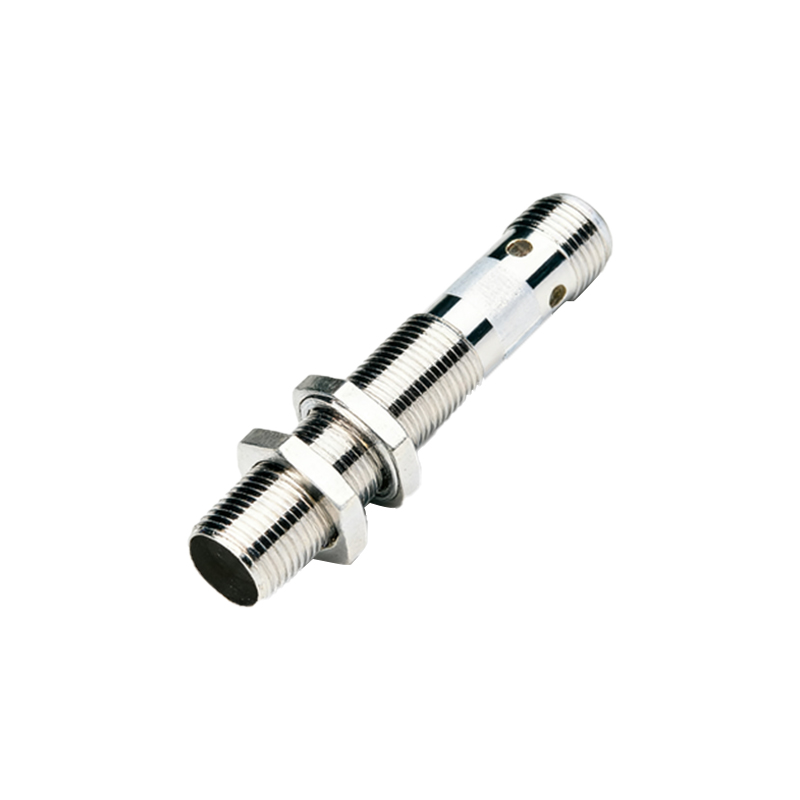
Inductive Proximity Sensors
Inductive proximity sensors are widely used for detecting metallic objects. They generate an electromagnetic field and sense changes caused by conductive materials, such as steel, aluminum, or copper. When a metal target enters the sensing range, it induces eddy currents in the sensor's coil, triggering an output signal. These sensors are highly durable, resistant to environmental factors like dust and moisture, and offer fast response times. Common applications include machine tool positioning, conveyor belt systems, and robotic assembly lines. However, they are limited to metal detection and have a relatively short sensing range compared to other types, typically up to 60 millimeters.
Capacitive Proximity Sensors
Capacitive proximity sensors can detect both metallic and non-metallic objects, including liquids, plastics, and wood. They work by measuring changes in capacitance between the sensor and the target. When an object enters the sensing field, it alters the dielectric constant, causing a shift in capacitance that activates the sensor. This versatility makes them ideal for applications like level detection in tanks, material handling, and packaging. They are also effective in harsh conditions, such as high humidity or contamination. The sensing range varies but generally extends up to 40 millimeters, depending on the material's properties. Proper calibration is necessary to avoid false triggers from environmental interference.
Ultrasonic Proximity Sensors
Ultrasonic proximity sensors utilize sound waves at frequencies beyond human hearing to detect objects. They emit ultrasonic pulses and measure the time taken for echoes to return after hitting a target. This time-of-flight principle allows for accurate distance measurement and detection of various materials, regardless of color or transparency. These sensors excel in applications requiring long-range sensing, up to several meters, such as liquid level monitoring, collision avoidance in vehicles, and warehouse automation. They perform well in challenging environments, including dusty or foggy areas, but may be affected by temperature fluctuations or acoustic noise.
Photoelectric Proximity Sensors
Photoelectric proximity sensors use light beams, typically infrared or laser, to detect objects. They consist of an emitter and a receiver; when an object interrupts or reflects the light beam, the sensor triggers an output. There are three main configurations: through-beam (separate emitter and receiver), retro-reflective (with a reflector), and diffuse (reflective). These sensors offer long sensing ranges, up to hundreds of meters for through-beam types, and high precision. They are suitable for detecting small or transparent objects, as in bottling lines, electronic assembly, and security systems. However, they can be sensitive to ambient light or dirty lenses, requiring regular maintenance.
Magnetic Proximity Sensors
Magnetic proximity sensors detect magnetic fields, often from permanent magnets or electromagnets. They are commonly based on reed switches or Hall effect technology. Reed switches use ferromagnetic reeds that close when exposed to a magnetic field, while Hall effect sensors generate a voltage proportional to the field strength. These sensors are compact, energy-efficient, and reliable in extreme temperatures or vacuum conditions. Typical applications include door position sensing in appliances, speed monitoring in motors, and safety interlocks. Their sensing range is limited, usually under 100 millimeters, and they only respond to magnetic targets.
Selection Criteria for Proximity Sensors
Choosing the right proximity sensor involves evaluating several factors. First, consider the target material: inductive sensors for metals, capacitive for diverse materials, and others based on specific needs. Sensing range and accuracy are critical for distance-dependent tasks, while environmental conditions like temperature, humidity, and contamination dictate durability requirements. Response time affects high-speed operations, and output types (e.g., analog, digital) must align with control systems. Cost and maintenance also play a role; for instance, photoelectric sensors may need more upkeep than inductive ones. Consulting manufacturer specifications and testing in real-world scenarios ensures a suitable match.
Future Trends in Proximity Sensing Technology
The future of proximity sensors is shaped by advancements in