Introduction to Photoelectric Sensing Technology
Photoelectric sensors are fundamental components in modern industrial automation, providing reliable, non-contact detection of objects. A 9 photoelectric sensor typically refers to a unit that may incorporate multiple sensing elements, advanced diagnostics, or specific form factors for complex applications. These devices operate on the principle of emitting a light beam—often infrared, visible red, or laser—and detecting changes in the received light signal. The core advantage lies in their ability to sense a wide variety of materials, including glass, metal, plastic, and liquids, over considerable distances and with high precision. Their versatility makes them indispensable in packaging, material handling, automotive assembly, and food & beverage production lines, where accuracy and speed are paramount.
Core Operating Principles and Types
The functionality of a photoelectric sensor hinges on three primary modes: through-beam, retro-reflective, and diffuse (proximity). In a through-beam system, the emitter and receiver are separate units. An object is detected when it interrupts the light beam traveling from the emitter to the receiver. This mode offers the longest sensing range and highest reliability. Retro-reflective sensors house both emitter and receiver in one housing, using a reflector to bounce the light beam back. Detection occurs when an object blocks this reflected beam. Diffuse sensors, also self-contained, detect an object by measuring the light reflected directly from the object's surface. Advanced 9-series sensors often integrate background suppression or foreground suppression technology within the diffuse mode, allowing them to ignore objects beyond or before a specific set distance, crucial for precise positioning tasks.
Key Features of Advanced 9-Series Sensors
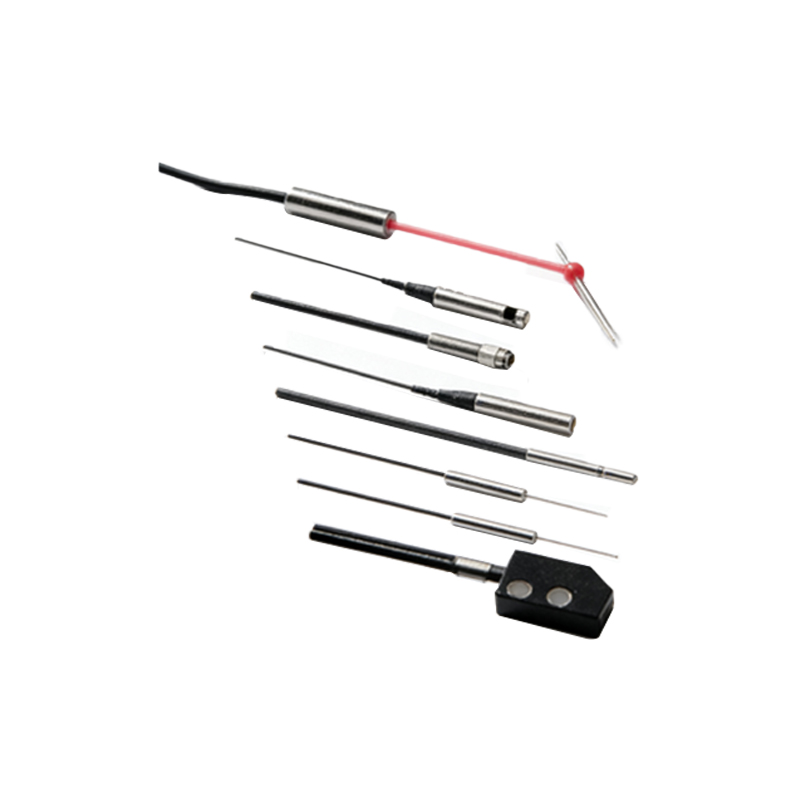
Modern 9 photoelectric sensors are engineered with features that enhance performance in demanding environments. These include robust housing ratings such as IP67 and IP69K for resistance to dust, water jets, and high-pressure washdowns, essential for pharmaceutical and food processing. Many models offer programmable functionality via teach-in buttons or IO-Link communication, enabling on-the-fly adjustment of sensing parameters like sensitivity and response time. Advanced diagnostics, often indicated by multi-color LEDs or via the IO-Link interface, provide real-time status on lens contamination, alignment issues, or output stability, significantly reducing downtime. Furthermore, specialized variants like polarized filters for shiny object detection, fiber optic versions for extreme temperatures or tight spaces, and laser models for high-precision alignment are common in comprehensive 9-series portfolios.
Application-Specific Considerations and Selection
Selecting the correct 9 photoelectric sensor requires a detailed analysis of the application. Key parameters include sensing distance, required resolution (minimum detectable object size), response speed, and the material and color of the target object. For instance, detecting a clear glass bottle on a high-speed filler demands a high-resolution, background-suppression sensor with a fast response. In contrast, detecting the presence of a large metal pallet in a warehouse might use a long-range through-beam sensor. Environmental factors are equally critical; sensors in outdoor applications need immunity to ambient light, while those in cold storage must operate reliably at low temperatures. Understanding the electrical requirements (e.g., NPN/PNP output, voltage range) and mechanical mounting constraints completes the selection process to ensure seamless integration into the control system.
Installation, Alignment, and Maintenance Best Practices
Proper installation is vital for optimal sensor performance. Ensuring a stable mounting platform free from vibration is the first step. For through-beam and retro-reflective types, precise alignment of the emitter, receiver, and reflector is necessary; many sensors feature alignment aids like visible red beams or alignment status LEDs. It is crucial to avoid optical interference, such as cross-talk between adjacent sensors or reflections from shiny surfaces in the sensing path. Regular maintenance involves keeping the lens clean from dust, oil, or condensation that can attenuate the light signal. Leveraging the built-in diagnostic features of advanced 9-series sensors for predictive maintenance can prevent unplanned stoppages. Periodically verifying the sensing stability, especially after changes in the production line or environment, ensures long-term reliability.
The Future: Integration with Industry 4.0 and IIoT
The evolution of the 9 photoelectric sensor is tightly coupled with the rise of Industry 4.0 and the Industrial Internet of Things (IIoT). Next-generation sensors are becoming intelligent data points on the network. Through communication protocols like IO-Link, they transmit not just a simple on/off signal but a wealth of process data, including internal temperature, operating hours, signal strength, and diagnostic warnings. This data enables condition-based monitoring, predictive maintenance, and deeper process optimization. Furthermore, advancements in miniaturization, energy efficiency, and the integration of multi-spectral sensing capabilities are on the horizon. These developments will allow 9-series sensors to tackle even more sophisticated tasks, such as color recognition, contrast detection, and precise measurement, solidifying their role as the eyes of the automated factory.