Understanding Proximity Sensor Fundamentals
Proximity sensors are non-contact devices designed to detect the presence or absence of an object within a specific sensing range. They operate by emitting an electromagnetic field, beam, or acoustic wave and then monitoring for changes in the return signal or field. The core principle is to sense a target without physical contact, making them ideal for harsh environments, high-speed counting, and applications requiring minimal wear and tear. The absence of mechanical contact translates to longer operational life and higher reliability. Engineers must first grasp this fundamental operating principle to appreciate the selection criteria that follow, as the choice of technology directly impacts performance in variables like sensing distance, target material, response speed, and environmental resilience.
Key Selection Criteria and Parameters
Selecting the optimal proximity sensor requires a systematic evaluation of several critical parameters. The first is the sensing distance, often specified as the nominal sensing distance (Sn). It is crucial to consider both the rated operating distance and the necessary safety margin or reduction factor, especially for inductive sensors detecting different metals. The target material is equally vital; inductive sensors detect metals, capacitive sensors detect both metals and non-metals, while photoelectric sensors can detect virtually any material. Other essential parameters include the sensor's response time, switching frequency, output type (PNP/NPN, NO/NC, analog), and housing material (e.g., stainless steel for washdown environments). Ignoring any of these factors can lead to system failure or unreliable operation.
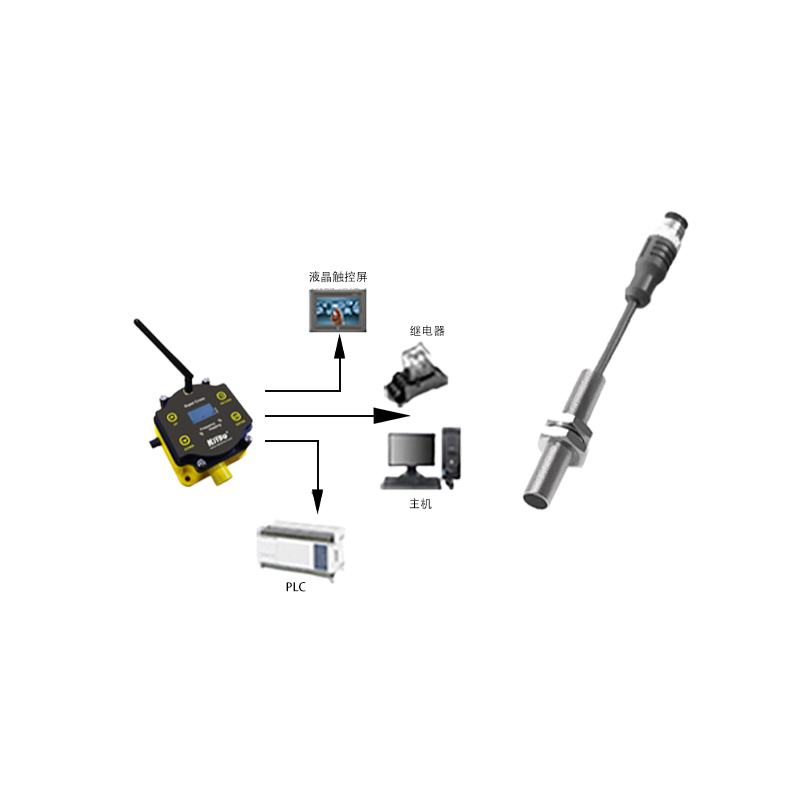
Inductive Proximity Sensors: For Metallic Targets
Inductive proximity sensors are the workhorses for detecting ferrous and non-ferrous metals. They generate an oscillating electromagnetic field from a coil. When a metallic target enters this field, it induces eddy currents, causing a change in oscillation amplitude that triggers the sensor's output. They are renowned for their robustness, high switching frequency, and resistance to dirt, dust, and moisture. Key sub-types include standard-range sensors, shielded (flush-mountable) models for tight installations, and non-shielded (non-flush) models offering longer sensing ranges. Special variants like factor-1 sensors maintain their rated sensing distance regardless of the target metal type (steel, aluminum, brass), while all-metal sensors offer consistent but reduced sensing distances across metals.
Capacitive Proximity Sensors: Beyond Metals
Capacitive proximity sensors can detect a much wider range of materials, including liquids, plastics, glass, wood, and granular substances. They function by generating an electrostatic field. Any object with a dielectric constant different from air alters the capacitance of the sensor's circuit, triggering detection. This makes them perfect for level detection in tanks (liquid or powder), material handling of non-metals, and presence detection through thin non-metallic walls. Sensitivity is often adjustable, allowing tuning to ignore container walls and focus on the target material. However, they can be more susceptible to environmental factors like humidity and temperature fluctuations compared to inductive types.
Photoelectric Sensors: Versatile and Long-Range
Photoelectric sensors offer the greatest versatility and longest sensing ranges, sometimes exceeding tens of meters. They operate by emitting a light beam (usually infrared, visible red, or laser) and detecting changes in the received light. The three main operating modes are through-beam (separate emitter and receiver), retro-reflective (uses a reflector), and diffuse (reflective), where the target itself reflects the beam back. They can detect objects of any color, material, or surface finish, though highly reflective or dark absorbent targets may require special models. Background suppression and foreground suppression variants are available for precise detection at a defined distance, ignoring objects beyond or before the set point.
Ultrasonic Proximity Sensors: For Challenging Conditions
Ultrasonic sensors use high-frequency sound waves to detect objects and measure distance. They are exceptionally effective in environments filled with dust, smoke, fog, or where target color or transparency is an issue for photoelectric sensors. They operate on the time-of-flight principle, calculating distance based on the echo return time. Common applications include bulk material level sensing, transparent object detection, and uneven surface profiling. While highly reliable in dirty environments, their performance can be affected by temperature gradients, wind, and extremely soft materials that absorb sound.
Application Environment and Installation Considerations
The operating environment dictates many sensor choices. For washdown areas in food & beverage or pharmaceutical industries, sensors must have high IP ratings (e.g., IP67, IP69K) and corrosion-resistant housings like stainless steel. In high-temperature settings near ovens or welding stations, high-temperature rated sensors are mandatory. Electrically noisy environments from variable frequency drives (V