Introduction to Sony Photoelectric Sensors
Sony photoelectric sensors represent a pinnacle of precision sensing technology, widely utilized across industrial automation, robotics, and quality control systems. These devices operate by emitting a light beam—typically infrared, visible red, or laser—and detecting changes in the received light intensity caused by the presence, absence, or characteristics of an object. Sony's expertise in optics and electronics, honed through decades in consumer and professional imaging, is directly applied to these industrial components. The result is a product line known for exceptional accuracy, reliability, and fast response times, capable of functioning in demanding environments where consistent performance is non-negotiable. From detecting minute components on a high-speed assembly line to ensuring precise positioning in automated machinery, Sony sensors provide the critical data needed for seamless operation.
Core Technologies and Operating Principles
The superior performance of Sony photoelectric sensors stems from several core technologies. A fundamental principle is the modulation of the emitted light. By pulsing the light source at a specific high frequency, the sensor's receiver can distinguish the signal from ambient light interference, such as factory lighting or sunlight, ensuring stable detection. Sony employs advanced optical lens design to create highly focused beams with consistent profiles, enabling precise detection of small or low-contrast objects. Furthermore, sophisticated integrated circuits process the received signal with high speed and intelligence. These ICs can implement functions like background suppression, which allows the sensor to ignore objects beyond a set distance, and teach-in programming for easy setup. The convergence of these optical and electronic innovations allows Sony sensors to achieve detection resolutions down to micrometers and response times in the microsecond range.
Key Product Types and Configurations
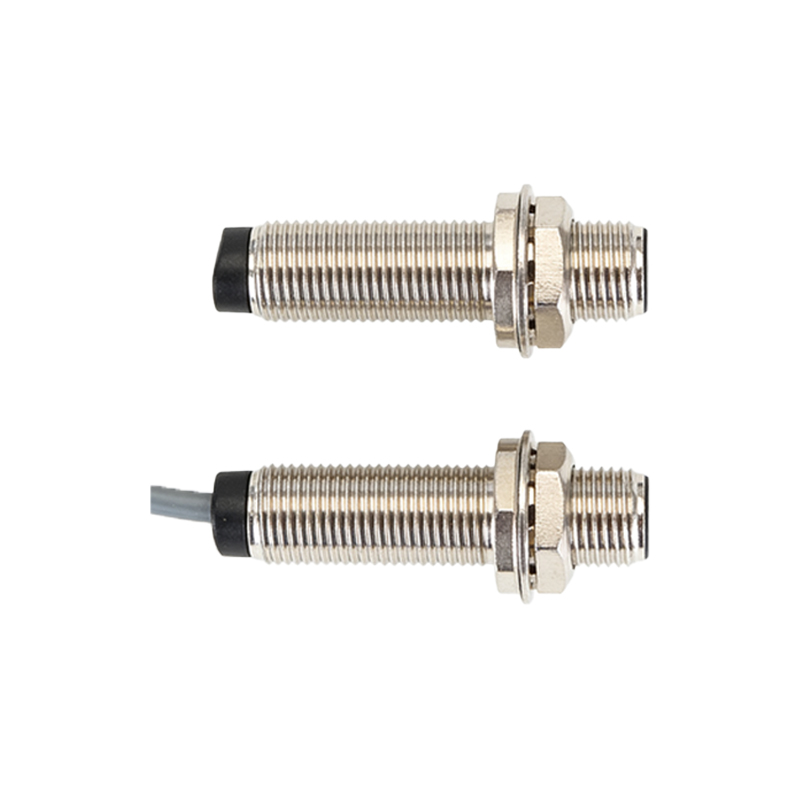
Sony offers a diverse portfolio of photoelectric sensors to meet various application needs. The primary configurations include through-beam, retro-reflective, and diffuse-reflective types. Through-beam sensors consist of separate emitter and receiver units; detection occurs when an object breaks the beam between them, offering the longest sensing ranges and highest reliability. Retro-reflective types use a single housing containing both emitter and receiver, relying on a reflector to bounce the light back; an object is detected when it interrupts this reflected beam. Diffuse-reflective sensors, also self-contained, detect light reflected directly off the target object itself, making them ideal for applications where installing a reflector is impractical. Sony also provides specialized variants, such as background suppression sensors for precise distance-based detection and color mark sensors that differentiate based on color contrast, expanding their utility in complex sorting and inspection tasks.
Application Scenarios in Modern Industry
The application of Sony photoelectric sensors spans virtually every sector of modern manufacturing and logistics. In automotive assembly lines, they are indispensable for part presence verification, robot guidance, and weld seam tracking. The electronics industry relies on them for PCB board positioning, component counting, and detecting microscopic flaws on silicon wafers. Within packaging machinery, these sensors control fill levels, verify label placement, and inspect seal integrity. Logistics and warehousing automation utilize them for parcel dimensioning, barcode reading guidance, and palletizing robot coordination. Their robustness allows them to perform in harsh conditions—resisting vibrations, temperature fluctuations, and exposure to dust or coolant mist—ensuring continuous operation in foundries, pharmaceutical cleanrooms, and food processing plants alike.
Advantages Over Competing Solutions
Choosing Sony photoelectric sensors offers distinct advantages. First is unparalleled precision and stability, a direct transfer from Sony's imaging sensor technology, leading to fewer false triggers and higher system uptime. Second is their compact form factor; despite their high performance, many models are designed to save valuable space in dense control panels and machinery. Third is ease of integration and use. Features like intuitive teach-in buttons, clear status LEDs, and compatibility with standard industrial communication protocols (like IO-Link) simplify installation and reduce commissioning time. Finally, Sony's global supply chain and technical support network provide assurance of product availability and expert assistance, minimizing downtime risks for critical operations. This combination of technical excellence and user-centric design solidifies their position as a preferred choice for engineers.
Installation, Calibration, and Maintenance Best Practices
Proper installation is crucial for optimal sensor performance. Key considerations include mounting stability to prevent misalignment from vibration, ensuring the optical path is free of obstructions like dust or steam, and selecting the correct sensing mode for the application. Calibration, often performed via a teach-in procedure, involves setting the sensitivity threshold to reliably detect the target while ignoring the background. Regular maintenance involves keeping the lens clean with appropriate materials, checking for physical damage to the housing or cable, and verifying operational performance through routine system checks. Leveraging built-in diagnostic outputs, such as stability indicators or excess gain indicators, can provide early warnings of potential issues like lens contamination or gradual misalignment, enabling proactive maintenance.
Future Trends and Innovations
The future of Sony photoelectric sensors is intertwined with the evolution of Industry 4.0 and smart factories. Emerging trends include the integration of enhanced intelligence directly at the sensor level. Future models may incorporate more advanced onboard processing for condition monitoring and predictive maintenance analytics, communicating detailed health data directly to supervisory systems. Miniaturization will continue, enabling sensors to be embedded in increasingly compact devices and collaborative robots (cobots). Furthermore, advancements in light source technology, such as the use of VCSELs (Vertical-Cavity Surface-Emitting Lasers), promise even more precise, efficient, and longer-lasting beams. As industrial networks evolve, seamless integration with Ethernet-APL, OPC UA, and other IIoT frameworks will make sensor data more accessible and actionable, driving greater efficiency and autonomy in automated systems.