Introduction to Hall Effect Proximity Sensors
Hall Effect proximity sensors are solid-state devices that detect the presence or absence of a magnetic field, typically generated by a permanent magnet or an electromagnet. They operate based on the Hall Effect, a fundamental physical principle discovered by Edwin Hall in 1879. When a current-carrying conductor is placed in a magnetic field perpendicular to the current flow, a voltage difference, known as the Hall voltage, is generated across the conductor. This voltage is proportional to the strength of the magnetic field. In a Hall Effect sensor, this phenomenon is harnessed using a thin semiconductor element. When a target, usually a magnet, approaches the sensor, the changing magnetic field strength alters the Hall voltage, which is then processed by integrated electronics to produce a clean, digital or analog output signal. Unlike inductive or capacitive sensors, Hall Effect sensors specifically respond to magnetic fields, making them ideal for applications involving ferrous or permanent magnet targets.
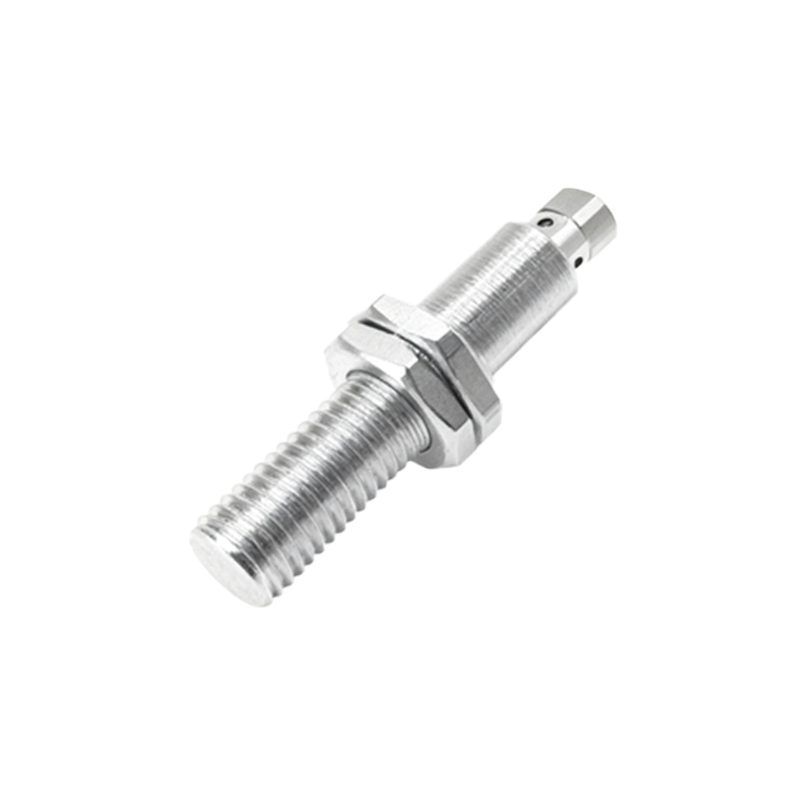
Core Operating Principles and Design
The fundamental operation hinges on the Hall element, typically made from materials like gallium arsenide, indium antimonide, or silicon. This element is integrated into an IC that includes signal conditioning circuitry such as amplifiers, Schmitt triggers, and voltage regulators. There are two primary output types: digital and linear. Digital (or switch) sensors provide a simple on/off signal when the magnetic flux density exceeds a predefined threshold. They often feature built-in hysteresis to prevent output chatter near the switching point. Linear sensors, on the other hand, produce a continuous analog output voltage that is directly proportional to the strength of the magnetic field, allowing for precise position measurement. Key design considerations include sensitivity, operating voltage range, temperature stability, and the type of magnetic actuation (head-on, slide-by, or push-pull). Their solid-state construction grants them high reliability, immunity to environmental contaminants like dust and oil, and a long operational lifespan with no moving parts to wear out.
Key Advantages Over Other Sensor Types
Hall Effect proximity sensors offer several distinct benefits that make them preferable in many industrial scenarios. First, they can detect both static (DC) and changing magnetic fields, allowing them to sense stationary positions, which is a limitation for inductive sensors that require a moving ferrous target. Second, they are truly contactless and wear-free, as the sensing element does not physically interact with the target. This leads to exceptionally high repeatability and millions of cycles of operation. Third, they are highly resistant to environmental factors such as vibration, moisture, and contaminants, making them suitable for harsh industrial environments. Fourth, their response time is extremely fast, often in the microsecond range, enabling high-speed counting and positioning tasks. Finally, they can operate over a wide temperature range and are not affected by non-magnetic materials intervening between the sensor and the target magnet, providing design flexibility.
Primary Industrial Applications and Use Cases
The applications of Hall Effect proximity sensors are vast and critical across numerous sectors. In automotive systems, they are ubiquitous for sensing wheel speed for anti-lock braking systems (ABS), detecting gear position in transmissions, and monitoring crankshaft and camshaft rotation. In factory automation, they are used for end-of-travel detection on linear actuators, rotary speed sensing on motors and conveyors, and precise positioning in CNC machines and robotics. The consumer electronics industry relies on them for detecting flip/slide phone covers, laptop lid position, and joystick control. They are also essential in brushless DC (BLDC) motors for commutation, providing the timing signals needed to energize the correct motor windings. Furthermore, they find use in fluid power systems for cylinder piston position feedback and in safety interlocks on machinery guards. Their ability to function reliably in the presence of oil, grease, and metallic chips makes them a staple in metalworking and heavy equipment.
Selection Criteria and Installation Best Practices
Selecting the appropriate Hall Effect sensor requires careful analysis of the application parameters. Critical factors include the required sensing distance, which is influenced by the magnet's strength and size; the output type (NPN/PNP, NO/NC for digital, voltage/current for analog); the supply voltage compatibility; and the required switching frequency or bandwidth. Environmental conditions like temperature extremes, potential for shock and vibration, and exposure to chemicals must also be considered. For installation, proper alignment between the sensor and the target magnet is crucial for consistent performance. The sensor should be mounted securely to minimize vibration. Electrical wiring should follow EMC guidelines, using shielded cables in electrically noisy environments and ensuring proper grounding to avoid signal interference. It is also important to consider the magnetic field orientation; the sensor's datasheet will specify the sensitive axis (e.g., face