Proximity sensors are a fundamental component in modern automation and control systems. These non-contact devices detect the presence or absence of an object within a specific range without any physical contact. Their ability to operate reliably in harsh environments, provide fast response times, and offer long service life makes them indispensable across numerous industries. Understanding the different types of proximity sensors is crucial for selecting the right technology for a given application. The primary classification is based on the underlying sensing principle, each with distinct characteristics, advantages, and limitations.
Inductive proximity sensors are among the most common types. They generate an electromagnetic field and detect the eddy current losses caused when a metallic target enters this field. These sensors are exclusively used for detecting ferrous and non-ferrous metals, such as steel, aluminum, copper, and brass. Their sensing range is relatively short, typically from a few millimeters up to about 60 millimeters. Key advantages include high switching frequency, robustness against dirt, dust, and moisture, and exceptional precision in position detection. They are widely used in machine tools, automotive assembly lines, and metal detection applications where only metallic objects need to be sensed.
Capacitive proximity sensors, in contrast, can detect both metallic and non-metallic materials. They operate by generating an electrostatic field and sensing the change in capacitance when any object with a dielectric constant different from air enters the field. This allows them to detect materials like plastics, glass, wood, paper, liquids, and granular substances. Their sensing range is similar to inductive sensors but can be influenced by the material's dielectric properties. A significant feature is their ability to sense through certain non-metallic barriers, making them ideal for level detection in tanks (liquid or powder), material handling, and presence detection of packaged goods.
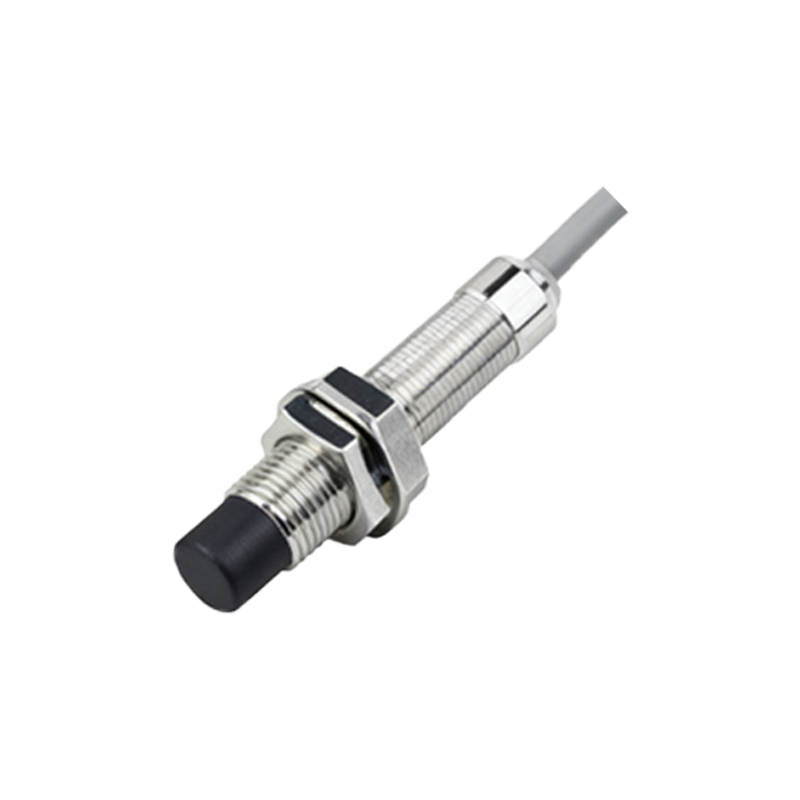
Ultrasonic proximity sensors utilize sound waves beyond the human hearing range. They emit high-frequency ultrasonic pulses and measure the time it takes for the echo to return from a target object. This time-of-flight principle allows them to measure distance as well as simply detect presence. They are effective for detecting objects of virtually any material, shape, or color, including transparent items that pose challenges for optical sensors. They are less affected by environmental factors like dust, smoke, or light interference but can be influenced by temperature gradients and air turbulence. Common applications include parking assistance systems, liquid level sensing, and object profiling on conveyor belts.
Magnetic proximity sensors, often called reed switches or Hall-effect sensors, detect the presence of a permanent magnet. Reed switches consist of two ferromagnetic reeds sealed in a glass tube; when a magnetic field is applied, the reeds attract and close the circuit. Hall-effect sensors produce a voltage output when exposed to a magnetic field. Both types are characterized by their simple, wear-free operation and are frequently used for detecting the position of cylinders (with a magnet embedded in the piston), door/window security systems, and speed sensing in rotational equipment.
Photoelectric sensors, while sometimes categorized separately, function as proximity sensors in their diffuse (reflective) mode. They consist of an emitter (usually an LED) and a receiver. In the diffuse mode, the sensor detects light reflected directly from the target object itself. They offer the longest sensing ranges among proximity types, from centimeters up to several meters, and can detect objects of almost any material. However, their performance can be affected by the object's color, reflectivity, and environmental conditions like ambient light or fog. They are ubiquitous in packaging, material handling, and automated storage systems.
The selection of the appropriate proximity sensor depends on several critical factors: the material of the target object, the required sensing distance, the environmental conditions (temperature, presence of contaminants), the required switching speed, and installation constraints. For instance, an inductive sensor is perfect for counting metal gears on a high-speed shaft, while a capacitive sensor is necessary for monitoring the plastic cap level on a bottling line. An ultrasonic sensor might be chosen to detect clear glass bottles, and a magnetic sensor is ideal for confirming the extended position of a pneumatic cylinder in a dirty manufacturing cell.
In conclusion, the diverse family of proximity sensors—inductive, capacitive, ultrasonic, magnetic, and photoelectric—provides engineers and designers with a versatile toolkit for automation. Each technology fills a specific niche, enabling precise, reliable, and non-contact detection across the vast landscape of industrial and consumer applications. As technology advances, these sensors continue to evolve, offering greater intelligence, miniaturization, and integration capabilities for the smart factories and systems of the future.