Introduction to Optical Speed Sensing Technology
Optical speed sensors, commonly known as photoelectric tachometers or rotary encoders, are fundamental components in modern industrial automation and motion control systems. These devices measure the rotational speed or angular position of a shaft, wheel, or other rotating object by utilizing light as the primary sensing medium. The core principle involves the interruption or reflection of a light beam, which is then converted into a digital or analog electrical signal proportional to the speed. Their non-contact nature, high precision, and fast response time make them superior to many mechanical sensing methods, enabling critical applications in robotics, automotive systems, aerospace, and manufacturing machinery where accurate speed feedback is essential for control, safety, and efficiency.
Fundamental Operating Principles
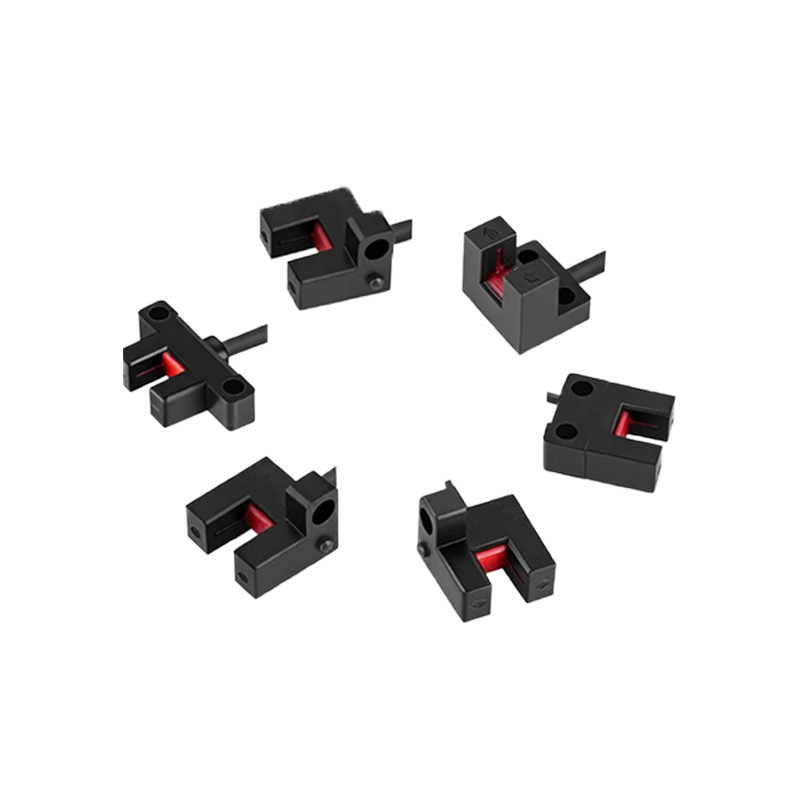
The operation of an optical speed sensor hinges on the interaction between a light source, a photodetector, and a rotating element. The most common configurations are the transmissive (or through-beam) type and the reflective type. In a transmissive sensor, an infrared LED or laser diode emits a continuous beam of light towards a phototransistor or photodiode detector. A slotted disk or codewheel, attached to the rotating shaft, passes between them. As the disk rotates, its slots alternately allow light to pass or block it, generating a pulsating signal at the detector. The frequency of this pulse train is directly proportional to the rotational speed. Reflective sensors operate similarly, but the light source and detector are mounted on the same side. The beam is directed at a reflective mark or a patterned surface on the target. The detector senses the reflected light, creating pulses as the reflective and non-reflective areas alternate.
Key Components and Signal Generation
A typical optical speed sensor comprises several critical components. The light source, often an infrared LED for its reliability and immunity to ambient light, provides the sensing beam. The photodetector converts the modulated light intensity into a corresponding electrical current. The interrupting element—the codewheel or reflective strip—is precisely manufactured with alternating opaque and transparent sections or reflective and non-reflective patterns. The quality and resolution of this disk define the sensor's accuracy. An integrated signal conditioning circuit is vital. It amplifies the weak detector signal, filters out noise, and shapes it into a clean, digital square wave or a precise analog voltage/current output. For incremental encoders, this results in two channels (typically labeled A and B) in quadrature, providing speed data and directional information.
Types of Optical Encoders: Incremental vs. Absolute
Optical speed sensors are broadly categorized into incremental and absolute encoders, each serving different purposes. Incremental encoders, widely used for speed measurement, generate a series of pulses per revolution. Speed is calculated by counting these pulses over a known time period (frequency method) or by measuring the time between pulses (period method). They are simpler and cost-effective but lack a positional reference upon power-up. Absolute optical encoders provide a unique digital code for each angular position of the shaft within a single revolution. They use a complex codewheel with multiple tracks and detectors to output a binary or Gray code word. While primarily for position, their data can also be differentiated over time to compute speed, offering a comprehensive motion feedback solution.
Advantages Over Other Sensing Technologies
Optical speed sensors offer distinct advantages that solidify their role in demanding environments. Their non-contact operation eliminates mechanical wear, ensuring long-term reliability and maintenance-free service. They provide exceptionally high resolution and accuracy, capable of detecting very high speeds and minute angular changes. The response time is extremely fast, limited only by the electronics, making them ideal for dynamic control loops. They are largely immune to electromagnetic interference (EMI) from motors and drives, unlike magnetic or inductive sensors. Furthermore, they can function without physical loading on the measured shaft, preserving system efficiency and preventing torque loss.
Critical Applications in Industry
The applications of optical speed sensors are vast and critical. In industrial motor drives and servo systems, they provide essential feedback for closed-loop speed and position control, ensuring precise machining, conveyor belt regulation, and robotic arm movement. Within the automotive industry, they monitor crankshaft and camshaft speed for engine management, anti-lock braking systems (ABS), and traction control. Aerospace utilizes them in jet engine monitoring and flight control surface actuators. They are also indispensable in consumer electronics, such as computer fans and disk drives, and in medical devices like infusion pumps and diagnostic equipment, where consistent and reliable motion is paramount.
Installation Considerations and Challenges
Proper installation is crucial for optimal performance. Key considerations include precise alignment between the sensor and the codewheel or reflective target to ensure a clear, consistent signal. Mounting must be robust to resist vibration, which can cause signal jitter. Environmental factors pose significant challenges. Contamination by dust, oil, or coolant can obscure the optical path, leading to signal dropout. Designers often employ sealed housings, protective windows, or air purge systems. Ambient light, especially strong infrared from industrial heaters, can interfere; using modulated light sources with synchronous detection circuits effectively mitigates this. Temperature extremes can affect LED output and electronic components, necessitating careful component selection and thermal design.
Future Trends and Developments
The future of optical speed sensing is geared towards higher integration, intelligence, and robustness. Miniaturization continues, enabling sensors to fit into increasingly compact devices. The integration of microprocessors directly into the sensor package allows for on-board diagnostics, advanced filtering, and direct communication via industrial fieldbus protocols like EtherCAT or IO-Link. There is a growing trend towards using laser diodes and advanced photodetector arrays to achieve sub-micron resolutions for ultra-high-precision applications. Furthermore, research into novel materials and packaging techniques aims to enhance durability in harsh environments, expanding their use in sectors like renewable energy (wind turbine monitoring) and heavy industrial machinery.