Introduction to Proximity Switch Sensors
Proximity switch sensors are fundamental components in modern industrial automation, providing non-contact detection of metallic objects. Among the diverse range of sensors available, the three-wire configuration is one of the most prevalent due to its balance of performance, reliability, and ease of integration. The S3015 model represents a specific iteration within this category, designed to meet rigorous industrial demands. This article delves into the technical specifications, operational principles, wiring methodology, and typical applications of the S3015 three-wire proximity sensor, offering a detailed perspective for engineers and technicians.
Technical Specifications of the S3015 Model
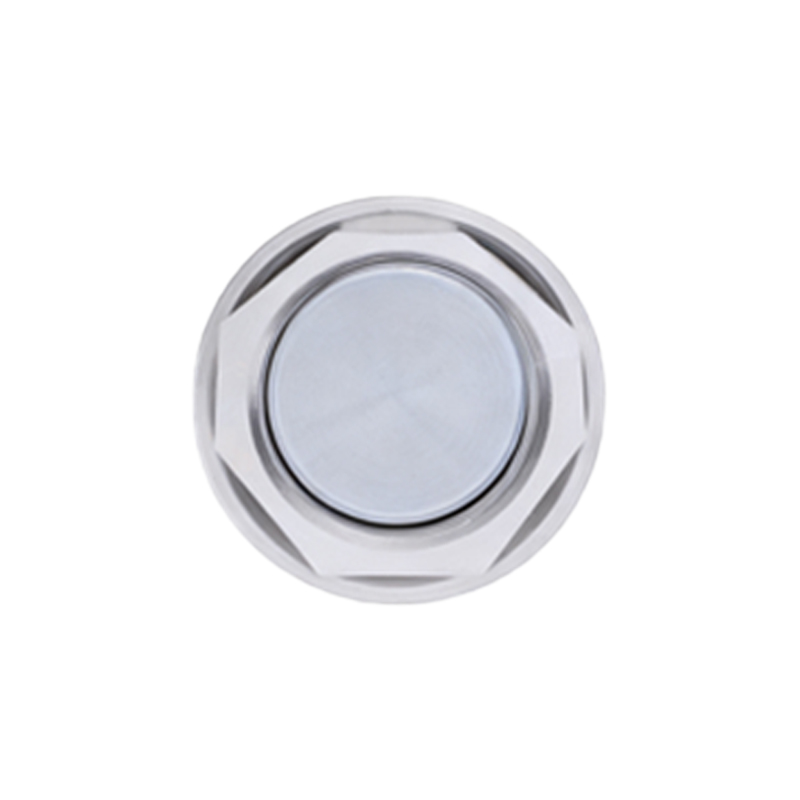
The S3015 is typically an inductive proximity sensor, engineered to detect ferrous metals, such as steel and iron, within a specified sensing range. Key specifications often include a nominal sensing distance, which for many standard S3015 units is around 15mm, though this can vary by manufacturer. It operates on a DC supply voltage, commonly 10-30V DC, making it compatible with standard industrial control circuits. The output type is usually a solid-state switching element, either NPN (sinking) or PNP (sourcing), configured in a normally open (NO) or normally closed (NC) logic. The housing is frequently constructed from nickel-plated brass or stainless steel, offering robust resistance to mechanical impacts, oils, and coolants, with protection ratings like IP67 ensuring durability in harsh environments.
Operating Principle and Detection Mechanism
The core operating principle of the inductive S3015 sensor is electromagnetic induction. The sensor's face contains an oscillator circuit that generates a high-frequency electromagnetic field. When a metallic target enters this field, eddy currents are induced on the target's surface. This causes a change in the oscillation amplitude within the sensor's coil. An internal evaluation circuit detects this change and triggers the solid-state output switch. The "three-wire" designation refers to the connection leads: one for power supply positive (brown wire typically), one for power supply negative or common (blue wire), and one for the switched output signal (black wire). This design allows for a simple interface with programmable logic controllers (PLCs), counters, or relay modules.
Wiring Configuration and Electrical Connections
Correct wiring is critical for the safe and reliable operation of the S3015 sensor. For a standard DC three-wire sensor, the connections are straightforward. The brown wire connects to the positive DC supply voltage (e.g., +24V). The blue wire connects to the negative or 0V DC supply common. The output wire (often black) carries the switched signal to the load. It is imperative to verify whether the unit is NPN or PNP. An NPN sensor sinks current to the common (blue) wire, meaning the load must be connected between the output (black) and the positive supply. Conversely, a PNP sensor sources current from the positive supply, requiring the load to be connected between the output and the common. Always consult the manufacturer's datasheet for the exact wiring diagram and ensure proper grounding and shielding in electrically noisy environments.
Key Advantages in Industrial Settings
The S3015 three-wire proximity switch offers several distinct advantages. Its non-contact nature eliminates mechanical wear, ensuring a long operational life with minimal maintenance. The fast switching speed, often in the kilohertz range, allows for high-speed counting and positioning applications. The robust construction provides excellent resistance to vibration, shock, and environmental contaminants. Furthermore, the absence of moving parts makes it immune to contact bounce, providing a clean, reliable digital signal for control systems. Its simple three-wire interface reduces installation complexity and cost compared to two-wire sensors that have stricter voltage drop limitations or four-wire devices with dual outputs.
Common Applications and Use Cases
This sensor finds extensive use across various industrial sectors. Typical applications include position sensing on conveyor lines to detect the presence of parts, end-of-travel detection on automated machinery, and rotary speed monitoring by counting gear teeth or holes on a rotating disc. In metalworking, it is used for tool positioning and workpiece detection. In packaging machinery, it ensures correct product placement. The S3015's specific sensing range and housing style make it suitable for medium-range detection tasks where space constraints or specific mounting requirements are present. Its reliability is crucial for automated assembly lines, robotic cells, and material handling systems.
Installation Considerations and Best Practices
Proper installation maximizes sensor performance and longevity. Ensure the sensing face is parallel to the target surface and maintain the specified nominal sensing distance, accounting for any reduction factors for different metals.