Introduction to Photoelectric Sensing Technology
Photoelectric sensors are a cornerstone of modern industrial automation, providing non-contact detection of objects, distances, and conditions. These devices operate by emitting a beam of light, typically from an LED or laser diode, and detecting changes in the received light signal. The fundamental principle relies on the interruption, reflection, or modulation of this light beam by a target object. This technology offers significant advantages over mechanical limit switches or proximity sensors, including faster response times, longer sensing ranges, and the ability to detect a wider variety of materials regardless of color, texture, or composition. From detecting transparent bottles on a high-speed filling line to ensuring precise positioning in robotic assembly cells, photoelectric sensors deliver reliable performance in demanding environments.
Honeywell's Legacy in Sensing Solutions
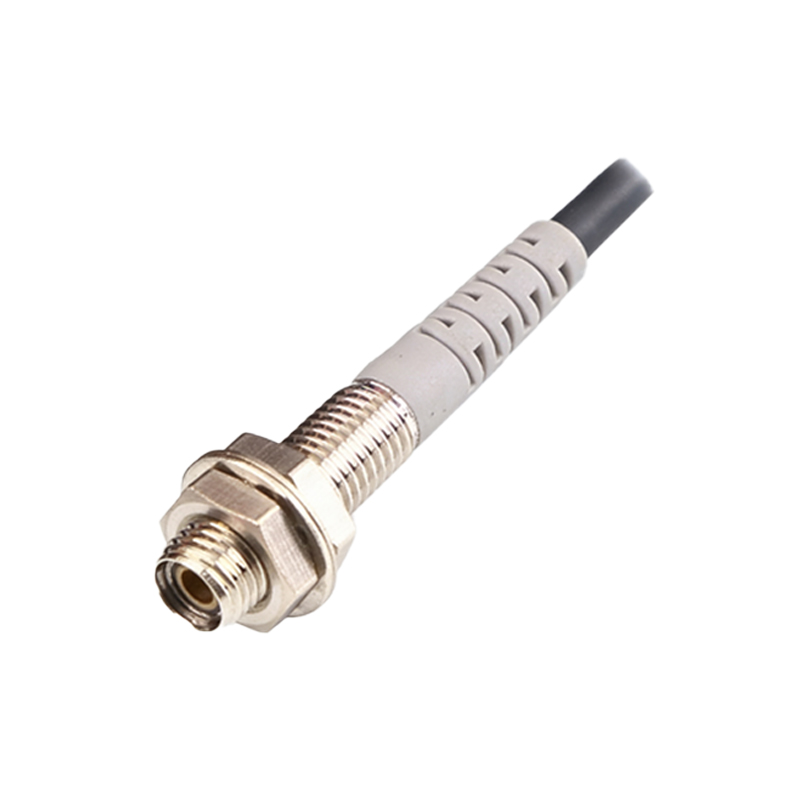
Honeywell International Inc. stands as a global leader in industrial controls and sensing technologies, with a rich history of innovation spanning decades. The company's foray into photoelectric sensors is built upon a deep understanding of customer applications across diverse sectors such as manufacturing, packaging, material handling, and automotive. Honeywell sensors are engineered not just as components but as integrated solutions, designed to solve specific challenges like harsh washdown conditions, extreme temperature fluctuations, and intense ambient light interference. This application-focused approach ensures that Honeywell photoelectric sensors deliver consistent reliability, reducing downtime and maintenance costs for end-users. The brand is synonymous with durability, precision, and advanced features that cater to the evolving needs of Industry 4.0 and smart factory initiatives.
Key Product Families and Technologies
Honeywell offers a comprehensive portfolio of photoelectric sensors, categorized primarily by their sensing mode. The diffuse reflective mode sensors, where the emitter and receiver are housed in a single unit, are ideal for detecting objects at a defined distance. Retro-reflective models use a separate reflector, allowing for longer ranges and detection of objects that might not optimally reflect light. Through-beam sensors, with separate emitter and receiver units, provide the longest range and highest reliability, as they detect any object that breaks the beam. Furthermore, Honeywell incorporates advanced technologies like background suppression for precise detection independent of surface color or reflectivity, and true color recognition for sorting and quality control applications. Their product lines often feature rugged housings in IP67 or higher ratings, various output configurations (PNP/NPN, analog, IO-Link), and easy-to-use alignment indicators.
Critical Features for Industrial Applications
Selecting the right photoelectric sensor requires careful consideration of several technical parameters. Sensing range is paramount, and Honeywell provides clear specifications for each model under defined conditions. Response time, often in the microsecond range, is critical for high-speed automation lines. The light source type—red LED, infrared, laser, or even green LED for enhanced contrast on red objects—impacts performance. Environmental robustness is a hallmark; Honeywell designs sensors to withstand vibration, shock, and exposure to chemicals or oils. Many models feature patented technologies to combat optical fouling from dust or condensation, ensuring stable operation. Connectivity is also evolving, with modern Honeywell sensors supporting digital communication protocols like IO-Link, which enables remote configuration, diagnostics, and integration into predictive maintenance systems, providing valuable data beyond a simple on/off signal.
Application Examples Across Industries
The versatility of Honeywell photoelectric sensors is demonstrated in countless real-world scenarios. In packaging machinery, they accurately detect the presence of labels, count products on conveyors, and verify cap placement on containers. Automotive assembly lines utilize them for robot guidance, part verification, and ensuring door and panel gaps are within tolerance. In the food and beverage industry, sensors with high IP69K ratings perform reliably in washdown environments, detecting fill levels, monitoring packaging film, and ensuring case packing accuracy. Logistics and warehousing systems rely on these sensors for parcel dimensioning, pallet detection, and guiding automated guided vehicles (AGVs). Each application leverages specific sensor strengths, whether it's the long range of a through-beam sensor for large object detection or the precision of a background suppression sensor for small component assembly.
Installation, Alignment, and Maintenance Best Practices
Proper installation is crucial for optimal sensor performance and longevity. Engineers must consider mounting stability, ensuring the sensor is secure and free from vibration that could cause misalignment. The sensing path should be clear of obstructions and potential sources of optical interference, such as reflective surfaces or highly polished objects adjacent to the target. Ambient light from welding arcs, sunlight, or other machinery can be mitigated by using sensors with modulated light sources and proper spectral filtering, features inherent in Honeywell designs. Alignment, especially for through-beam and retro-reflective types, is simplified with built-in visual or auditory indicators like alignment LEDs or buzzers. Routine maintenance involves keeping lenses clean and periodically checking mounting hardware and electrical connections. Leveraging smart sensor diagnostics via IO-Link can proactively alert operators to issues like declining signal strength or lens contamination.
The Future: Smart Sensors and IIoT Integration
The future of photoelectric sensing is intelligent and connected. Honeywell is at the forefront of integrating Industrial Internet of Things (IIoT) capabilities into its sensor portfolio. Next-generation sensors go beyond simple detection, becoming data points that feed information into cloud platforms and manufacturing execution systems (MES). They can report their own health status, track operational counts, and even adapt sensitivity based on environmental changes. This shift enables predictive maintenance, where potential failures are identified before they cause downtime, and allows for greater process optimization through data analytics. As machine vision and simpler photoelectric sensing converge, Honeywell's expertise positions its products as essential components in building more adaptive, efficient, and transparent automated systems for the factories of tomorrow.