In the seamless dance between humans and machines, a silent, unseen facilitator often goes unnoticed: the hand proximity sensor. This unassuming technology, embedded in countless devices around us, detects the presence, absence, or distance of a hand without any physical contact. It’s the reason a faucet begins to flow, a soap dispenser releases its contents, or a smartphone screen dims when you bring it to your ear. The magic lies in its ability to create intuitive, hygienic, and energy-efficient interactions, fundamentally reshaping how we engage with the digital and physical world.
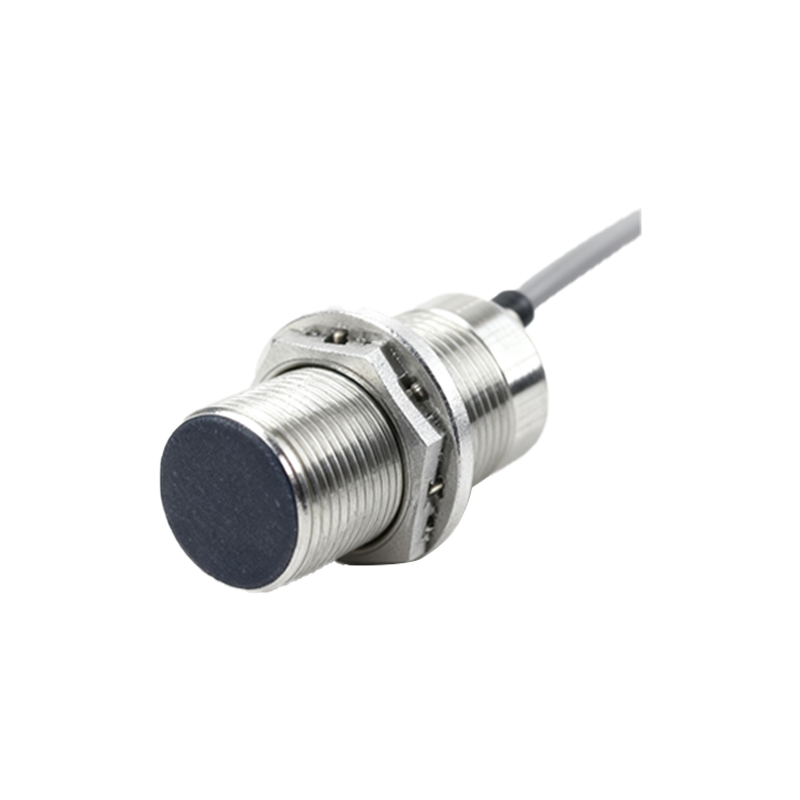
At its core, a hand proximity sensor operates by emitting a field or beam and monitoring changes within it. The most common types are capacitive, infrared (IR), and ultrasonic sensors. Capacitive sensors, prevalent in consumer electronics, detect the change in capacitance caused by the conductive properties of the human body. When a hand approaches, it alters the sensor's electrostatic field, triggering a response. This is the technology behind touchless light switches and the screen-off function during phone calls. Infrared sensors, often used in automatic taps and hand dryers, work by emitting an IR beam. A hand interrupts or reflects this beam back to a receiver, signaling the device to activate. Ultrasonic sensors emit high-frequency sound waves and measure the time it takes for an echo to return, calculating the distance to the object—in this case, a hand. Each technology has its niche, chosen based on required range, accuracy, environmental conditions, and cost.
The applications of hand proximity sensors are vast and growing. In public health and sanitation, they have become indispensable. Touchless faucets, soap dispensers, and flushers in restrooms minimize the spread of germs, a concern magnified in the post-pandemic era. In the automotive industry, they enhance safety and convenience; a wave of the hand can adjust infotainment volume or open a trunk, allowing drivers to keep their eyes on the road. Smart homes leverage them for ambient lighting that brightens as you enter a room or for touchless control of appliances, promoting both convenience and energy savings. In industrial settings, they act as safety guards, halting machinery when a worker's hand is detected in a danger zone.
Beyond mere functionality, these sensors are pivotal for creating accessible technology. For individuals with mobility or dexterity challenges, a simple hand gesture can control doors, appliances, or computers, fostering greater independence. The technology also paves the way for more natural user interfaces. As we move towards an era of augmented reality (AR) and the metaverse, precise hand proximity and gesture detection will be crucial for immersive, intuitive interactions in three-dimensional digital spaces.
However, the implementation of hand proximity sensing is not without its challenges. Environmental factors like ambient light, temperature extremes, or radio frequency interference can affect sensor accuracy, particularly for IR and capacitive types. Designers must also consider "false triggers" from unintended objects or environmental noise, requiring sophisticated signal processing and calibration. Furthermore, as with any data-collecting device, privacy considerations emerge, especially when sensors are coupled with cameras or advanced gesture recognition software that could potentially interpret detailed movements.
The future of hand proximity sensing is intertwined with advancements in miniaturization, power efficiency, and artificial intelligence. Sensors are becoming smaller, cheaper, and more integrated, allowing them to be embedded in wearables, flexible displays, and even clothing. Low-power designs enable battery-operated devices to last for years. When combined with machine learning algorithms, these sensors can evolve from simple presence detectors to sophisticated gesture interpreters, understanding a swipe, a pinch, or a wave as distinct commands. This convergence will unlock new forms of silent, seamless communication with our devices.

In conclusion, hand proximity sensors represent a critical layer of the invisible interface that connects us to our technology. They remove friction, promote hygiene, enhance safety, and open doors to more inclusive and natural interactions. As this technology continues to evolve, becoming more sensitive, contextual, and integrated, our relationship with the machines in our lives will become even more fluid and intuitive. The next time a light turns on as you walk by, or a door opens without a touch, remember the sophisticated yet simple technology at work—a silent sentinel waiting for the approach of a hand.