Laser gas sensors have revolutionized the field of gas detection and analysis, offering unparalleled sensitivity, selectivity, and speed. At the heart of their operation lies a critical process: modulation. Modulation techniques are not merely an add-on but the fundamental mechanism that enables these sensors to extract meaningful signals from noise, distinguish between different gas species, and achieve the high performance demanded by industrial, environmental, and medical applications. This article delves into the core modulation methods, explaining their principles and why they are indispensable.
The primary challenge in laser-based gas sensing is detecting an extremely weak absorption signal. The target gas molecules absorb light at specific wavelengths, but this absorption is often minuscule, especially at low concentrations. The direct, unmodulated laser output would produce a signal buried in electronic noise and interference from other sources. Modulation provides the key by shifting the measurement to a frequency domain where noise is lower and the signal of interest can be amplified and isolated with precision.

The most prevalent technique is Wavelength Modulation Spectroscopy (WMS). In WMS, the laser's injection current is modulated with a high-frequency sine wave. This causes the laser's output wavelength to oscillate rapidly around a central wavelength that is tuned to the absorption line of the target gas. A slow ramp is typically superimposed on this to scan across the absorption feature. The high-frequency modulation transforms the absorption signal into harmonics of the modulation frequency. By using sensitive lock-in amplifiers to detect the second harmonic (2f) signal, WMS effectively rejects low-frequency noise (like 1/f noise from electronics) and background fluctuations. This results in a significant signal-to-noise ratio improvement, allowing for detection limits in the parts-per-billion (ppb) or even parts-per-trillion (ppt) range. WMS is the workhorse for many tunable diode laser absorption spectroscopy (TDLAS) systems used in stack emission monitoring and atmospheric research.
For the ultimate in sensitivity and baseline stability, Frequency Modulation Spectroscopy (FMS) is employed. FMS operates on a similar principle but modulates the laser at frequencies comparable to or greater than the width of the absorption line itself. This generates sidebands on the optical frequency. When the laser carrier and its sidebands interact with the gas absorption line, they create a beat note at the modulation frequency that carries the absorption and dispersion information. Detection of this beat note, often using a fast photodetector and RF electronics, yields a signal that is virtually immune to amplitude noise from the laser source. FMS is particularly powerful for detecting very weak absorptions or in situations with strong optical fringes, making it ideal for fundamental physics experiments and ultra-trace gas detection.
Beyond these, Direct Absorption Spectroscopy (DAS) serves as the foundational, though less sensitive, approach. Here, the laser wavelength is slowly scanned over an absorption line without high-frequency modulation. The transmitted intensity is directly recorded, and the absorption is calculated using the Beer-Lambert law. While simpler and providing absolute concentration measurements without calibration, DAS is more susceptible to low-frequency noise and requires careful baseline fitting. It is often used in applications where extreme sensitivity is not the primary concern, or as a benchmark for more advanced techniques.
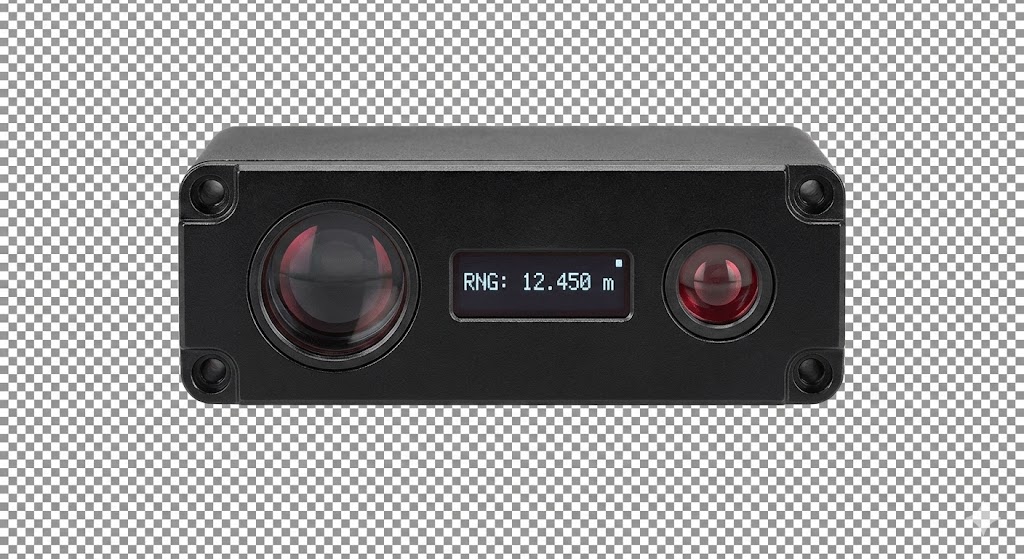
The choice of modulation technique is a careful balance between performance requirements, complexity, and cost. WMS offers an excellent compromise, providing high sensitivity with relatively straightforward electronics. FMS pushes the sensitivity frontier but demands more sophisticated laser sources and detection schemes. Recent advancements are integrating these techniques with novel laser types, such as quantum cascade lasers (QCLs) and interband cascade lasers (ICLs), which operate in the mid-infrared where molecular absorption is strongest. Furthermore, the advent of photonic integrated circuits is promising to miniaturize these sophisticated modulation systems, paving the way for compact, field-deployable sensors.
In conclusion, modulation is the engine that drives the capabilities of modern laser gas sensors. By cleverly manipulating the laser's wavelength or frequency, engineers and scientists can peer into the molecular world with extraordinary clarity. From ensuring safe industrial processes to monitoring climate-changing gases and diagnosing diseases through breath analysis, the sophisticated dance of modulation makes precise and reliable gas sensing a reality. As laser technology continues to evolve, so too will the modulation strategies, unlocking new possibilities for sensing and measurement.
