Introduction to Photoelectric Sensor Units
A photoelectric sensor unit is a fundamental component in modern industrial automation, serving as the eyes of a machine or system. It operates on the principle of converting light signals into electrical signals to detect the presence, absence, or distance of an object. The core unit typically consists of an emitter (light source), a receiver (photodetector), and associated signal processing circuitry. These units are prized for their non-contact operation, high speed, and long sensing ranges compared to mechanical alternatives. The choice of light source—be it LED, laser, or infrared—directly influences the unit's performance characteristics, such as range, precision, and environmental robustness. Understanding the basic unit configuration is the first step in selecting the right sensor for any application.
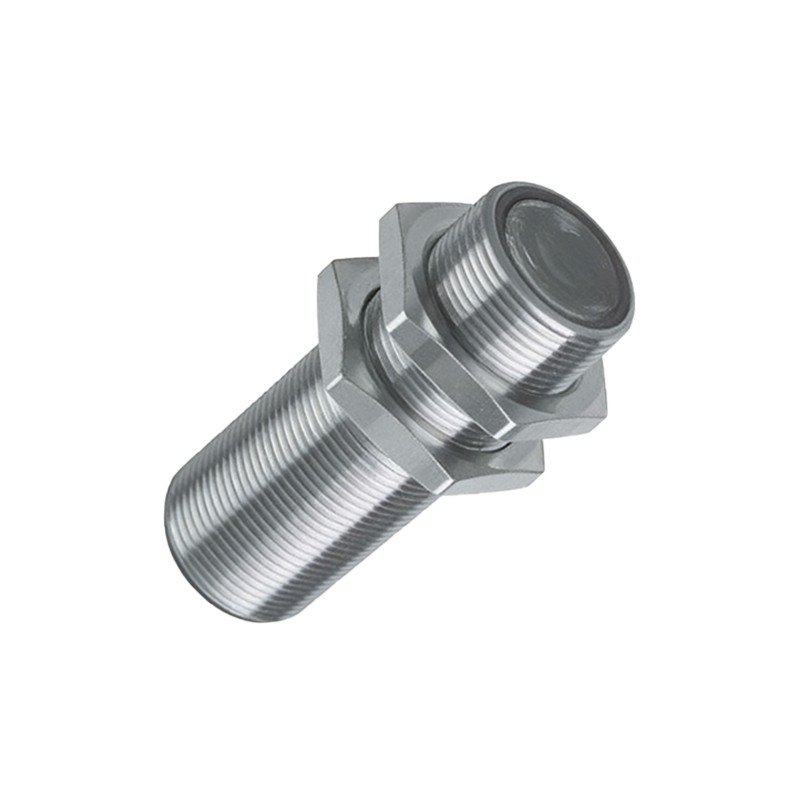
Key Performance Units and Specifications
When evaluating photoelectric sensors, engineers must consider several critical performance units. Sensing distance, measured in meters or millimeters, defines the operational range. Response time, quantified in milliseconds or microseconds, indicates how quickly the unit can detect a change and output a signal. Another vital unit is the light spot diameter, often specified in millimeters, which affects sensing resolution. For analog sensors, the output is a current (mA) or voltage (V) signal proportional to the received light intensity. Discrete sensors provide a simple ON/OFF signal. Environmental ratings, such as IP (Ingress Protection) codes and operating temperature ranges (in °C or °F), are non-negotiable units that define the sensor's durability in harsh conditions like dust, moisture, and extreme temperatures.
Types of Sensing Modes and Their Operational Units
Photoelectric sensor units are categorized by their sensing mode, each with distinct operational principles and unit considerations. The through-beam type consists of separate emitter and receiver units. Its performance is often stated as a maximum sensing distance in meters, with excellent reliability. The retro-reflective mode uses a single housing containing both emitter and receiver, relying on a reflector. Its effective range, in meters, is a key specification. Diffuse (proximity) sensors, with the emitter and receiver in one unit, detect light reflected directly from the target. Their sensing distance, typically shorter and measured in millimeters or centimeters, is highly dependent on the target's color, material, and surface finish, requiring careful unit analysis during selection.
Signal Output and Electrical Interface Units
The electrical interface of a photoelectric sensor unit is defined by standardized units and connections. Common output types include NPN/PNP transistor outputs, which switch a load connected to a DC voltage supply (e.g., 12-24 VDC). Relay outputs are used for higher power AC switching. Analog outputs provide a variable signal, such as 0-10 V or 4-20 mA, where the current unit (mA) is particularly valued for its noise immunity in long-distance transmission. The unit's supply voltage range (VDC or VAC) and current consumption (mA) are essential for proper power supply design. Additionally, many modern units feature IO-Link communication, a digital point-to-point serial connection that transmits detailed process data and parameter units beyond a simple switch status.
Application-Specific Units and Selection Criteria
Selecting the correct sensor unit requires translating application needs into technical specifications. For object counting on a high-speed conveyor, the critical unit is the sensor's response frequency (Hz). In precise positioning, the repeatability, stated in micrometers (µm), is paramount. For detecting transparent objects, a sensor with a high-gain receiver or a polarized filter is necessary, often evaluated by its minimum detectable opacity percentage. In food and beverage or pharmaceutical applications, the sensor housing material and surface finish are specified by industry-standard units and certifications (e.g., FDA compliance, EHEDG guidelines). The mounting style, with dimensions in millimeters, and connection type (connector or cable) are also practical unit considerations for integration.
Advanced Units: Distance Measurement and Background Suppression
Advanced photoelectric sensor units provide sophisticated functionality with precise measurement units. Background suppression (BGS) sensors can ignore objects beyond a set distance. This cutoff point is adjustable and precisely defined in millimeters. True distance-measuring sensors, using time-of-flight or triangulation principles, output the exact distance to the target as an analog value (e.g., mV/mm) or a digital value over a communication bus. The resolution of such measurement might be specified in sub-millimeter units. These advanced units enable complex applications like bin level detection, robotic guidance, and dimensional checking, where the sensor provides quantitative data rather than a simple presence/absence signal.
Installation, Alignment, and Diagnostic Units
Proper installation is crucial for reliable operation. Alignment tools often use signal strength indicators, shown as a percentage or bar graph, to achieve optimal positioning. Many modern units feature built-in diagnostic LEDs that provide visual status indication. Some advanced models offer teach-in functions, allowing users to set sensitivity thresholds or timing parameters directly on the unit. Environmental factors like ambient light immunity is rated in lux units. For challenging installations, accessories like mounting brackets, protective shrouds, and fiber optic cables (with core diameter specified in microns) extend the versatility of the basic sensor unit. Correct installation ensures the sensor performs to its specified unit ratings.
Future Trends and Smart Sensor Units
The evolution of photoelectric sensor units is towards greater intelligence and connectivity. Smart sensors integrate microprocessors that provide data in engineering units directly, perform self-monitoring, and predict maintenance needs. The integration with Industrial Internet of Things (IIoT) platforms means sensor data, including operational hours, event counts, and temperature readings, is transmitted in standardized data packets. Emerging trends include units with even smaller form factors (measured in cubic millimeters), lower power consumption (in milliwatts), and enhanced resistance to interference. The future unit is not just a detector but a intelligent node in a networked system, providing rich, contextualized data to drive efficiency and predictive analytics.