Introduction to 24V Proximity Sensors
In the realm of industrial automation and safety systems, 24V proximity sensors have become indispensable components for human detection. These devices operate on a 24-volt direct current (DC) power supply, a standard in many industrial control circuits due to its balance of safety and reliability. Unlike higher voltage systems, 24V DC presents a lower risk of electrical shock, making it suitable for environments where personnel interact with machinery. Proximity sensors designed for human detection typically utilize capacitive or infrared technologies to sense the presence of a person without physical contact. Their primary function is to enhance safety by triggering alarms, stopping machinery, or initiating other protective measures when a human enters a predefined hazardous zone. The integration of these sensors into safety light curtains, access control systems, and automated guided vehicles (AGVs) underscores their critical role in modern industrial settings.
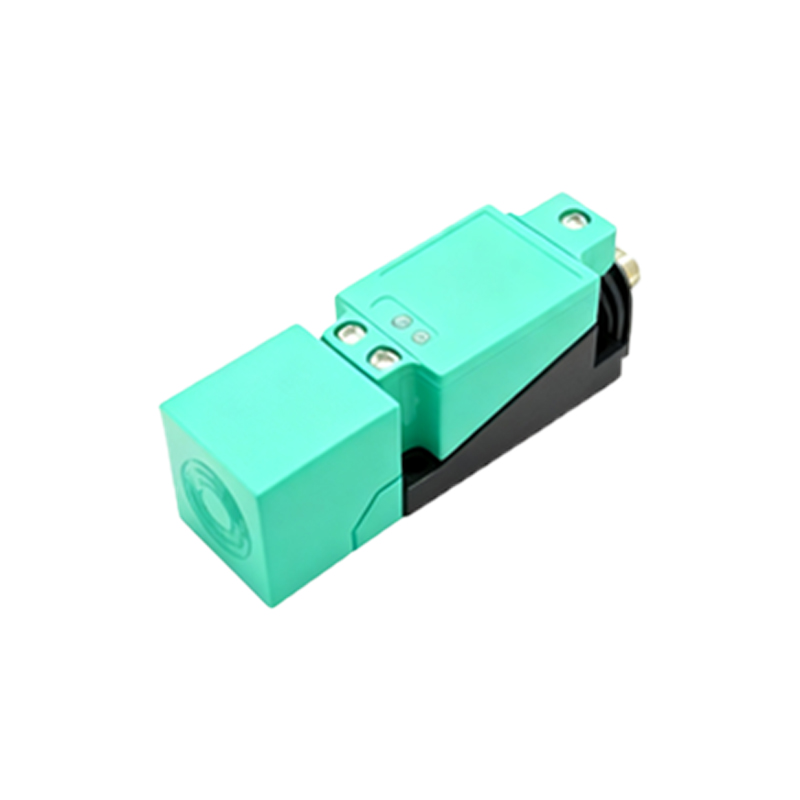
Key Technologies and Operating Principles
The effectiveness of a 24V human proximity sensor hinges on its underlying technology. Capacitive sensors detect changes in an electrostatic field caused by the presence of a human body, which has a different dielectric constant than air. They are sensitive to a variety of materials and can even detect through non-metallic barriers, making them versatile for certain applications. Infrared (IR) sensors, often used in passive infrared (PIR) motion detectors, sense the heat radiation emitted by humans. More advanced versions may use time-of-flight (ToF) or triangulation principles for precise distance measurement. These sensors generate a digital or analog output signal upon detection, which is then processed by a programmable logic controller (PLC) or other control unit. The 24V power not only energizes the sensor's internal circuitry but also often powers the output signal loop, simplifying wiring and integration with standard industrial interfaces.
Critical Selection Criteria for Engineers
Selecting the appropriate 24V proximity sensor requires a meticulous analysis of application parameters. Sensing range is paramount; it must be sufficient to provide adequate warning time but not so large as to cause nuisance tripping from non-target movements. Environmental factors like ambient temperature, humidity, dust, and potential exposure to oils or chemicals dictate the required ingress protection (IP) rating. The sensor's response time must be fast enough to prevent injury in high-speed machinery scenarios. Output type is another key decision: a simple Normally Open (NO) or Normally Closed (NC) relay contact, a PNP/NPN transistor output, or an analog 4-20mA/0-10V signal for proportional distance data. Engineers must also consider the mounting style (flush, non-flush, threaded barrel) and housing material to ensure mechanical compatibility and durability in the intended location.
Installation, Wiring, and Configuration Best Practices
Proper installation is crucial for reliable operation. The sensor should be mounted securely to minimize vibration, which can affect calibration. For capacitive sensors, it is essential to consider the influence of the mounting surface and nearby objects on the sensing field, often requiring an adjustment of the sensitivity potentiometer. Wiring must adhere to local electrical codes and standards (e.g., IEC, NEC). Typically, a 24V DC power supply is connected to the sensor's positive and negative terminals. The load (e.g., a PLC input, relay coil, or warning lamp) is connected in series with the sensor's output terminal. Shielding cables may be necessary in electrically noisy environments to prevent electromagnetic interference (EMI) from causing false triggers. Following installation, a thorough commissioning test with actual human presence under various conditions is mandatory to validate the setup.
Common Industrial Applications and Use Cases
The applications for 24V human proximity sensors are vast and critical across industries. In manufacturing, they are integrated into machine guarding systems on press brakes, robotic cells, and conveyor lines to create virtual safety zones. In material handling and logistics, they prevent collisions between AGVs and warehouse personnel. Within access control, they automate doors or trigger security alerts in restricted areas. Building automation systems use them for energy-saving functions like lighting and HVAC control in offices based on occupancy. A specialized and safety-critical application is in collaborative robot (cobot) workcells, where these sensors provide an additional layer of personnel detection to complement force-limiting technologies, ensuring safe human-robot interaction.
Maintenance, Troubleshooting, and Safety Standards
To ensure long-term reliability, a routine maintenance schedule is recommended. This includes visual inspection for physical damage, cleaning of the sensing face to remove dirt or debris, and verification of the sensing range and output signal. Common issues include failure to detect due to misalignment, contaminated lenses, or incorrect sensitivity settings, as well as false triggers