Introduction to Photoelectric Tension Sensing
In the realm of industrial automation, precise tension control is paramount for processes ranging from web handling in printing and converting to wire drawing and textile manufacturing. Among the various technologies employed for this critical measurement, photoelectric tension sensors stand out for their non-contact operation, high precision, and reliability. These sensors utilize the fundamental principles of optics and light detection to monitor and regulate the tension of moving materials without physical interaction, thereby eliminating wear and ensuring consistent product quality. This article delves into the operational principles, key advantages, diverse applications, and essential selection criteria for photoelectric tension sensors, providing a comprehensive guide for engineers and system integrators.
Core Operating Principle
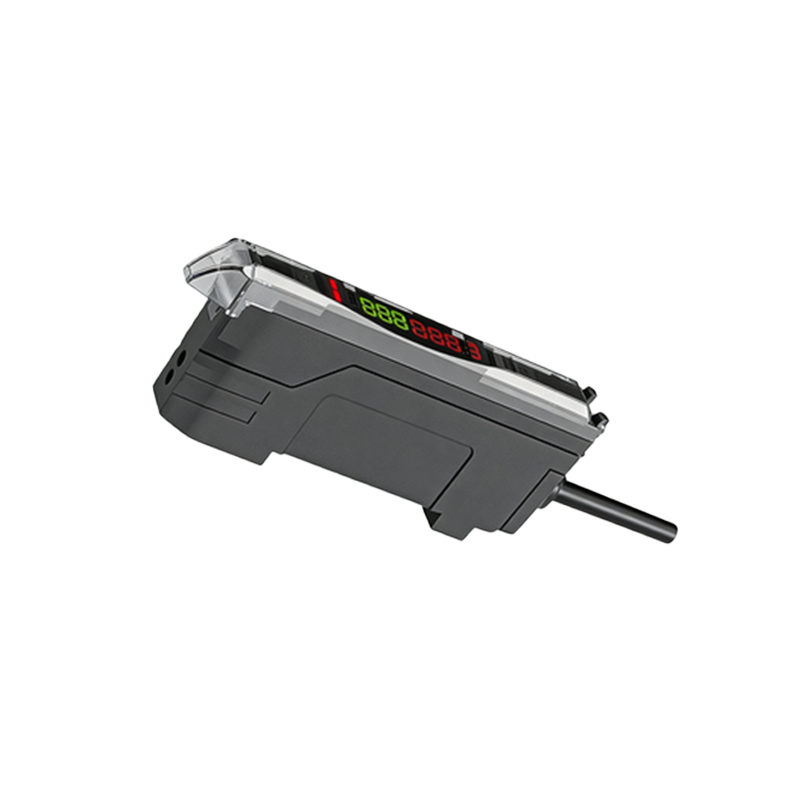
The fundamental operation of a photoelectric tension sensor is based on the detection of light beam deflection or interruption caused by the material under tension. A typical configuration involves a sensing head that emits a focused beam of light, often from an LED or laser source, towards a reflective target or a receiver. In one common design, the moving web or filament passes through the sensor's field of view. As tension varies, the material's position or angle changes minutely. This displacement causes a corresponding change in the reflected light pattern or the amount of light received by a photodetector (such as a photodiode or position-sensitive device). The sensor's internal electronics then convert this optical signal into a precise, proportional electrical output, typically a voltage (0-10V) or current (4-20mA) signal, which is fed back to the control system for real-time adjustment of drive motors or brakes.
Key Advantages Over Contact Sensors
Photoelectric tension sensors offer several distinct benefits that make them suitable for demanding industrial environments. First and foremost is their non-contact nature. Since they do not touch the material, there is no risk of surface damage, marking, or abrasion, which is crucial for sensitive substrates like films, foils, or optical fibers. This also eliminates mechanical wear on the sensor itself, leading to significantly longer service life and reduced maintenance costs. Secondly, they provide exceptionally high resolution and fast response times, capable of detecting minute tension fluctuations at high line speeds. Their immunity to electromagnetic interference (EMI) is another critical advantage in electrically noisy plant environments. Furthermore, they are often insensitive to environmental factors like dust or oil mist when properly housed, and they can measure tension on very thin or delicate materials where contact rollers would be impractical.
Primary Industrial Applications
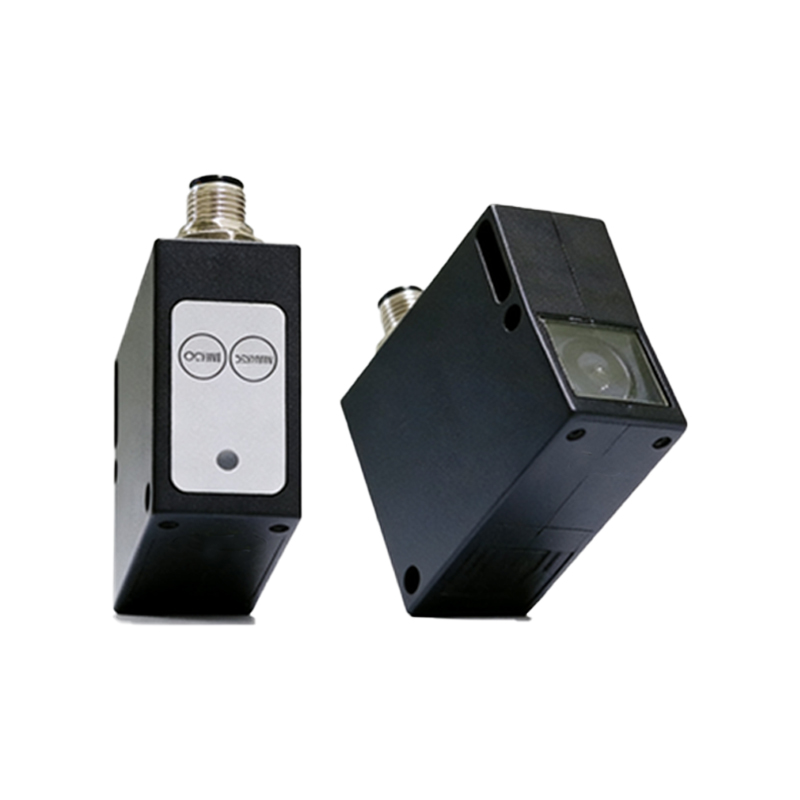
The application spectrum for photoelectric tension sensors is broad and spans multiple industries. In the printing and packaging sector, they are indispensable for controlling the tension of paper, plastic film, and foil webs to prevent wrinkles, breaks, and registration errors. The textile industry relies on them for consistent yarn tension during spinning, weaving, and knitting processes. In wire and cable manufacturing, they ensure uniform tension during stranding, insulating, and sheathing operations, directly impacting product diameter and quality. They are also widely used in the converting industry for slitting, laminating, and coating lines. Beyond traditional manufacturing, these sensors find use in more specialized fields such as optical fiber production, where maintaining micron-level tension control is essential for preserving the fiber's transmission characteristics.
Critical Selection Parameters
Selecting the appropriate photoelectric tension sensor requires careful consideration of several application-specific parameters. The measurement range is paramount; the sensor must be capable of detecting the expected minimum and maximum tension levels of the material. The material width and thickness will determine the required beam spot size and sensing distance. The required accuracy and resolution dictate the sophistication of the optical system and signal processing electronics. Environmental conditions such as ambient light, temperature extremes, and the presence of contaminants must be factored into the housing and ingress protection (IP) rating selection. The output signal type must be compatible with the existing PLC or drive controller. Finally, mechanical mounting options and the physical space constraints around the process line are practical considerations that cannot be overlooked.
Installation and Calibration Best Practices
Proper installation is critical to achieving optimal performance from a photoelectric tension sensor. The sensor must be mounted rigidly and in correct alignment relative to the material path to ensure the light beam interacts consistently with the target. Vibration from nearby machinery should be minimized through isolation mounts if necessary. Calibration is a vital step, typically involving applying known tension values to the material and adjusting the sensor's output span and zero point. Many modern sensors feature auto-calibration routines and digital interfaces for simplified setup. Regular verification checks are recommended to ensure long-term accuracy, as factors like lens contamination or slight mechanical drift can affect readings over time.
Integration with Control Systems
The true value of a photoelectric tension sensor is realized through its seamless integration into a broader automation control system. The analog or digital output signal is fed into a dedicated tension controller or a programmable logic controller (PLC). The controller compares the actual tension signal from the sensor with the preset desired tension value (setpoint). Using a control algorithm, typically a Proportional-Integral-Derivative (PID) loop, the controller generates a corrective output signal to adjust the torque of a drive motor, the braking force of a clutch/brake, or the speed of a dancer roll actuator. This closed-loop control system continuously and dynamically adjusts to maintain tension within a tight tolerance band, ensuring process stability and product consistency.
Future Trends and Developments
The evolution of photoelectric tension sensors is closely tied to advancements in industrial IoT (IIoT) and Industry 4.0. Future sensors are expected to feature enhanced digital connectivity, such as IO-Link, Ethernet/IP, or PROFINET, enabling not only data transmission but also remote configuration, diagnostics, and predictive maintenance capabilities. Integration of onboard intelligence for advanced signal processing and self-diagnosis of issues like lens fogging or source degradation is becoming more common. Furthermore, miniaturization of components allows for smaller sensor footprints, enabling installation in increasingly confined spaces. The development of more robust optical designs continues to push the boundaries of performance in challenging environments with high levels of ambient light or particulate matter.