Introduction to Slot Type Photoelectric Sensors
Slot type photoelectric sensors, also known as through-beam sensors, consist of a transmitter and a receiver housed in a single U-shaped unit. The transmitter emits a beam of light, typically infrared or visible LED, which is received by the opposite side. When an object passes through the slot, it interrupts the light beam, triggering an output signal. This design offers inherent alignment benefits, as the emitter and receiver are pre-aligned, ensuring reliable operation without the need for precise manual adjustment. These sensors are valued for their high precision, fast response times, and immunity to environmental factors like color or surface texture of the detected object. Common output types include NPN, PNP, and relay contacts, making them compatible with various control systems such as PLCs and microcontrollers. Their compact and robust construction allows for installation in confined spaces and harsh industrial environments, providing long-term stability with minimal maintenance.
Object Detection and Counting in Manufacturing
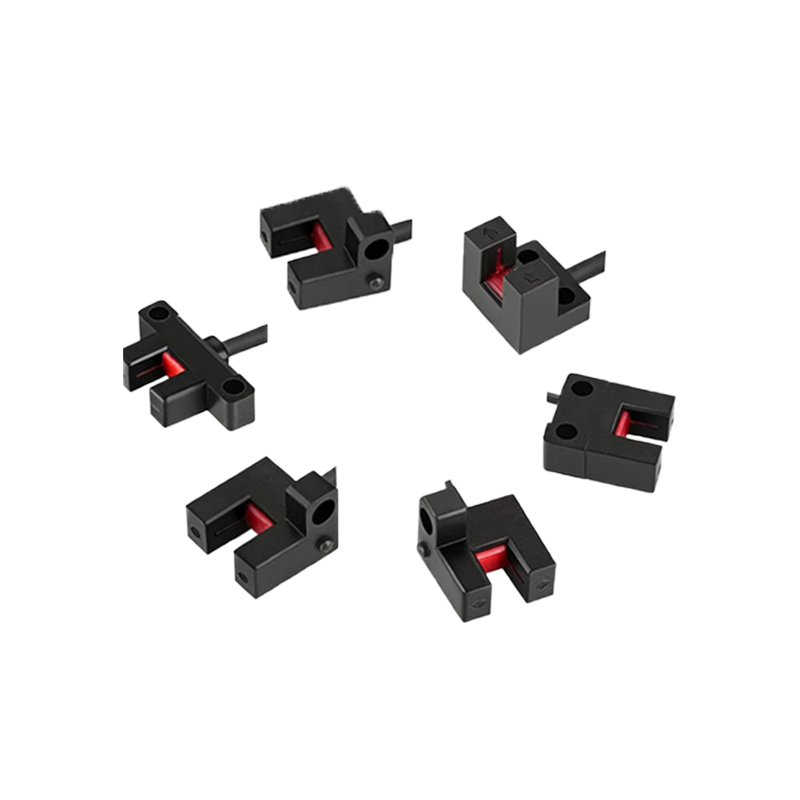
In manufacturing assembly lines, slot type photoelectric sensors are extensively used for detecting the presence, absence, or passage of objects. They monitor components on conveyor belts, ensuring each item is correctly positioned before proceeding to the next stage. For instance, in packaging machinery, these sensors verify that boxes or products pass through specific points, enabling precise control of filling, sealing, and labeling processes. Counting applications are critical in inventory management and production tracking. By detecting objects as they break the beam, sensors provide accurate counts of items like bottles, electronic parts, or pharmaceutical packages. This data is fed into control systems to regulate production flow, trigger alarms for shortages or jams, and generate reports for quality assurance. High-speed detection capabilities allow for counting at rates exceeding thousands of units per minute, supporting efficient mass production.
Position Sensing and Edge Guidance
Precision positioning is essential in automated systems such as CNC machines, robotic arms, and printing equipment. Slot type sensors detect edges, notches, or holes in materials like metal sheets, paper, or plastic films, providing feedback for alignment and movement control. In web handling processes, they guide materials by sensing perforations or marks, ensuring accurate cutting, folding, or winding. For example, in textile manufacturing, sensors detect selvage edges to maintain fabric alignment during dyeing or finishing. The non-contact nature of photoelectric sensing prevents wear and damage to delicate materials, while immunity to surface variations ensures consistent performance. By integrating with servo motors or actuators, these sensors enable real-time adjustments, reducing waste and improving product quality in high-tolerance applications.
Safety and Access Control Systems
Safety is a paramount concern in industrial settings, and slot type photoelectric sensors contribute to protective measures in machinery and facilities. They are employed in safety interlocks on doors, gates, or guards of hazardous equipment, where beam interruption signals the system to halt operation, preventing accidents. In access control, sensors monitor entry points, detecting unauthorized intrusion or ensuring only one person passes at a time in restricted areas. For instance, in automated warehouses, they secure loading docks by sensing vehicle or personnel movement, triggering alarms or barriers as needed. Their reliability in diverse lighting conditions and resistance to dust or moisture makes them suitable for outdoor or rugged environments. Compliance with safety standards like ISO 13849 ensures these sensors meet rigorous requirements for risk reduction in workplaces.
Quality Inspection and Sorting Applications
Quality control processes leverage slot type photoelectric sensors to inspect products for defects or verify specific features. By detecting variations in object dimensions, such as height or thickness, sensors identify out-of-spec items on production lines. In sorting systems, they distinguish between objects based on presence or absence of certain characteristics, like tabs on containers or labels on packages, directing them to appropriate bins via actuators. For example, in food processing, sensors check for missing caps on bottles or improper sealing on pouches, rejecting faulty items automatically. The ability to sense transparent or reflective objects, such as glass or foil, extends their utility in industries like pharmaceuticals and electronics. Integration with vision systems or barcode scanners enhances inspection accuracy, supporting zero-defect manufacturing goals.
Automotive and Electronics Industry Uses
The automotive sector relies on slot type photoelectric sensors for assembly line automation, where they detect parts like pistons, gears, or wiring harnesses during installation. In engine manufacturing, sensors verify the placement of components before welding or fastening, ensuring precision in critical systems. Electronics production involves handling small, delicate parts such as circuit boards or chips. Sensors monitor pick-and-place machines, confirming that components are correctly oriented and present before soldering. They also detect lead positions on integrated circuits or connectors, preventing misalignment in high-speed assembly. The compact size of slot sensors allows integration into tight spaces within robotic workcells, while EMI resistance ensures stable operation amid electrical noise from motors or power supplies.
Challenges and Selection Considerations
While slot type photoelectric sensors offer numerous benefits, selecting the right model requires attention to factors like slot width, sensing distance, and environmental conditions. The slot must accommodate the size of objects being detected, with standard widths ranging from a few millimeters to over 100 mm. Sensing distance, or the gap between emitter and receiver, affects sensitivity and should match application needs to avoid false triggers. Harsh environments with dust, oil, or temperature extremes may necessitate sensors with IP67 or higher ratings for protection. Additionally, response time and output type must align with system speed and compatibility. Regular maintenance, such as cleaning lenses to prevent buildup, ensures longevity. Advances in technology, like background suppression models, enhance performance in challenging scenarios, making these sensors versatile tools across industries.