Introduction to the D4V Proximity Switch Sensor
The D4V proximity switch sensor represents a significant advancement in non-contact sensing technology, widely utilized in industrial automation and control systems. Engineered for precision and reliability, this sensor operates by detecting the presence or absence of metallic objects without any physical contact. Its core principle is based on electromagnetic induction, where an oscillator generates a high-frequency electromagnetic field. When a metallic target enters this field, eddy currents are induced, causing a change in the oscillator's amplitude. This change is then processed by the sensor's circuitry to trigger a solid-state output signal. The D4V series is particularly noted for its robust construction, making it suitable for harsh industrial environments characterized by dust, moisture, and mechanical stress. Its compact design allows for easy integration into machinery, assembly lines, and safety systems, providing a critical function in position detection, limit switching, and object counting applications.
Key Technical Specifications and Operating Principles
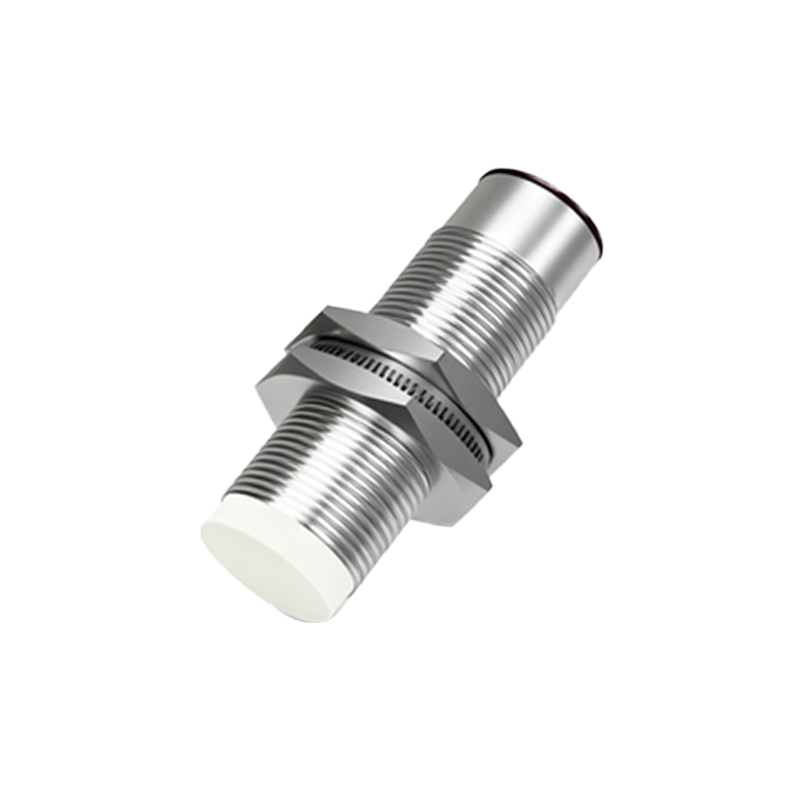
Delving into the technical specifications, the D4V sensor typically features a defined sensing range, which varies depending on the specific model (e.g., 4mm, 8mm). It is crucial to select a sensor with a range appropriate for the application to ensure reliable detection while avoiding false triggers. The sensor operates on standard DC voltages, commonly 12-24V DC, and provides either a PNP (sourcing) or NPN (sinking) transistor output, allowing compatibility with various programmable logic controllers (PLCs) and control systems. A critical parameter is its switching frequency, which determines how quickly the sensor can respond to targets passing by. High-frequency D4V models are essential for high-speed production lines. Furthermore, these sensors are often equipped with built-in protection against short-circuit, reverse polarity, and overload, enhancing their durability and operational safety. The housing is typically constructed from nickel-plated brass or stainless steel, offering excellent resistance to corrosion and physical impact.
Installation Considerations and Wiring Configuration
Proper installation is paramount for optimal performance of the D4V proximity sensor. The sensor must be mounted securely to minimize vibration, which can affect sensing accuracy. It is also vital to consider the mounting style—flush or non-flush. Flush-mounted sensors can be installed embedded in metal, while non-flush types offer a longer sensing range but require a clear area around the sensing face. Environmental factors such as ambient temperature, presence of other magnetic fields, or conductive materials nearby must be evaluated to prevent interference. The wiring configuration follows a standard three-wire setup: brown wire for positive supply voltage (+V), blue wire for common negative (0V), and black wire for the output signal. Correctly connecting these wires according to the sensor's output type (PNP or NPN) and the input requirements of the controller is essential to establish a functional circuit and avoid damage to the components.
Application Scenarios in Industrial Automation
The versatility of the D4V proximity switch sensor makes it indispensable across numerous industrial sectors. In automotive manufacturing, these sensors are deployed on robotic arms to detect the precise position of components for welding or assembly. On packaging lines, they count bottles or boxes, ensuring accurate filling and packaging operations. In metalworking and CNC machinery, D4V sensors act as limit switches to prevent over-travel of cutting tools or slides, safeguarding both the machine and the workpiece. They are also integral to material handling systems, detecting the presence of pallets on conveyors or the position of elevator doors. Their non-contact nature eliminates mechanical wear, leading to significantly lower maintenance requirements and higher system uptime compared to traditional mechanical limit switches.
Troubleshooting Common Operational Issues
Despite their robustness, D4V sensors can encounter issues. A frequent problem is failure to detect a target. This can stem from an incorrect sensing distance, a target material that is not ferrous (for inductive sensors), or a sensing face obstructed by dirt or debris. Regular cleaning is recommended. Another common issue is erratic switching or false signals, often caused by electrical noise from nearby motors, welders, or frequency drives. Using shielded cables and ensuring proper grounding can mitigate this. If the sensor's LED indicator fails to illuminate, check the power supply voltage and polarity. A consistently activated output without a target present might indicate sensor failure or, in rare cases, a residual magnetism issue with the target. Methodically checking wiring, power, sensing environment, and finally replacing the sensor are standard troubleshooting steps.
Advantages Over Mechanical Switches and Future Trends
The D4V proximity sensor offers compelling advantages over mechanical switches. Its non-contact operation ensures a virtually infinite lifespan in terms of switching cycles, as there are no moving parts to