Introduction to Cylindrical Proximity Sensors
Cylindrical proximity sensors are fundamental components in modern industrial automation, designed to detect the presence or absence of an object without physical contact. Their robust, tubular metal housing provides excellent durability in harsh environments, making them a preferred choice for machinery, assembly lines, and material handling systems. The cylindrical form factor allows for easy installation in standard mounting holes, ensuring a secure and stable fit. These sensors operate by emitting an electromagnetic field, light beam, or ultrasonic waves and detecting changes in the return signal caused by a target object. Their non-contact nature eliminates mechanical wear and tear, leading to high reliability and long service life. Understanding the various types available is crucial for selecting the right sensor for specific application requirements, such as sensing range, target material, environmental conditions, and output signal type.
Inductive Proximity Sensors
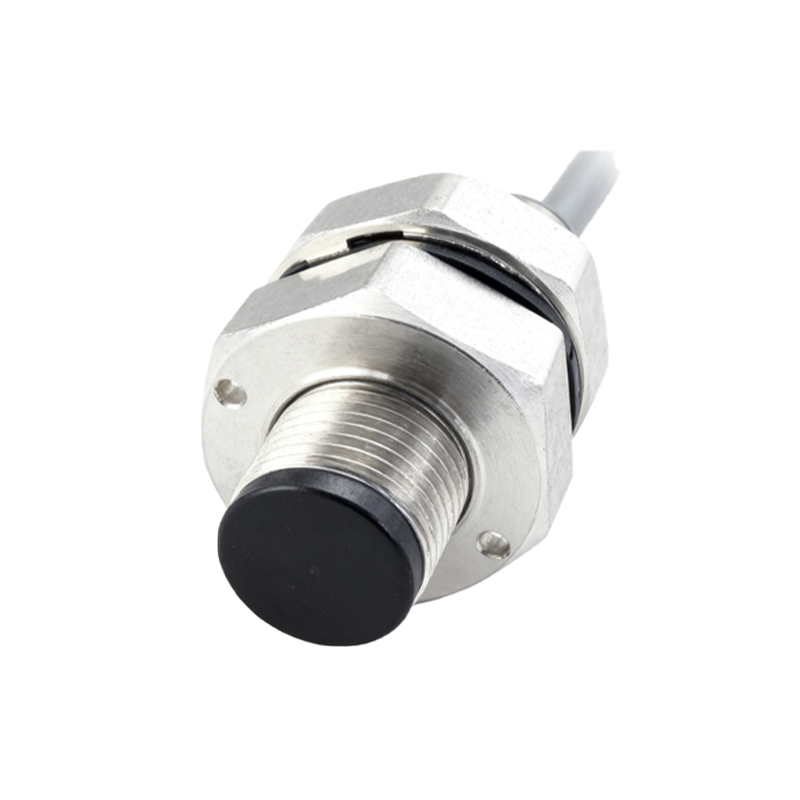
Inductive proximity sensors are the most common type of cylindrical sensor used for detecting metallic objects. They generate an oscillating electromagnetic field from a coil at the sensing face. When a ferrous or non-ferrous metal target enters this field, it induces eddy currents, causing a change in the oscillation amplitude. This change is detected by the sensor's circuitry, which triggers a solid-state output switch. Key characteristics include a relatively short sensing range, typically from 1 to 60 mm, depending on the sensor size and target material. They are immune to non-metallic substances like dust, oil, and water, making them ideal for dirty industrial settings. Common output configurations are NPN (sinking) and PNP (sourcing) DC versions, as well as AC models. Shielded (flush-mountable) and unshielded (non-flush mountable) designs offer flexibility for different mounting scenarios, with shielded types having a narrower, more directed sensing field.
Capacitive Proximity Sensors
Capacitive proximity sensors can detect both metallic and non-metallic materials, including liquids, plastics, glass, and wood. They function by generating an electrostatic field. When any object with a dielectric constant different from air enters this field, it alters the capacitance of the sensor's circuit, triggering an output. The cylindrical versions are particularly useful for level detection of liquids or granular materials through container walls (given the wall material is non-metallic), or for detecting non-metallic objects on conveyor belts. Their sensing range is generally shorter than inductive sensors and can be influenced by environmental factors like humidity. Many models feature a sensitivity adjustment potentiometer, allowing users to fine-tune the sensor to ignore certain background materials (like a container wall) and only detect the target substance. This versatility makes them essential in packaging, food processing, and chemical industries.
Ultrasonic Proximity Sensors
Cylindrical ultrasonic proximity sensors operate by emitting high-frequency sound waves (typically beyond human hearing) and measuring the time it takes for the echo to return from a target object. This time-of-flight principle allows them to detect objects regardless of color, transparency, or material composition—be it solid, liquid, or granular. They offer the longest sensing ranges among cylindrical proximity sensors, often from a few centimeters up to several meters. They are excellent for applications requiring precise distance measurement or detection of clear glass, transparent films, or irregularly shaped objects. However, their performance can be affected by temperature variations, air turbulence, and highly absorbent surfaces. The cylindrical housing often incorporates both the transmitter and receiver piezoelectric elements. They are widely used in palletizing, collision avoidance on AGVs (Automated Guided Vehicles), and bulk material level monitoring.
Photoelectric Sensors in Cylindrical Housings
While often associated with rectangular housings, photoelectric sensing technology is also available in robust cylindrical formats. These sensors use a light emitter (usually LED) and a receiver. They are categorized mainly into three modes: through-beam, retro-reflective, and diffuse (proximity) mode. Cylindrical diffuse sensors are true proximity sensors, where the emitted light reflects off the target back to the receiver housed in the same unit. They are effective for detecting objects at moderate distances and are sensitive to color and surface reflectivity. Cylindrical through-beam sensors consist of two separate units (emitter and receiver) and offer the longest range and highest reliability for detection. The cylindrical design provides good resistance to misalignment and environmental contaminants. They are indispensable for detecting small objects, transparent materials, or in applications requiring high-speed response, common in electronics manufacturing and bottling lines.
Magnetic Proximity Sensors (Reed Switch/Hall Effect)
Cylindrical magnetic proximity sensors detect the presence of a permanent magnet. They come in two primary technologies