Introduction to Three-Wire Square Proximity Sensors
In the realm of industrial automation, the three-wire square proximity switch sensor stands as a cornerstone component for non-contact object detection. Engineered for robustness and reliability, these sensors are pivotal in countless applications, from conveyor belt monitoring to robotic assembly lines. Their square housing design offers distinct advantages in mounting and integration, particularly in space-constrained environments. Unlike cylindrical sensors, the square form factor provides flat surfaces that simplify bracket design and ensure stable installation, minimizing the risk of rotation or misalignment after setup. The three-wire configuration, a standard in modern DC sensor design, provides a straightforward interface for power and signal output, making them compatible with a vast array of Programmable Logic Controllers (PLCs) and control systems. This design typically includes wires for positive supply voltage, common ground, and a switched output signal, which can be either NPN (sinking) or PNP (sourcing) based on the circuit requirements.
Core Operating Principles and Technology
The fundamental operation of a square three-wire proximity sensor is based on electromagnetic field interaction. Most commonly, these sensors employ inductive or capacitive sensing technologies. Inductive sensors generate an oscillating electromagnetic field from a coil within the sensor face. When a metallic target enters this field, it causes eddy currents that dampen the oscillation. The sensor's internal circuitry detects this change and triggers the output switch. Capacitive sensors, on the other hand, can detect both metallic and non-metallic objects by sensing changes in capacitance caused by the target's dielectric properties. The square housing efficiently encases the oscillator coil, amplifier, and solid-state switching circuitry. The three-wire system is integral to this operation: one wire supplies DC power (typically 10-30V DC), the second is the ground return, and the third carries the load-switching signal. This architecture allows for a clean, low-noise switching signal crucial for high-speed counting and precision positioning tasks.
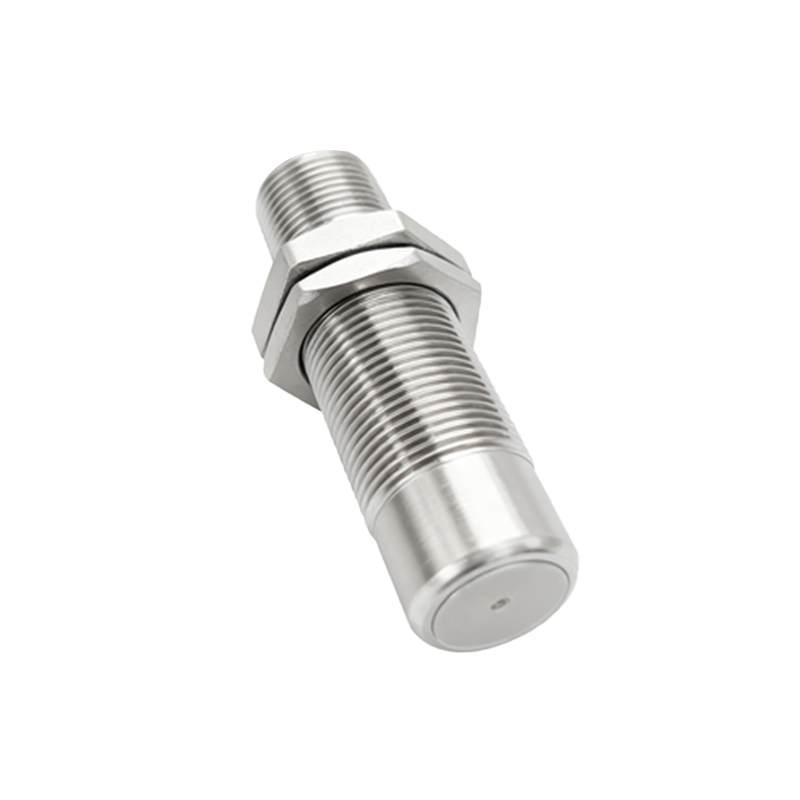
Key Electrical Characteristics and Wiring
Understanding the electrical specifications is paramount for correct implementation. The three wires are universally color-coded: brown for positive supply (+V), blue for common ground (0V), and black for the output signal. For a PNP (sourcing) sensor, the black wire provides a positive voltage to the load when activated. For an NPN (sinking) sensor, the black wire provides a path to ground for the load current. Key parameters include operating voltage range, current consumption, output current capacity (load current), and switching frequency. The square design often allows for better heat dissipation from the internal electronics, contributing to stable performance across a wide temperature range. It is critical to ensure proper shielding and cable routing, especially in environments with strong electromagnetic interference (EMI). Many models feature short-circuit and reverse polarity protection, enhancing their durability in harsh industrial settings. Always consult the manufacturer's datasheet for specific wiring diagrams and voltage tolerances.
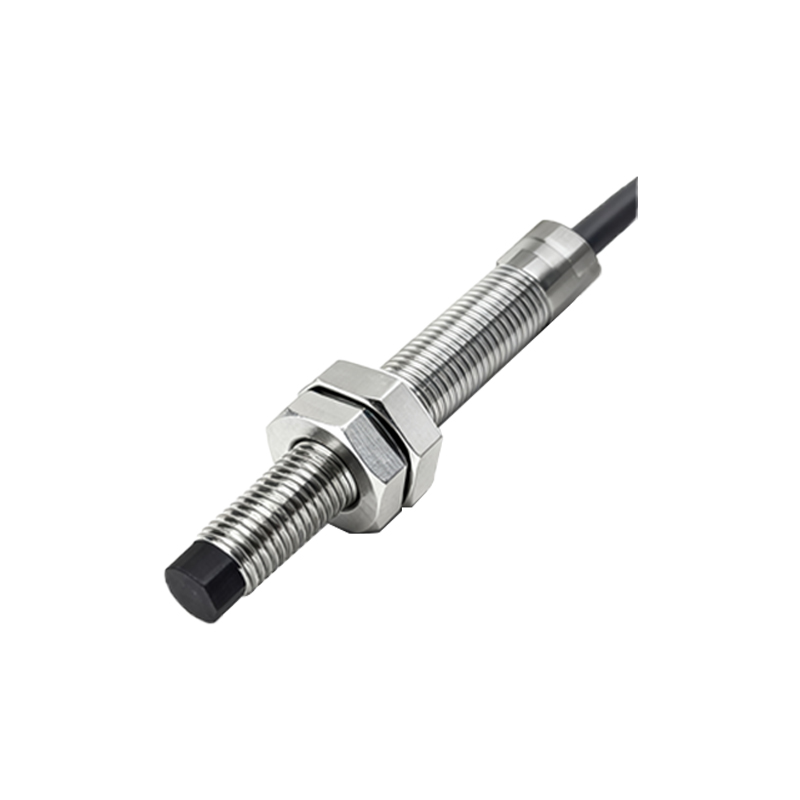
Mounting Considerations and Sensing Range
The square form factor offers superior mounting flexibility. Sensors can be flush-mounted in a metal bracket without affecting their nominal sensing distance, a feature not always possible with cylindrical types. The flat sides enable secure fastening using standard brackets or directly onto machine frames. The sensing face is typically located on one of the flat surfaces. The rated sensing distance (Sn) is a crucial specification, indicating the nominal distance at which a standard target will reliably trigger the sensor. For inductive square sensors, this target is usually a square of mild steel. It is essential to account for reduction factors for different metals (e.g., aluminum, copper). A critical installation practice is maintaining adequate clearance around the sensor face to prevent interference from surrounding metal, known as the "non-flush mountable" characteristic. For optimal performance, installers should follow the recommended lateral and axial clearance distances specified in the technical manual.
Application Scenarios and Selection Criteria
Three-wire square proximity sensors find extensive use in material handling, packaging machinery, automotive manufacturing, and CNC machine tools. Common applications include detecting the presence of a pallet, counting bottles on a line, verifying cylinder position, or initiating a robotic pick-and-place sequence. When selecting a sensor, engineers must evaluate several factors: the required sensing technology (inductive for metals, capacitive for varied materials), the physical size and shape constraints favoring a square body, the required sensing distance, output type (NPN vs. PNP), electrical ratings, and environmental conditions such as temperature, humidity, and exposure to coolants or washdowns. Models are available with different housing materials (e.g., nickel-plated brass, stainless steel, or PBT plastic) to withstand specific environmental challenges. The choice between a shielded (flush