Introduction to Proximity Sensing Technology
Proximity switch sensors are fundamental components in modern industrial automation, enabling non-contact detection of objects. Among various configurations, the three-wire proximity sensor stands out as one of the most prevalent and reliable types used in machinery, conveyor systems, and safety applications. Unlike mechanical limit switches, these sensors operate without physical contact, thereby eliminating wear and tear and ensuring long-term operational stability. Their core function is to detect the presence or absence of a metallic or, in some variants, non-metallic target within a specified sensing range. The three-wire design specifically refers to the electrical connection scheme, which typically includes power supply, ground, and output signal lines. This configuration offers a robust interface with programmable logic controllers (PLCs) and other control systems, forming the backbone of countless automated processes where precise and rapid object detection is critical.
Core Operating Principle: Inductive Sensing
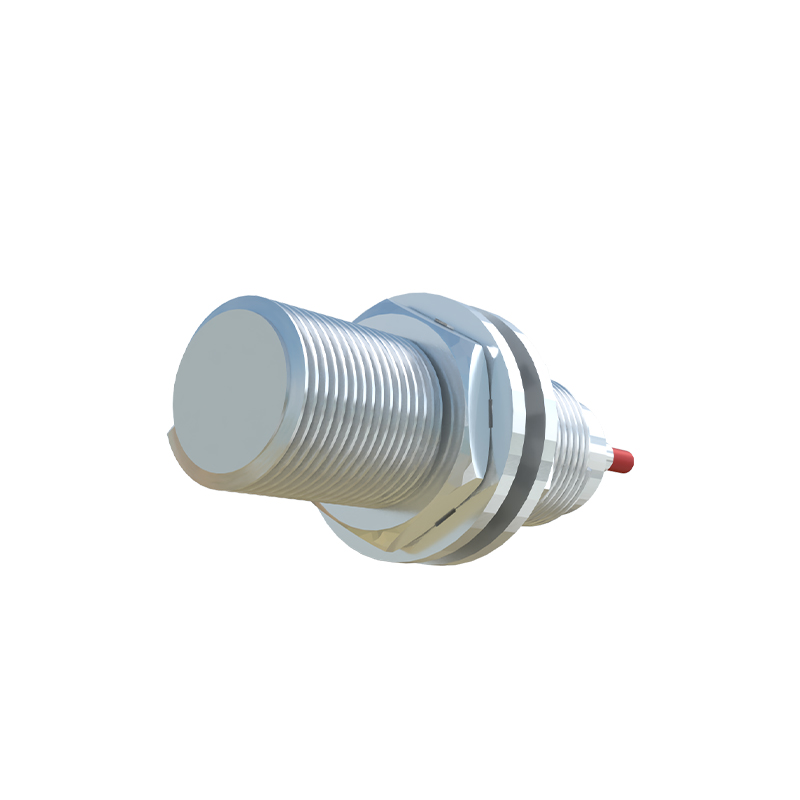
The majority of three-wire proximity switches for metal detection are based on the principle of electromagnetic induction. The sensor's active face contains a coil that is part of an oscillator circuit. When an alternating current flows through this coil, it generates a high-frequency electromagnetic field around the sensor head. In the absence of a conductive target, this oscillator operates at a stable amplitude. However, when a metallic object enters this oscillating field, eddy currents are induced on the surface of the target. These eddy currents draw energy from the oscillator, causing its amplitude to decrease. An integrated evaluation circuit continuously monitors the oscillator's amplitude. Once the amplitude drop exceeds a predefined threshold—corresponding to the target being within the nominal sensing distance—the circuit triggers a change in the output state of the sensor. This entire process occurs without any physical contact, allowing for detection through non-ferrous materials and in harsh environments.
Internal Circuitry and Output Types
The three wires are designated for specific functions: brown (or red) for positive DC supply voltage (typically 10-30V DC), blue for the common ground (0V), and black (or white) for the switched output signal. The internal circuitry is sophisticated, comprising the oscillator, demodulator, trigger, and output switching stage. Regarding output, three-wire sensors are predominantly available in two transistor-based types: NPN (sinking) and PNP (sourcing). An NPN output switches the negative (ground) line to the load, meaning the load is connected between the supply positive and the sensor's output wire. Conversely, a PNP output switches the positive supply line to the load. The choice between NPN and PNP depends on the control system's input card configuration. Additionally, the output can be normally open (NO) or normally closed (NC), defining the signal state when no target is present. This flexibility makes the three-wire sensor highly adaptable to diverse electrical control architectures.
Key Characteristics and Performance Parameters
Several technical parameters define a sensor's performance. The sensing distance, or nominal range (Sn), is the critical specification, indicating the standard detection distance for a defined standard target. Factors like target material, size, and shape can affect the actual sensing range. Repeat accuracy is another vital parameter, denoting the sensor's ability to consistently detect a target at the same point. Response frequency specifies how quickly the sensor can toggle its output state, measured in Hertz (Hz), which is crucial for high-speed applications. Housing material, typically nickel-plated brass or stainless steel, and the protection rating (e.g., IP67) determine environmental resilience against dust, coolants, and physical impact. Understanding these parameters is essential for selecting the correct sensor for a specific application, ensuring reliability and preventing malfunctions.
Application Considerations and Wiring Practices
Correct installation and wiring are paramount for optimal performance. The sensor must be mounted securely, with careful attention to prevent mutual interference when multiple sensors are placed in close proximity—maintaining a minimum distance is often recommended. The sensing field can be influenced by surrounding metals; flush-mounted sensors are designed for embedding in metal, while non-flush types offer longer ranges but require a metal-free zone around them. Wiring must adhere to the manufacturer's diagram: incorrect polarity can damage the device. It is common practice to include a protective fuse in the supply line. For inductive sensors, only metallic targets can be detected, and the sensing distance varies with the target's material (steel, aluminum, copper). For non-metallic targets, capacitive three-wire sensors, operating on a different principle, must be employed.
Advantages Over Two-Wire Alternatives
While two-wire sensors exist, the three-wire design offers distinct benefits. The primary advantage is the separate output line, which allows for a very low residual current