Introduction to CNBS Photoelectric Sensors
In the realm of industrial automation, reliable object detection is paramount. CNBS photoelectric sensors have established themselves as a robust and versatile solution for a wide array of applications. These sensors operate on a fundamental principle: they emit a beam of light, typically from an LED, and detect changes in the received light signal. This change occurs when an object interrupts or reflects the beam, triggering an electrical output signal. The core advantage lies in their non-contact operation, allowing for detection without physical interaction, which minimizes wear and tear and enables high-speed operation. CNBS offers a diverse portfolio, including through-beam, retro-reflective, and diffuse reflective models, each designed to tackle specific sensing challenges in demanding industrial environments.
Core Operating Principles and Technologies
Understanding the technology behind CNBS sensors is key to proper selection. Through-beam sensors consist of separate emitter and receiver units. The object to be detected breaks the light beam between them, offering the longest sensing ranges and highest reliability, ideal for precise detection on conveyor lines. Retro-reflective sensors house both emitter and receiver in one housing, using a reflector to bounce the light beam back. An object is detected when it blocks this return path. These are excellent for applications where mounting components on both sides of the target is impractical. Diffuse reflective sensors, also single-unit, detect objects by measuring the light reflected directly off the target's surface. Their sensing distance depends on the object's color, size, and surface texture, making them suitable for proximity detection and presence verification.
Key Features and Performance Specifications
CNBS photoelectric sensors are engineered for performance and durability. Key specifications include sensing range, response time, light source, and output type. Sensing ranges vary from a few centimeters to several meters, depending on the model and operating principle. Fast response times, often in the microsecond range, are critical for high-speed production lines. Common light sources are visible red, infrared, and laser red. Visible red beams are easy to align, while infrared is immune to ambient light interference. Laser models provide a precise, focused beam for detecting very small objects or achieving long ranges. Outputs typically include NPN/PNP transistors, analog current/voltage, or IO-Link for smart sensor communication, providing direct interface with PLCs and control systems.
Robust Design for Harsh Industrial Environments
Industrial settings present challenges like dust, moisture, vibration, and temperature extremes. CNBS sensors are built to withstand these conditions. Many models feature rugged, IP67 or IP69K rated housings that protect against water and dust ingress. They are constructed from high-quality materials like stainless steel or robust plastics to resist chemical exposure and physical impact. Advanced models incorporate background suppression technology, which allows them to detect an object within a precise, defined range while ignoring objects or surfaces beyond it. This is invaluable for detecting objects on a conveyor belt while ignoring the belt itself or a background structure, ensuring reliable operation in complex setups.
Application Examples Across Industries
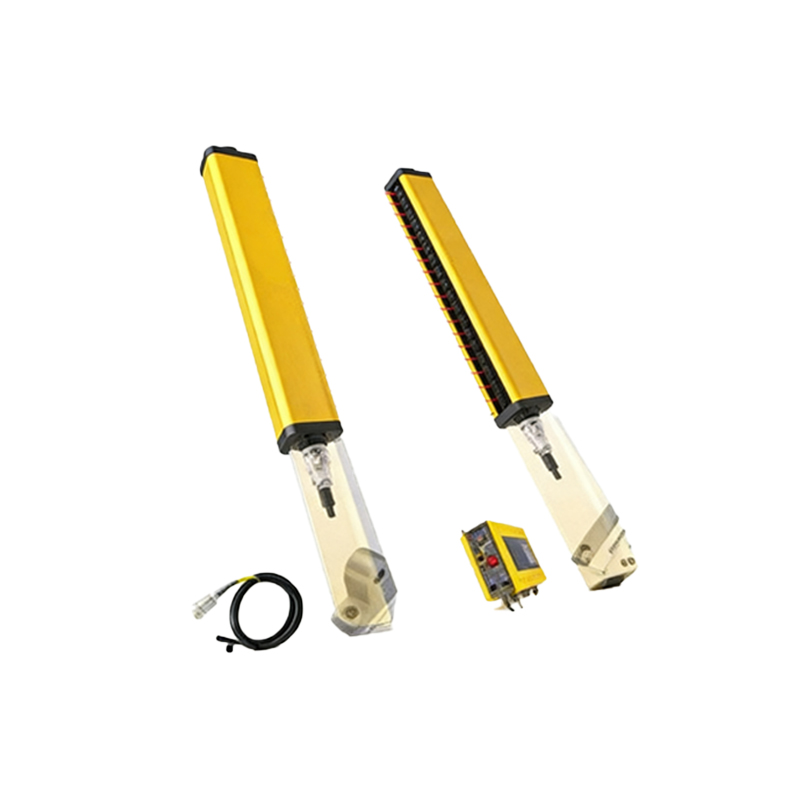
The versatility of CNBS photoelectric sensors makes them indispensable across sectors. In packaging and material handling, they count bottles, detect box presence on conveyors, and control filling levels. In the automotive industry, they verify part placement in assembly robots and monitor automated guided vehicle (AGV) paths. In food and beverage processing, stainless-steel, washdown-rated models detect labels, monitor product flow, and ensure proper container positioning. In electronics manufacturing, precise miniature sensors verify component placement on PCBs. They are also widely used for door control, palletizing, and as safety curtains to protect personnel by detecting entry into hazardous zones.
Installation, Alignment, and Maintenance Best Practices
Correct installation is crucial for optimal sensor performance. Ensure the sensor is securely mounted to minimize vibration effects. For through-beam and retro-reflective types, precise alignment between emitter, receiver, and reflector is essential; many CNBS sensors feature built-in alignment indicators (like LED status lights) to simplify this process. Consider the environmental factors: avoid mounting where direct sunlight, strong ambient light, or airborne contaminants like steam or dust could interfere with the light beam. Regular maintenance involves keeping the lens clean and periodically checking the mounting stability and electrical connections. Modern smart sensors with IO-Link can provide diagnostic data, predicting maintenance needs and reducing downtime.
Advantages Over Other Sensing Technologies
Compared to other proximity sensors like inductive or capacitive types, CNBS photoelectric sensors offer distinct benefits. They can detect virtually any material—metal, plastic, glass, wood, or liquid—unlike inductive sensors that only detect metals. They provide much longer sensing distances than capacitive sensors. Their fast response speed and non-contact nature make them superior for high-cycle applications. While ultrasonic sensors are also versatile, photoelectric sensors generally offer faster response and are less affected by temperature variations or soft, sound-absorbing materials. The choice of the correct photoelectric mode (through-beam, retro-reflective, diffuse) allows for precise tailoring to the application's specific requirements.
Future Trends and Smart Sensor Integration
The future of CNBS photoelectric sensors is intertwined with Industry 4.0 and smart factory concepts. The integration of IO-Link communication is a significant trend. This point-to-point serial protocol allows for bidirectional data exchange, enabling remote configuration, real-time parameter adjustment, and advanced diagnostics. Sensors can report operating hours, temperature, signal strength, and contamination levels, facilitating predictive maintenance. Furthermore, advancements in laser technology and background suppression algorithms continue to push the boundaries of precision and reliability. As systems become more interconnected, the role of the photoelectric sensor evolves from a simple switch to an intelligent data point within a comprehensive automation network.