Introduction to Proximity Sensing
Proximity sensors are a cornerstone of modern industrial automation, enabling machines to detect the presence or absence of an object without physical contact. These non-contact devices are crucial for applications ranging from simple object counting on a conveyor belt to complex robotic positioning and safety interlocks. Their ability to operate reliably in harsh environments—filled with dust, moisture, or vibration—makes them indispensable. The core principle uniting all types is the use of an electromagnetic field, light, or sound to sense a target. This guide, enhanced with animated explanations, delves into the operational principles of the most common proximity sensor technologies.
Inductive Proximity Sensor Operation
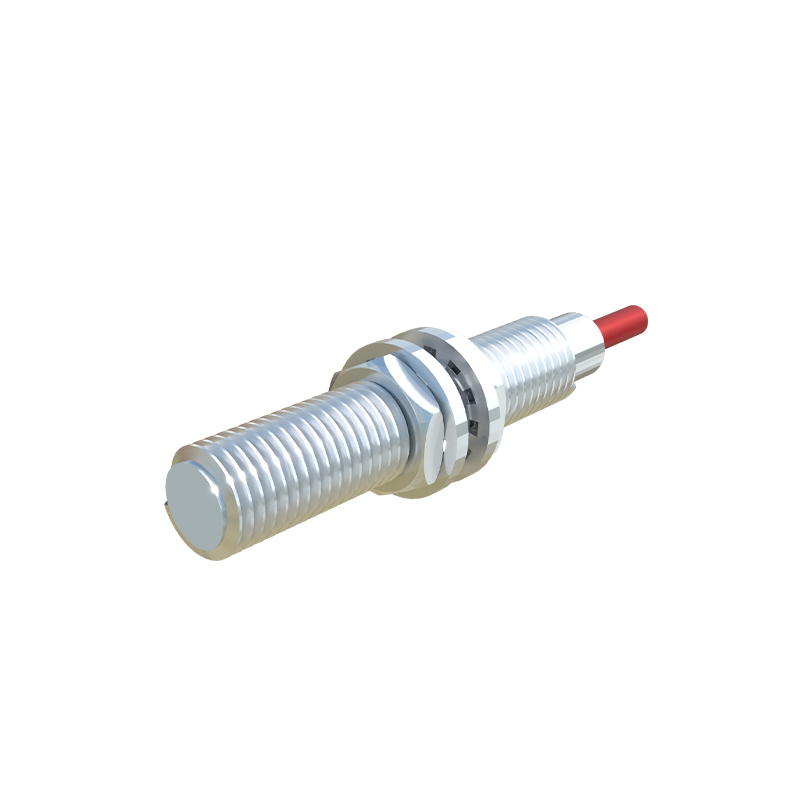
Inductive proximity sensors are designed to detect metallic objects. The heart of the sensor is a coil wound around a ferrite core, connected to an oscillator. When powered, the oscillator generates a high-frequency alternating electromagnetic field at the active face of the sensor. In the absence of a metal target, this field remains stable. When a conductive metal object enters this field, eddy currents are induced on the surface of the target. These eddy currents draw energy from the oscillator, causing its amplitude to decrease. This change is detected by a threshold circuit, which subsequently triggers a solid-state switch to change the output state. The sensor effectively "sees" the metal. Animated visuals clearly show the generation of the electromagnetic field and the disturbance caused by the incoming metal object, illustrating the non-contact detection process.
Capacitive Proximity Sensor Operation
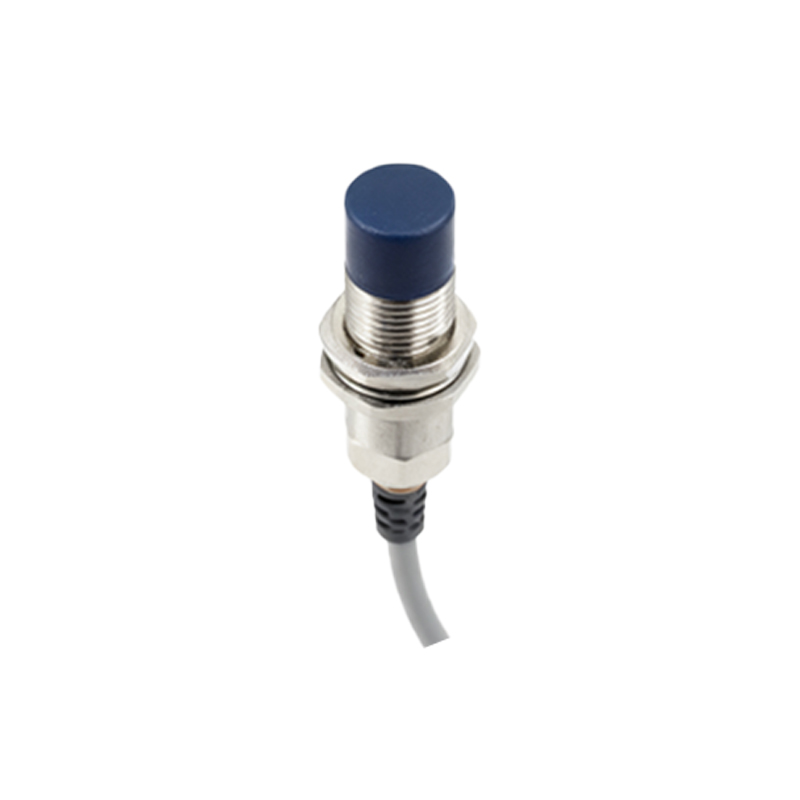
Capacitive sensors can detect both metallic and non-metallic materials, such as liquids, plastics, wood, and granules. They operate on the principle of capacitance change. The sensor face forms one plate of a capacitor, with the ground plane or the sensor housing acting as the other plate. The oscillator circuit is tuned to a specific capacitance level. When any material with a different dielectric constant than air approaches the active face, it alters the capacitance of the system. This change increases the oscillator's amplitude. A threshold circuit monitors this amplitude, and once it reaches a preset level, it switches the output. An animation demonstrates how the electric field extends from the sensor face and how different materials distort this field, leading to a detectable change. This makes them ideal for level detection in tanks or presence detection of non-metallic containers.
Ultrasonic Proximity Sensor Operation
Ultrasonic sensors measure distance or detect objects using sound waves beyond the human hearing range. The sensor contains a piezoelectric transducer that emits short, high-frequency ultrasonic pulses. These pulses travel through the air at the speed of sound. Upon striking an object, the sound wave is reflected back to the sensor. The same transducer (or a separate receiver) detects the echo. An internal timer measures the time interval between the emitted pulse and the received echo. Using the known speed of sound, the sensor's control electronics calculates the distance to the object. Animated sequences are particularly effective here, showing the emission of sound waves, their travel, reflection, and return, providing a clear visual of the time-of-flight principle. They are excellent for detecting clear objects, liquids, and uneven surfaces.
Photoelectric Sensor Operation
Photoelectric sensors use light beams to detect objects. They consist of an emitter (light source, typically LED) and a receiver. There are three main modes: through-beam, retro-reflective, and diffuse reflective. In through-beam mode, the emitter and receiver are separate units. An object is detected when it interrupts the light beam. Retro-reflective mode uses a single unit with both emitter and receiver, and a reflector; detection occurs when the beam is broken. Diffuse reflective mode relies on light reflecting off the target itself back to the receiver. An animation can vividly depict these three modes, showing the path of the light beam and how its interruption or reflection triggers the output. Photoelectric sensors are versatile for long-range detection and can sense virtually any material.
Magnetic Proximity Sensor (Reed Switch) Operation
Magnetic proximity sensors, often using reed switches, detect the presence of a permanent magnet. The reed switch consists of two ferromagnetic, flexible metal reeds sealed within a glass tube filled with inert gas. The reeds are slightly separated. When a magnetic field of sufficient strength from a magnet approaches, the reeds become magnetically polarized, attract each other, and make physical contact, closing the electrical circuit. When the magnet is removed, the reeds spring back to their open position. Animated diagrams perfectly illustrate the reeds bending and making contact under the influence of the magnetic field. These sensors are simple, cost-effective, and used in applications like door/window security and cylinder position