Introduction to Proximity Sensing Technology
Proximity sensors are fundamental components in modern industrial automation, designed to detect the presence or absence of an object without physical contact. Among their diverse applications, the detection of glass presents a unique set of challenges and requires specific technological solutions. Glass, being a transparent or translucent material, is not easily detected by standard inductive or capacitive sensors, which rely on the electrical or magnetic properties of the target. This has led to the development and refinement of specialized sensors, primarily photoelectric and ultrasonic types, tailored for reliable glass detection in high-speed production lines, such as those in the automotive, packaging, and appliance manufacturing industries.
The Challenge of Detecting Transparent Materials
The primary difficulty in detecting glass stems from its optical properties. Standard diffuse photoelectric sensors, which emit a light beam and detect its reflection from the target object, often fail with clear glass. A significant portion of the emitted light passes directly through the material, while another portion may reflect at angles that do not return to the sensor's receiver. This results in an unreliable or absent detection signal. Similarly, capacitive sensors, which detect changes in an electrostatic field, can struggle with non-conductive materials like glass unless they have a specific dielectric constant that significantly alters the field. Therefore, conventional methods are insufficient, necessitating more sophisticated approaches.
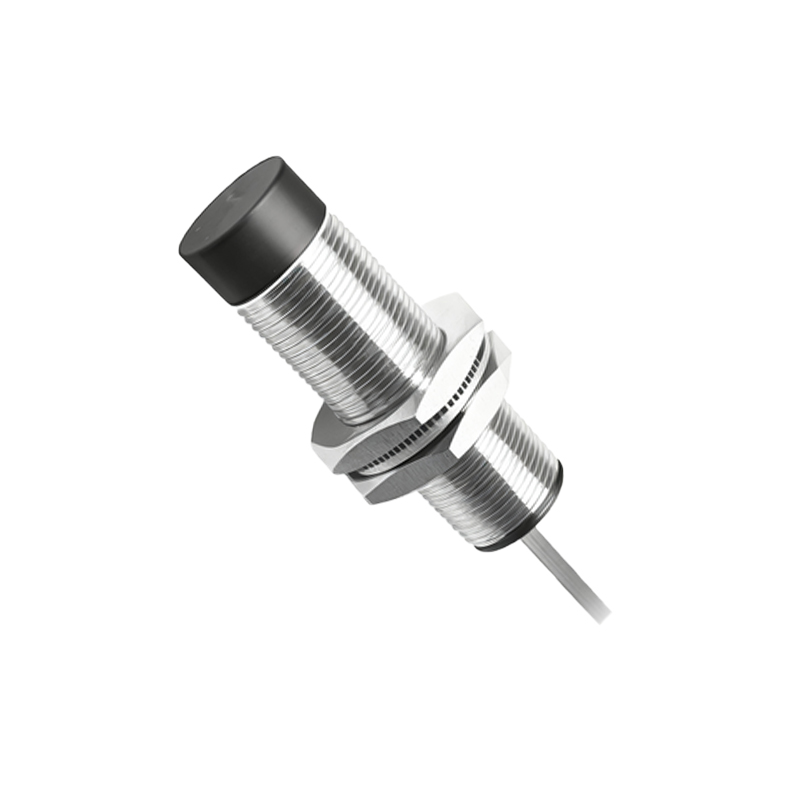
Principles of Photoelectric Sensors for Glass Detection
Photoelectric sensors are the most prevalent solution for glass detection. Two main operational modes are employed: through-beam and polarized retro-reflective. In a through-beam setup, the emitter and receiver are separate units placed opposite each other. The glass object is positioned in the light path. Even though glass is transparent, it will refract (bend) the light beam. High-precision sensors can detect this minute deflection or the slight reduction in light intensity caused by reflections at the glass surfaces. A more common and robust method involves using a polarized retro-reflective sensor with a specialized reflector. These sensors emit polarized light. When this light beam strikes a standard retro-reflector, it is returned with its polarization angle maintained, and the sensor detects it. However, when the beam passes through a glass pane, the glass surface can depolarize the light. The sensor's receiver is equipped with a polarizing filter (analyzer) that only accepts light with the original polarization. Thus, the depolarized light reflected from the glass is rejected, causing the sensor to register an "object present" state.
Ultrasonic Sensor Technology for Glass Detection
Ultrasonic proximity sensors offer an effective alternative, particularly for thicker or coated glass. These sensors operate by emitting high-frequency sound waves (typically beyond 20 kHz) and measuring the time for the echo to return. When an ultrasonic wave encounters a glass surface, a large portion of the sound energy is reflected back to the sensor due to the significant difference in acoustic impedance between air and the solid glass. The sensor's control unit calculates the distance to the object based on the time-of-flight of the sound pulse. This method is highly effective regardless of the glass's color, transparency, or surface finish (provided it is not sound-absorbent). It can reliably detect single or multiple glass panes, making it ideal for applications like detecting glass sheets on conveyor belts or monitoring the level of liquid in a glass container indirectly.
Application Considerations and Best Practices
Selecting the right sensor for a glass detection application requires careful analysis of several parameters. The thickness, color, and surface quality of the glass are critical. For thin, clear glass, a polarized retro-reflective photoelectric sensor is often the best choice. For thicker, frosted, or coated glass, ultrasonic sensors provide greater reliability. Environmental factors such as dust, moisture, ambient light (for photoelectric sensors), and acoustic noise (for ultrasonic sensors) must also be mitigated. Sensor mounting position, angle, and distance must be precisely calibrated to ensure the detection beam interacts optimally with the glass surface. Regular maintenance and cleaning of the sensor lens or transducer surface are essential to prevent false triggers caused by contamination.
Conclusion and Industry Outlook
The reliable detection of glass using proximity sensors is a solved but nuanced engineering challenge, primarily addressed through advanced photoelectric and ultrasonic technologies. The choice between them hinges on the specific material properties and environmental conditions of the application. As Industry 4.0 and smart factory concepts evolve, these sensors are increasingly integrated with IO-Link and other digital communication protocols, providing not just a detection signal but also diagnostic data and parameterization capabilities. Future developments may see increased use of laser-based sensors for extreme precision and the integration of machine vision systems for multi-parameter inspection beyond mere presence detection, ensuring even higher levels of quality control and automation efficiency in glass-handling processes.
SEO