Understanding the Core Differences
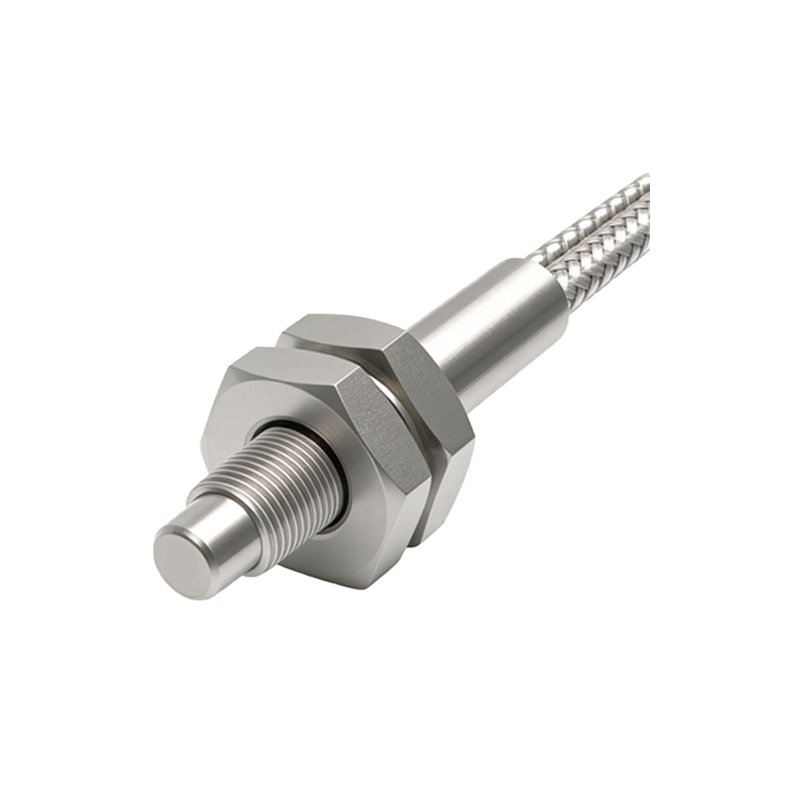
The fundamental question of whether 2-wire and 3-wire photoelectric sensors are interchangeable is a common one in industrial automation. The short answer is generally no, they are not directly interchangeable without considering the electrical and functional implications. The core difference lies in their wiring configuration and how they interface with the control system, typically a Programmable Logic Controller (PLC). A 2-wire sensor is wired in series with the load, much like a simple switch. It utilizes the same two wires to carry both the power supply for its internal electronics and the switched output signal. In contrast, a 3-wire sensor has dedicated lines: one for power supply positive, one for power supply negative (common), and a separate third wire for the output signal. This separation of power and signal paths is the key distinction that drives their different applications and limitations.
Electrical Characteristics and Load Compatibility
The electrical behavior of these sensors is critical for compatibility. A 2-wire sensor has a residual voltage drop (or leakage current) when in the "ON" state and a residual current flow when in the "OFF" state. This is due to the internal electronics constantly drawing power. This characteristic means 2-wire sensors have strict minimum and maximum load current requirements. If the load (e.g., a PLC input) draws too little current, the sensor may not function correctly; if it draws too much, the sensor could be damaged. Three-wire sensors, with their isolated output, typically use solid-state switches like transistors. They provide a much cleaner signal with negligible voltage drop when ON and virtually zero leakage when OFF. The output is either actively pulled to the supply voltage (PNP sourcing) or to common (NPN sinking), making them far less sensitive to the load's current draw, provided the maximum current rating is not exceeded.
Wiring Schemes and PLC Integration
Integration with a PLC input module clearly illustrates the non-interchangeability. For a DC sinking input module (which expects to connect to a PNP sensor), you would use a 3-wire PNP sensor. Its output wire connects to the PLC input, and the common wire connects to the PLC common terminal. A 2-wire sensor in this scenario would be wired in series between the positive supply and the PLC input. However, the sensor's leakage current in the OFF state might be high enough to keep the PLC input erroneously active. Conversely, for a DC sourcing input module (expecting an NPN sensor), using a 2-wire sensor could fail because the sensor needs a minimum current to operate, which the PLC input's high impedance might not provide. Mismatching these can lead to unreliable operation, damaged sensors, or damaged PLC inputs.
Application-Specific Advantages and Limitations
Each type has its ideal application domain. The primary advantage of a 2-wire sensor is simplified installation. It requires less wiring, which can reduce cost and installation time in large systems. It is often used for basic switching tasks and can directly replace mechanical limit switches. Its main limitations are the residual current/voltage issues and lower switching capacity. The 3-wire sensor offers superior performance. It allows for faster switching speeds, can handle higher currents, and provides a more reliable, "crisp" signal to the controller. It is the standard for most modern industrial applications requiring precision and reliability. Furthermore, 3-wire sensors enable advanced functionalities like short-circuit protection, diagnostics via LED indicators, and IO-Link communication, which are not feasible with a 2-wire design.
Practical Guidelines for Selection and Substitution
Direct substitution is not recommended without a thorough review of the electrical specifications. If considering a change, the control circuit's design must be re-evaluated. Key parameters to check include: the PLC input type (sourcing or sinking), the minimum operating current of a 2-wire sensor versus the PLC input's impedance, the maximum leakage current of a 2-wire sensor, and the power supply voltage. In some rare cases, with careful calculation and the use of external bleed resistors, a workaround might be possible to adapt one type to a circuit designed for the other. However, for reliability and safety, the best practice is to always replace a sensor with the exact same type and model or one explicitly listed as a direct equivalent by the manufacturer. When designing a new system, 3-wire sensors are typically the preferred choice for their performance and flexibility, reserving 2-wire sensors for specific, cost-sensitive, or legacy-compatibility applications.