Introduction to Photoelectric Sensing Technology
Photoelectric sensors are pivotal components in modern industrial automation, utilizing light beams to detect the presence, absence, or distance of objects. These sensors operate by emitting a light source—typically infrared, visible, or laser—and measuring the reflected or interrupted light to generate electrical signals. The core advantage lies in their non-contact nature, enabling high-speed, precise detection without physical wear. In automation systems, they are indispensable for tasks such as object counting, positioning, and quality inspection. The reliability of photoelectric sensors hinges on their underlying circuit boards, which integrate signal processing, power management, and communication interfaces. This article delves into the design principles and practical implementations of circuit boards tailored for photoelectric sensor applications, addressing key considerations for engineers in the electrical industry.
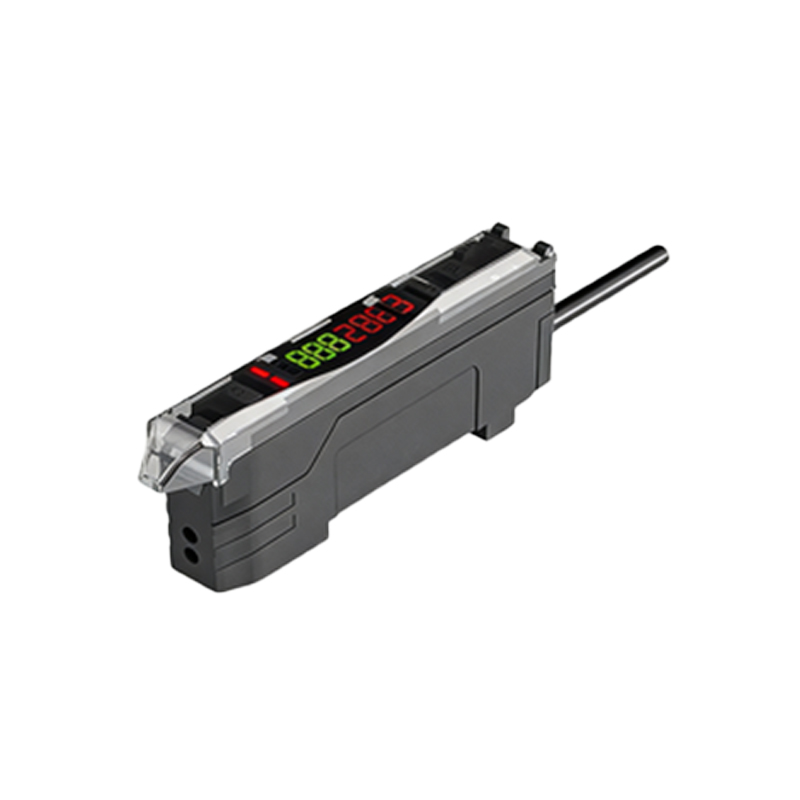
Circuit Board Architecture and Core Components
A photoelectric sensor circuit board typically comprises several essential modules: the emitter section, receiver section, signal conditioning unit, and output driver. The emitter module includes a light-emitting diode (LED) or laser diode, driven by a constant current source to ensure stable light intensity. For instance, an infrared LED paired with a pulse-width modulation (PWM) controller can enhance energy efficiency and reduce heat dissipation. The receiver module features a phototransistor or photodiode that converts incoming light into a weak electrical current. This signal is then amplified and filtered through operational amplifiers (op-amps) in the conditioning unit to mitigate noise from ambient light or electrical interference. Advanced designs may incorporate analog-to-digital converters (ADCs) for digital signal processing, allowing programmable sensitivity adjustments. The output driver interfaces with external systems, providing transistor-transistor logic (TTL) or open-collector outputs compatible with programmable logic controllers (PLCs).
Design Considerations for Noise Immunity and Stability
Ensuring robust performance in industrial environments requires meticulous attention to noise immunity and thermal stability. Electromagnetic interference (EMI) from motors or high-voltage equipment can disrupt sensor signals, necessitating shielding techniques such as grounded copper pours on the printed circuit board (PCB). Differential signaling and low-pass filters are employed to suppress high-frequency noise. Thermal management is critical, as temperature fluctuations affect LED output and semiconductor behavior. Designers often integrate temperature compensation circuits using thermistors or digital sensors to calibrate readings dynamically. Power supply design must account for voltage regulation, with linear regulators or switching converters providing clean, stable voltages to sensitive analog components. Decoupling capacitors placed near integrated circuits (ICs) minimize ripple and transient spikes. Additionally, conformal coating can protect the board from moisture, dust, and chemical exposure in harsh settings.
Implementation Examples in Industrial Automation
In practice, photoelectric sensor circuit boards are deployed across diverse applications. For conveyor belt systems, retro-reflective sensors with modulated light signals detect package transitions, triggering counters or sorting mechanisms. The circuit board here includes a modulation/demodulation circuit to distinguish the sensor's light from ambient sources, improving accuracy. In robotic assembly lines, diffuse sensors with background suppression capabilities measure object proximity, relying on analog output circuits that provide continuous distance data. These boards often feature microcontroller units (MCUs) for real-time processing and serial communication protocols like RS-485 or IO-Link for network integration. Another example is in safety curtains, where multiple emitter-receiver pairs form a light grid; the circuit design emphasizes fail-safe logic and redundant pathways to ensure immediate shutdown upon beam interruption. Field-programmable gate arrays (FPGAs) may be used for high-speed, parallel processing in such critical systems.
Testing and Validation Protocols
Rigorous testing validates circuit board functionality under simulated operational conditions. Engineers perform electrical tests to verify voltage levels, current draw, and signal integrity using oscilloscopes and multimeters. Environmental stress testing involves subjecting boards to temperature cycles, humidity, and vibration to assess durability. Optical calibration ensures alignment between emitter and receiver components, with lux meters measuring light intensity consistency. Software tools like SPICE simulations model circuit behavior before prototyping, identifying potential issues like oscillation or saturation. In production, automated optical inspection (AOI) checks solder joints and component placement, while functional tests run sensor boards through predefined scenarios, such as detecting objects at varying distances or under different lighting conditions. Compliance with industry standards, such as IEC 60947-5-2 for proximity sensors, is mandatory for market acceptance.
Future Trends and Innovations
The evolution of photoelectric sensor circuit boards is driven by advancements in miniaturization, connectivity, and intelligence. Emerging trends include the integration of micro-electromechanical systems (MEMS) for compact, low-power designs suitable for IoT devices. Wireless capabilities, enabled by Bluetooth Low Energy (BLE) or Zigbee modules, allow sensor data transmission to cloud platforms for predictive maintenance analytics. Artificial intelligence (AI) algorithms embedded in onboard processors can enable adaptive sensing, where the board self-adjusts parameters based on environmental changes. Energy harvesting techniques, such as using photovoltaic cells to power sensors, are gaining traction for sustainable operations. Furthermore, the adoption of flexible PCBs and additive manufacturing promises custom-shaped boards that fit into constrained spaces. As Industry 4.0 accelerates, these innovations will enhance sensor precision, reliability, and interoperability in smart factories.