Introduction to Barcode Scanners and Photoelectric Sensors
In the world of industrial automation and data capture, barcode scanners and photoelectric sensors are both pivotal technologies. At first glance, they might seem similar because they both interact with light to perform their functions. A barcode scanner is a device designed to read and decode information stored in barcodes, which are graphical representations of data. It typically uses a light source, such as a laser or LED, to illuminate the barcode and a photosensitive element to detect the reflected light pattern. On the other hand, a photoelectric sensor is a broader category of devices used to detect the presence, absence, or distance of objects by using a light transmitter and receiver. They are fundamental components in automation for tasks like object counting, positioning, and level detection. While both technologies rely on photoelectric principles, their purposes, designs, and applications differ significantly.
Core Working Principle Comparison
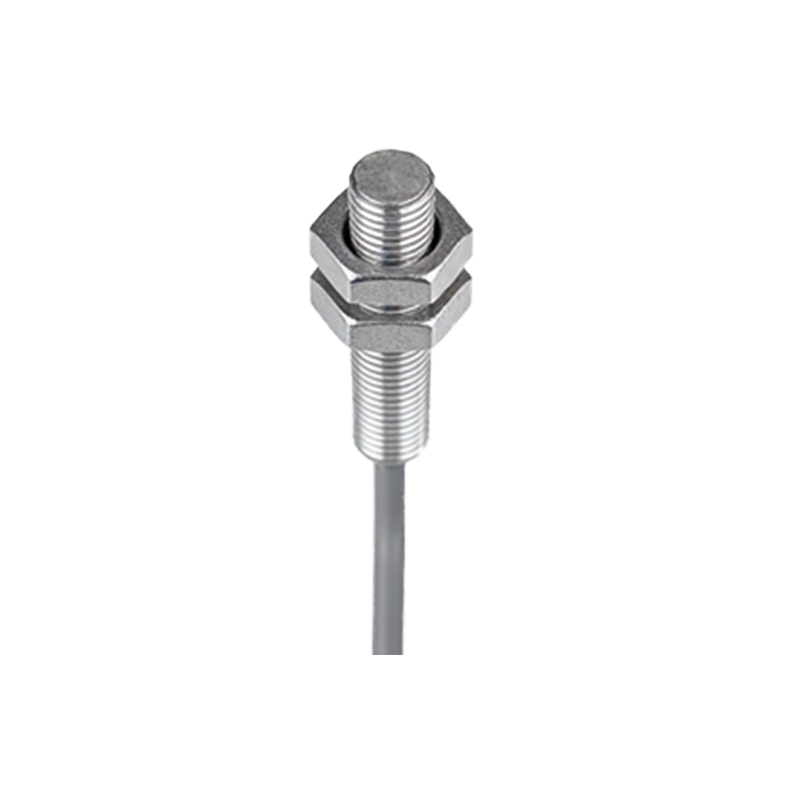
The fundamental operation of both devices is based on the photoelectric effect, where light is converted into an electrical signal. A barcode scanner emits a focused beam of light onto a barcode. The dark bars absorb light, while the white spaces reflect it. The scanner's sensor detects these variations in reflected light intensity, converting them into an electrical signal that is then decoded into digital data, such as numbers or letters. In contrast, a photoelectric sensor generally operates in one of three modes: through-beam, retro-reflective, or diffuse reflective. In through-beam mode, the transmitter and receiver are separate; an object is detected when it interrupts the light beam. Retro-reflective mode uses a reflector to bounce light back to the receiver, with detection occurring when the beam is blocked. Diffuse reflective mode relies on light reflecting directly off the object itself. The sensor's output is typically a simple on/off signal indicating object presence, not detailed data decoding.
Key Design and Functional Differences
Design-wise, barcode scanners are engineered for precision in reading specific patterns. They incorporate sophisticated optics and decoding algorithms to interpret varied barcode symbologies (like UPC, QR codes). Many modern scanners also include image capture capabilities for 2D codes. Their focus is on accurate data extraction at high speeds, often in dynamic environments like retail checkouts or logistics sorting. Photoelectric sensors, however, are built for robustness and reliability in detection. They prioritize factors like sensing range, response time, and environmental resistance (to dust, moisture). Their output is usually a binary signal used to trigger other machine actions. While some advanced photoelectric sensors can measure distance or detect colors, they do not decode complex graphical data like a barcode scanner does.
Typical Applications in Industry
Barcode scanners are ubiquitous in sectors where tracking and identification are crucial. In retail, they streamline point-of-sale transactions. In warehousing and logistics, they manage inventory and track shipments through barcodes on packages. Manufacturing lines use them to identify components and assemblies, ensuring correct parts are used. Photoelectric sensors serve a wider range of detection tasks. On conveyor belts, they detect the presence of items for counting or sorting. In packaging machinery, they ensure products are correctly positioned. They monitor liquid levels in tanks, control door operations, and provide safety curtains in hazardous areas. Essentially, barcode scanners are for "identifying what something is," while photoelectric sensors are for "detecting if something is there" or measuring its properties.
Technological Overlap and Integration
Despite their differences, there is technological overlap. Both utilize LEDs, lasers, or infrared light sources and employ photodiodes or CMOS sensors as receivers. Some advanced systems integrate both functions. For instance, a smart camera system in automated guidance might use photoelectric sensing to locate an object and then employ barcode scanning to identify it. However, from a technical categorization standpoint, a barcode scanner is a specialized application of photoelectric technology. It is not merely a type of photoelectric sensor; rather, it is a complex device that incorporates a photoelectric sensing element as one component within a larger system dedicated to data decoding.
Conclusion: Clarifying the Relationship
To answer the titular question directly: A barcode scanner is not simply a photoelectric sensor. It is a distinct device that uses photoelectric principles as part of its operation. Think of it this way: all barcode scanners utilize a form of photoelectric sensing, but not all photoelectric sensors are barcode scanners. The barcode scanner is a data capture tool with a specialized decoder, whereas the photoelectric sensor is a general-purpose detection switch. Understanding this distinction is vital for engineers and system designers when selecting the appropriate technology for a specific automation or identification task, ensuring optimal performance and efficiency in industrial applications.