What Are Proximity Sensors?
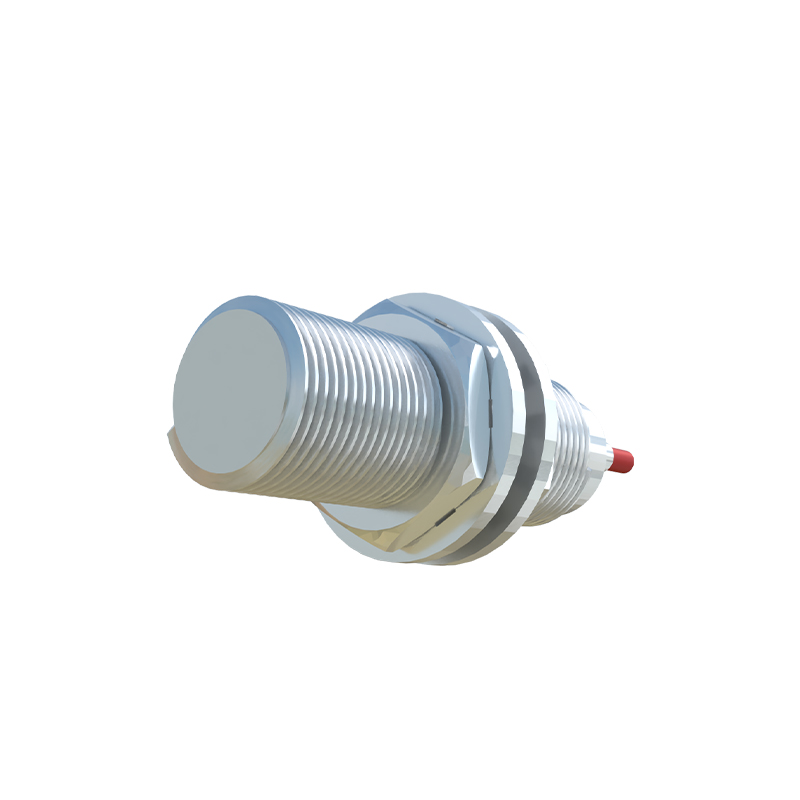
Proximity sensors are non-contact electronic devices designed to detect the presence or absence of an object within a specific sensing range without any physical contact. They are fundamental components in industrial automation, providing reliable and rapid detection for various control and monitoring tasks. Unlike mechanical limit switches, which require physical touch, proximity sensors operate by emitting a field or beam of electromagnetic radiation and looking for changes in the field or return signal. This key characteristic allows for high-speed operation, long service life, and minimal maintenance, as there is no mechanical wear and tear from repeated contact. They are essential for creating smarter, more efficient, and safer automated systems across numerous sectors.
Core Operating Principles
The principle of operation varies by sensor type, primarily defined by the technology used to generate the sensing field. The most common types are inductive, capacitive, ultrasonic, and photoelectric sensors. Inductive proximity sensors generate an oscillating electromagnetic field. When a metallic object enters this field, it induces eddy currents on the object's surface, which dampens the oscillator's amplitude. This damping is detected by the sensor's circuitry, triggering an output signal. Capacitive sensors work similarly but can detect both metallic and non-metallic materials (like liquids, wood, or plastics) by measuring changes in capacitance caused by the object altering the electrostatic field. Ultrasonic sensors emit high-frequency sound waves and measure the time it takes for an echo to return, calculating distance. Photoelectric sensors use a light beam (visible, infrared, or laser); detection occurs when an object interrupts or reflects this beam.
Key Characteristics and Selection Criteria
Selecting the right proximity sensor requires understanding several critical parameters. Sensing range, or the maximum distance at which the sensor can reliably detect a standard target, is paramount. The target material significantly influences the choice; inductive sensors are only for metals, while capacitive sensors offer broader material compatibility. Environmental factors like temperature extremes, humidity, dust, and chemical exposure dictate the required housing material and protection rating (e.g., IP67). Output type is another crucial decision: digital outputs (like NPN/PNP transistors) provide simple on/off signals, while analog outputs (4-20 mA or 0-10V) offer continuous distance information. Response time, the speed at which the sensor reacts to a target, is vital for high-speed applications. Finally, physical size and mounting style must align with the mechanical constraints of the application.
Primary Industrial Application Areas
The application spectrum for proximity sensors is vast within industrial automation. In manufacturing and assembly lines, they are used for precise object detection, counting, and positioning. For instance, an inductive sensor can verify the presence of a metal component on a conveyor belt before a robotic arm performs a pick-and-place operation. In the automotive industry, they are integral for robotic welding, paint shop automation, and part verification. Machine tools rely heavily on them for tool wear monitoring, spindle positioning, and safety door interlocking. Capacitive sensors find use in liquid level detection in tanks and hoppers, as well as in packaging lines to detect transparent films or glass bottles. Ultrasonic sensors are preferred for challenging environments with dirt or fog, commonly used in bulk material level sensing and parking assistance systems on AGVs (Automated Guided Vehicles).
Advantages Over Traditional Sensing Methods
Proximity sensors offer distinct advantages that justify their widespread adoption. Their non-contact nature eliminates mechanical stress on both the sensor and the target, leading to exceptional durability and virtually infinite operational life in terms of switching cycles. They provide high-speed and high-frequency response, capable of detecting objects moving at very high velocities, which is unattainable for mechanical switches. They are highly reliable and consistent, with no issues related to contact bounce or oxidation. Furthermore, their solid-state construction makes them resistant to vibration, shock, and environmental contaminants when properly housed. This reliability translates into reduced machine downtime, lower maintenance costs, and improved overall system productivity and safety.
Integration and Future Trends
Modern proximity sensors are increasingly intelligent and network-ready. Integration with Industrial Internet of Things (IIoT) platforms is a major trend. Sensors with IO-Link communication capability can transmit not just a switch signal but also detailed parameter data (like temperature, signal strength, or device health) to a central controller for predictive maintenance and process optimization. Miniaturization continues, allowing sensors to fit into tighter spaces. There is also a growing demand for sensors that can operate in extreme conditions, such as high-temperature foundries or sterile food-processing environments. As industries push towards greater flexibility and data-driven decision-making, the role of the proximity sensor evolves from a simple binary switch to a critical node in a smart, connected factory ecosystem, providing essential data for